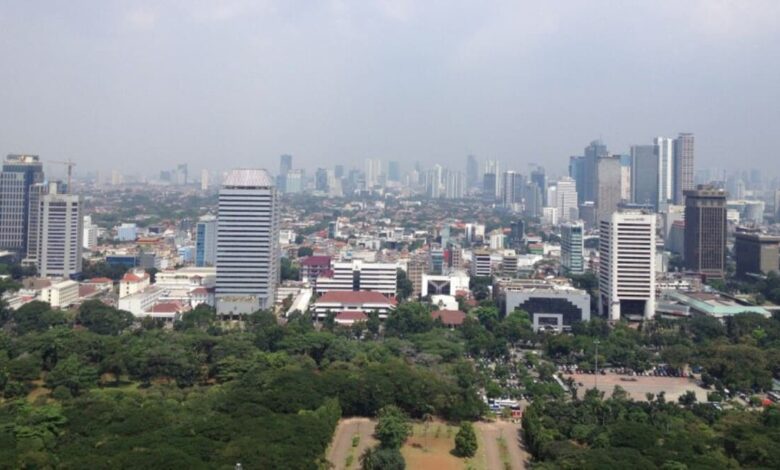
For the first time in decades, Jakarta has claimed the top spot as the world’s most populous city. This shift was made possible after a revision in the criteria used to define metropolitan boundaries. The new measurement system introduced by the UN enabled a more accurate assessment of urban agglomerations, resulting in significant changes to the global city rankings.
According to updated data, Jakarta’s population has surpassed 38 million people. Dhaka follows with 37 million residents, and Tokyo is now third with around 33 million inhabitants. This reshuffling among the megacities reflects the rapid urban population growth in Asia, where urbanization is accelerating at an extraordinary pace.
Nine out of the world’s ten largest cities are now located in Asia. Alongside Jakarta, Dhaka, and Tokyo, the list includes New Delhi, Shanghai, Guangzhou, Cairo, Manila, Kolkata, and Seoul. The sole exception is Cairo, representing Africa. This strong tilt toward Asia highlights how swiftly the world’s demographic map is changing.
Changes in calculation methodology: what’s different
Previously, different methods were used to determine the population size of megacities, making comparisons between countries difficult. Now the UN uses a unified methodology that takes into account not only administrative boundaries but also actual building density, transport connectivity, and the economic integration of suburbs. This has made it possible to identify the true scale of urban agglomerations and make statistics more objective.
As a result, Tokyo, which had long been considered the world’s largest city, has lost the top spot to Jakarta. This data revision became possible by including new districts that were not previously part of the city’s official boundaries, but are in fact integral to it.
Urbanization: global trends and consequences
The growth of urban populations is one of the main trends of the 21st century. In the middle of the last century, only 20% of the world’s population lived in cities, while today that figure is approaching 50%. According to experts, by 2050, two-thirds of humanity will live in megacities.
Rapid urbanization brings both new opportunities and serious challenges. The largest cities face problems with traffic congestion, housing shortages, environmental pollution, and increasing social inequality. At the same time, megacities are becoming centers of economic development, innovation, and cultural exchange.
Asian megacities: reasons for explosive growth
Asian cities are experiencing record population growth driven by high birth rates, internal migration, and economic expansion. In Indonesia, Bangladesh, India, and China, millions move from rural areas to cities each year seeking jobs and better opportunities. This influx is pushing urban boundaries outward and giving rise to new metropolitan areas.
At the same time, the governments of these countries face the challenge of modernizing infrastructure, developing transportation networks, and providing access to basic services for their growing urban populations. Tackling these issues has become a crucial factor for the sustainable development of major cities.
A historical look: how the leaders of urbanization have changed
In 1950, the world’s largest cities were New York and London. By the end of the 20th century, however, Asian megacities had taken the lead. Tokyo held the top spot for many years, but has now been surpassed by Jakarta. This shift highlights not just demographic, but also economic changes shaping the world.
Experts point out that in the coming decades, the list of the world’s largest cities may shift again. Rapid population growth in Africa and South Asia is likely to give rise to new megacities that could break into the global top 10.
By the way: The UN and its role in global statistics
The United Nations (UN) is an international organization established in 1945 to maintain peace, security, and cooperation among countries. Nearly every nation in the world is a member. The UN not only addresses political and humanitarian issues but also undertakes large-scale efforts to collect and analyze statistical data. Thanks to its initiatives, the global community receives objective information on demographic, economic, and social trends. In recent years, the UN has been actively implementing new standards and methodologies to make statistics more transparent and comparable across countries. This enables more informed decision-making at the global level and timely responses to contemporary challenges.