Traces of Ancient Life: New Frontiers in the Search
In recent years, scientists have debated when the first living organisms appeared on our planet. Back in 2017, researchers in Canada discovered structures in ancient rocks that resembled microscopic tubes, similar to those formed by iron-oxidizing bacteria. These findings sparked intense debate: some experts believe they represent evidence of life, while others insist that such formations could have resulted from non-biological processes.
Biomolecules are considered key evidence of life’s existence on Earth. However, in rocks older than 1.7 billion years, they are almost never preserved. Over time and under pressure, these molecules break down, turning into a complex mixture of fragments—making it extremely difficult to determine if they are of biological origin.
AI and Chemical Analysis: A Revolution in Studying Ancient Rocks
An international team of researchers from the Carnegie Science Center (USA) has proposed a new method for detecting traces of life in ancient rocks. They used artificial intelligence to analyze the breakdown products of organic matter. For training the neural network, they collected 272 samples with a clearly established origin—including modern organisms, fossils, and meteorites.
Each sample underwent pyrolysis—a process of decomposition at high temperatures. The resulting fragments were analyzed using gas chromatography and mass spectrometry. These methods produced unique chemical “fingerprints” that allowed the AI to learn how to distinguish biogenic substances from inorganic matter.
After training, the algorithm was able to detect traces of life in samples with high accuracy—up to 98%—as well as determine whether the organism had been photosynthetic. Special attention was paid to those species that released oxygen during photosynthesis.
Photosynthesis and the Great Oxygenation Event: New Evidence
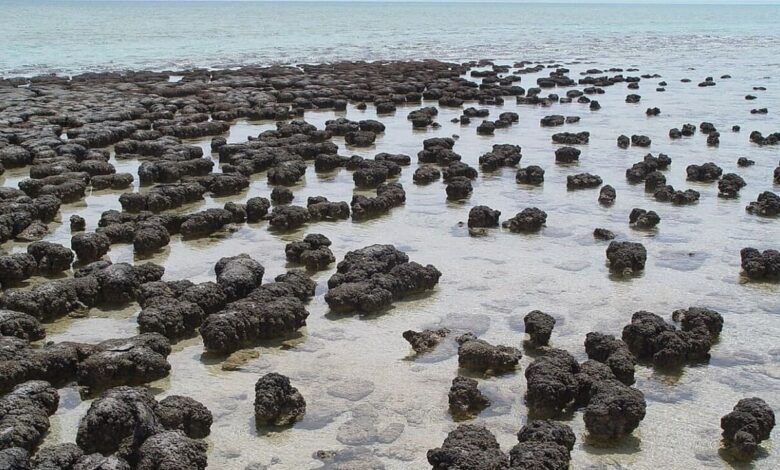
The emergence of photosynthesis was a key milestone in the evolution of life on Earth. By developing the ability to use oxygen to generate energy, living organisms gained an evolutionary advantage. It is believed that the first photosynthetic organisms were cyanobacteria—microscopic algae that left behind stromatolites, distinctive mineral structures found in rocks over two billion years old.
Around 2.3–2.4 billion years ago, the so-called Great Oxygenation Event took place. Oxygen levels in the atmosphere surged, leading to mass extinction among organisms unable to adapt. Those that survived gained the opportunity for further evolution.
Until recently, there was no direct evidence of photosynthesis existing in such distant epochs. A new study has now, for the first time, provided strong confirmation that photosynthetic organisms existed as far back as 2.5 billion years ago.
Analysis results: the oldest signs of life and photosynthesis
Researchers used a trained neural network to analyze 134 ancient samples whose origins were previously uncertain. In rocks from the Gamohaan Formation (South Africa), dated at 2.52 billion years old, they discovered traces of photosynthetic organisms.
In addition, the biological origin of organic compounds was confirmed in rocks from the Singhbhum Craton (India), which are 3.51 billion years old. Samples from Greenland, estimated to be 3.7–3.8 billion years old, also revealed signs of life. However, due to significant changes in Earth’s crust over such a long period, scientists are not drawing definitive conclusions yet.
These findings open new horizons for understanding Earth’s early history and the evolution of life. The use of artificial intelligence and modern analytical methods offers a fresh perspective on processes that occurred billions of years ago, bringing us closer to uncovering the origins of life on our planet.