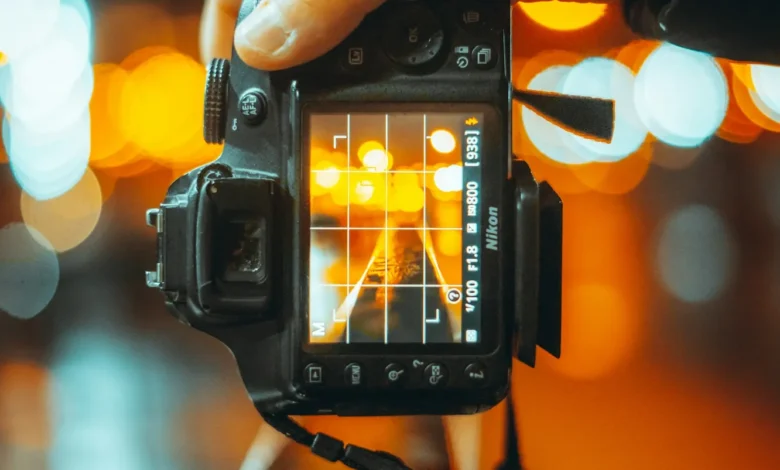
In recent years, video content has confidently captured the attention of internet users. Short clips, stories, and live streams have become a routine part of daily life. People are increasingly choosing dynamic formats because they instantly grab your attention and require no effort to consume. Against this backdrop, static images seem almost invisible, as if losing their relevance. Yet it is within this stillness and silence that their new strength lies.
Photography today is not experiencing a crisis, but a transformation. It is leaving behind familiar digital flows, where algorithms reward speed and long watch times rather than depth of perception. On social networks, photos flash by between videos, giving way to moving images. However, this does not mean photography is disappearing—on the contrary, it’s seeking new forms of existence and reclaiming its unique value.
A change of environment
Over the past decade, videos have taken the lead at exhibitions and galleries. Visitors now spend more time in front of screens than at traditional displays. This reflects a global shift: attention has become more valuable than meaning, and speed more important than pause. Video sets the pace immediately, leaving no room for contemplation. Photography, on the other hand, asks you to stop, reflect, study the details—and that, in a world of endless scrolling, has become a true luxury.
Print publications are reducing their circulation, and paper media are becoming rare. Images are losing their physicality, dissolving in the digital stream. Yet at the same time, a renewed interest in physical prints is emerging. Paper gives photographs scale, texture, and a unique atmosphere. Research shows that viewers spend more time looking at printed images and are more likely to revisit the details than when viewing them on a screen.
New challenges
In the digital environment, photographers have to adapt to the demands of algorithms. Boosted color, higher contrast, added drama—all these are attempts to make photos stand out amid video content. But such methods rarely deliver lasting results. Photography becomes just a pause between video clips, losing its independent value. Nevertheless, it is in this gap that a new creative space emerges.
Transitioning to a physical form changes not just perception, but also the photographer’s role. Now, it’s not enough to simply shoot and edit images—the photographer must also consider how their work will exist in physical space, whether in a gallery, a book, or a private collection. Skills in printing, knowledge of exhibition techniques, and the ability to connect with viewers are becoming essential parts of the profession.
A return to experience
Western experts note that everything that could be recorded and reproduced has already been done. Now comes the era of experience—something that can’t be conveyed through streaming video. Photography is becoming an event, not just an image. It demands time, attention, a willingness to pause and look closely. A paper print stands in contrast to digital noise, making each frame meaningful for those willing to see.
In this context, photography is changing its very state. Online, it serves as a design element, a part of the interface. In the physical world, it becomes an object people interact with directly. Algorithms can generate perfect images, but they can’t provide the feeling of a genuine moment. The future of photography depends not on technology, but on where and how it exists.
Rethinking the Role
Today, photography occupies a niche similar to that of theater or opera after the advent of cinema. It has become rare, demanding, but significant for its audience. This is not a decline, but a new stage of development. Photographers are searching for ways to restore depth and temporality to their images, experimenting with formats, materials, and methods of presentation. As a result, unique projects are emerging—ones that cannot be replicated in the digital stream.
Transitioning to a physical form requires new knowledge and approaches. It’s important not only to create an image, but also to consider how it will exist beyond the screen. Galleries, photo books, and private collections become platforms for meaningful engagement with the viewer. Here, photography regains its power, prompting us to pause and observe instead of simply scrolling.