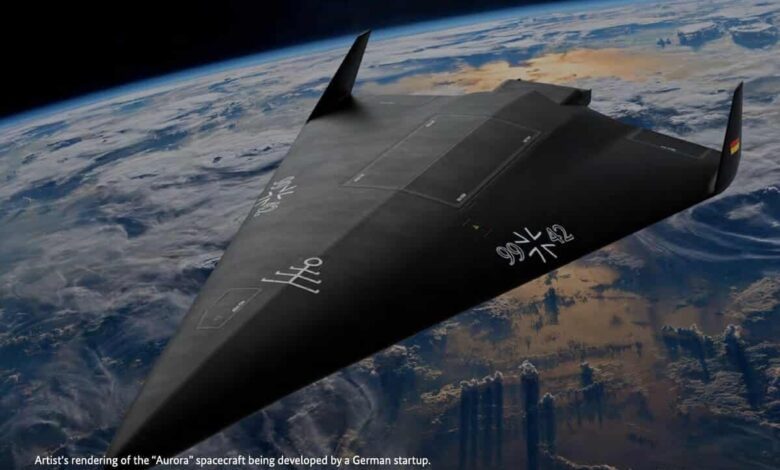
Germany’s Ministry of Defense has released a strategic document outlining a fresh perspective on the role of outer space in ensuring national security. For the first time at the state level, plans are outlined not only for developing defensive, but also offensive capabilities in space. This approach reflects the growing importance of orbit for both military and civilian objectives.
The strategy emphasizes that Germany intends to operate in space not only during peacetime, but also in times of crisis or threat. The document covers both military and civil aspects, demonstrating a comprehensive approach to shaping the country’s space policy.
Three priorities and dozens of objectives
The strategy is based on three key pillars: timely threat detection, fostering international cooperation, and strengthening defense capabilities. In total, the document lists 65 objectives spanning a wide range—from political initiatives to the implementation of new technologies. However, the specific timelines and funding amounts have not been disclosed yet.
Special attention is given to securing access to space. Germany insists on expanding European support programs for launch vehicles of various classes. Priorities include creating systems capable of frequent launches and ensuring Europe’s independence in exploring lunar orbit.
Future Technologies: Spaceplanes and Small Satellites
The document highlights advanced technologies that could transform military operations in orbit. Among these are reusable spaceplanes capable of launching from regular airfields and returning to Earth for multiple uses. Such vehicles promise to reduce environmental impact and speed up mission execution compared to conventional rockets.
Germany also plans to develop small satellites for rapid-response tasks, improve orbital monitoring systems, and introduce innovative engines. Long-term goals include mastering orbital logistics and conducting operations near the Moon.
Defense and New Challenges
Although the strategy is officially focused on defense, it explicitly states the need to limit potential adversaries’ ability to use space against Germany’s interests. This implies developing means of active counteraction and strengthening the Bundeswehr’s position in orbit.
The release of this document coincided with a surge in military space investments across Europe. The European Union is already preparing a significant increase in defense and space budgets for the period after 2028. However, the path to realizing these ambitious plans is challenged by issues such as limited launch capacity, contracting difficulties, and a lack of unified strategy among European countries.
Europe’s Changing Approach to Space
Experts note that European countries will have to reconsider the traditional view of space as an exclusively peaceful domain. Until recently, discussions about a military presence in orbit were considered undesirable, but today this issue is becoming part of the agenda. Space companies, which were previously focused on scientific and commercial projects, will need to play a more active role in defense initiatives.
In the coming years, Germany and its EU partners will be forced to seek a balance between technological development, international cooperation, and ensuring their own security in orbit. This will lead to new projects and will also change the structure of the European space industry.
Did you know: The Bundeswehr and its role in the space sector
The Bundeswehr is the armed forces of Germany, uniting the Army, Air Force, Navy, and cybersecurity units. In recent years, the Bundeswehr has steadily expanded its presence into new domains, including space. During the 2020s, the Bundeswehr established the Space Operations Center, responsible for monitoring and safeguarding national interests in orbit. Germany is among the countries investing in the development of its own satellite systems and military space technologies. The Bundeswehr closely collaborates with the European Space Agency (ESA) and participates in international programs to ensure security in space. Under its new strategy, Germany plans to boost cooperation with NATO and EU partners and adopt innovative solutions to enhance the effectiveness of military operations. The country also traditionally places high importance on environmental issues and sustainable development, a principle reflected in its approach to space projects. In the coming years, the Bundeswehr intends not only to strengthen its defense capabilities but also to help establish new standards of conduct in space. This will enable Germany to occupy a more prominent position in global space policy and secure its interests amid growing competition in orbit.