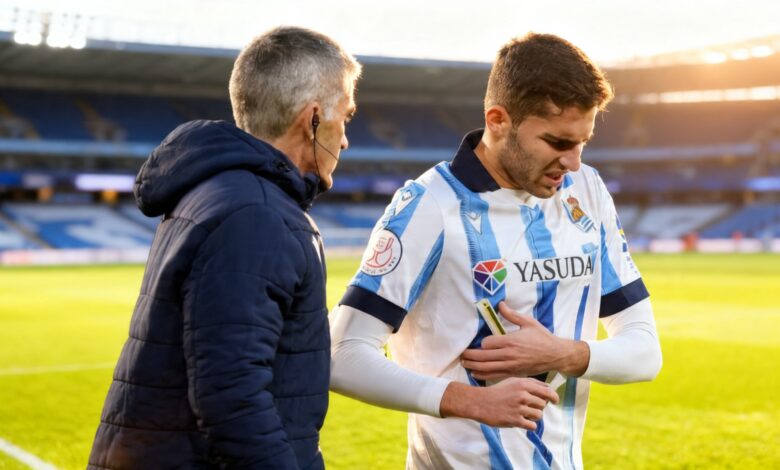
The absence of Arsen Zakharyan from the Real Sociedad squad on the eve of the Copa del Rey final was an unexpected blow for the fans and the team itself. The decision not to include the Russian midfielder in the lineup is due to his illness, which could alter the balance of power in the decisive match against Madrid’s Atletico. For Spanish clubs, such situations always carry risks: losing a key player at the most crucial moment of the season can impact the result and the atmosphere within the team.
As TASS notes, Zakharyan was not included in the list of players for the final, which will take place on April 18. According to Mundo Deportivo, the reason was an acute gastrointestinal issue. The management of the Basque club decided not to take the player to the match to avoid a possible spread of infection among other team members. This approach demonstrates how seriously Spanish football treats health and collective safety issues.
Impact on the team
This season, Arsen Zakharyan has played 20 matches for Real Sociedad and scored once. His absence in the final may affect tactical arrangements and the choice of the starting lineup. The coaching staff is forced to seek new solutions to compensate for the loss of a midfielder who has become an important part of the team since August 2023. In such situations, clubs often rely on young players or change their game plan to maintain balance on the field.
According to TASS, the club chose not to risk the health of the other players, which is especially important given the tight schedule and high level of competition in Spanish football. In recent years, similar incidents have already impacted the outcomes of key matches, when even minor health issues of individual players led to changes in the lineup and unexpected results.
Reaction and consequences
Real Sociedad’s decision not to take Zakharyan to the final has sparked discussion among experts and fans. Many believe that the absence of the Russian midfielder could be an advantage for Atlético, known for its ability to exploit the opponent’s weaknesses. At the same time, the team from San Sebastián has repeatedly proven that it can handle difficulties and find unexpected solutions in tough situations.
Recalling recent events in Spanish sports, it is worth noting that such personnel losses do not always lead to defeats. For example, in the case of Carlos Alcaraz’s debut at the Godó tournament the team also faced unexpected changes in the lineup but managed to adapt and deliver a solid result. This confirms that flexibility and readiness for change have become key factors for success in modern Spanish sports.
Context and trends
In recent years, Spanish football clubs have increasingly faced the need to quickly respond to emergency situations related to players’ health. Illnesses and injuries at crucial points in the season put coaching staffs and medical teams to the test. In these circumstances, not only physical preparation but also the squad’s psychological resilience plays a key role.
Practice shows that teams capable of adapting swiftly and finding internal reserves are more likely to succeed, even in the absence of their leaders. Similar cases have been observed in other sports, where last-minute substitutions have led to unexpected turns of events. Spanish football continues to demonstrate a high level of adaptability and professionalism despite all challenges.
For reference, it is worth recalling that cases of players missing important matches due to illness have previously occurred in Spanish football. For example, last season several leading players from Barcelona and Real Madrid were also unable to take the field for medical reasons, which affected match outcomes. Analysis by russpain.com indicates that such situations are becoming increasingly common, and clubs are forced to improve their squad management and medical support approaches. This reflects a broader trend toward higher safety standards and greater care for athletes’ health in Spanish sports.