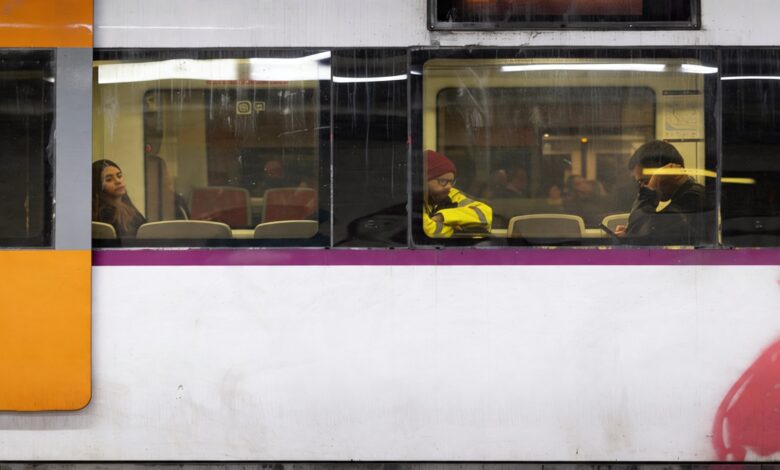
On Saturday morning, residents of Catalonia faced major disruptions in rail service: train traffic on the R3 line between La Garriga (Barcelona province) and Ripoll (Girona) came to a complete halt. The cause was a bold copper cable theft, which led to an immediate stoppage on one of the region’s key routes. For many passengers, this meant not only delays, but also the need to rearrange their plans for the day.
According to El Pais, Adif specialists have been working since early morning to restore the damaged infrastructure. Their goal is to get the line back in operation as soon as possible, but no exact timeline for resuming service has been given yet. As a result of the incident, rail service between La Garriga and Ripoll has been severed, and passengers have been offered alternative routes.
Alternative routes
Temporary arrangements have been introduced: between L’Hospitalet and Montcada i Reixac, passengers are being transported by trains on the R4 line, as the routes overlap on this section. Buses have been organized between Montcada and Ripoll, as well as from Ripoll to Puigcerdà/La Tour de Querol. This solution has helped partially ease the burden on the transportation system, but has not eliminated the inconvenience.
At the same time, the R1 line also faced difficulties in the morning: the first trains could not depart between El Masnou and Mataró due to a fire near the tracks. Fortunately, service on this section was restored by midday. However, during the night, from 22:00 to 06:00, bus replacement services will again operate between Blanes and Maçanet-Massanes on the R1 line due to scheduled infrastructure maintenance.
Impact on other lines
The situation on the R3 line also affected other routes. On the R2 Sud line, due to repair work between Garraf and Sitges, only two trains per hour are running in each direction between Sant Vicenç de Calders and Garraf. On the R4 line, additional bus services have been arranged between Terrassa-Estació del Nord and Manresa, and on the R8 line — between Martorell Central and Rubí Can Vallhonrat.
The R11 line continues to operate normally along its entire route from Barcelona Sants to Portbou. At the same time, on the R13, R14, R16, and R17 lines between Sant Vicenç de Calders and El Prat, bus replacement services are operating due to ongoing works on the Garraf — Sitges section. On the R14 line, between Riba-roja d’Ebre and Reus, alternative routes with stops at intermediate stations have also been introduced. Rail service is maintained on the RT1, RT2, RL3, and RL4 lines.
Consequences for passengers
Widespread train disruptions have affected thousands of Catalonia residents, forcing them to seek new ways to get to work, school, or home. For many, this became an unexpected challenge, especially against the backdrop of existing restrictions due to repair work on other parts of the rail network. As El Pais notes, such incidents highlight the vulnerability of transport infrastructure to malicious actions and the need to strengthen security measures.
In this context, it’s worth noting that disruptions in transportation systems are not uncommon in Spain. For instance, a recent dispute erupted in Madrid over control of tourism spending, which also sparked debates about the reliability and transparency of government institutions. More on such conflicts can be found in the article about disagreements within the Madrid Court of Auditors in this analytical review.
Cable theft on railways is a recurring problem for Spain. In recent years, such incidents have already led to temporary suspensions on certain routes, especially in Catalonia and Madrid. In 2024, a similar case occurred on the line between Barcelona and Tarragona, causing widespread delays and schedule changes. Authorities regularly strengthen infrastructure security measures, but so far have been unable to prevent such incidents entirely. Each new incident prompts discussions about the need to upgrade security systems and increase accountability for these types of crimes.