Catalonia is facing a heated debate over new diagnostic exams for schoolchildren. This year, all 4th-grade primary and 2nd-grade ESO students were given tests that completely exclude written expression tasks. This decision has sparked discontent among teachers and parents, as writing skills are considered essential for future education and successful integration into society. According to El Pais, the changes affect more than 160,000 children, and the consequences could impact the entire regional education system.
Last academic year, the exams included both multiple-choice and open-ended questions, allowing assessment of not only knowledge but also the ability to reason and express thoughts in writing. The format has now changed: all tasks are exclusively multiple-choice. Representatives from the Department of Education admit this approach is not ideal, but do not explain why open-ended questions were removed. According to Núria Planas, head of the Assessment Agency, written expression tasks are planned to return in the future, but for now, students and teachers must work with the current format.
Reaction from schools and teachers
Teachers call the new exam format a serious mistake. They believe that tests are unable to assess children’s writing skills and logical thinking. The problem is especially acute in primary school, where basic communication skills are formed. Many educators think these changes could lower the quality of education and make it harder to objectively evaluate knowledge. Some schools are already discussing possible consequences for future curricula and adapting teaching methods.
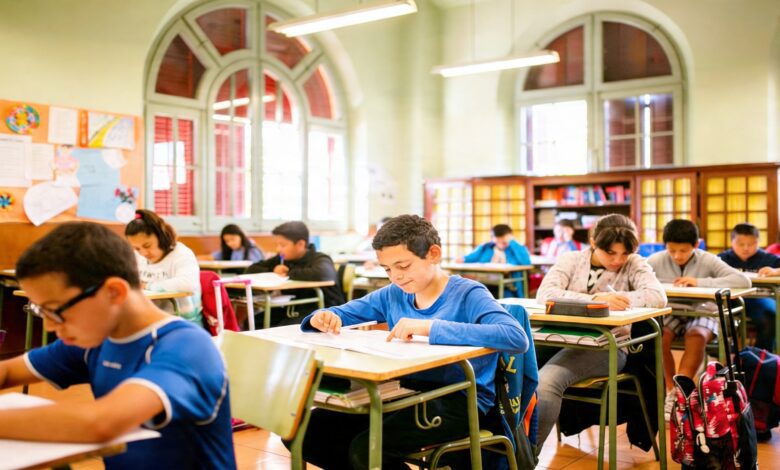
This year, exams are held over the course of a week. For 4th-grade primary students, knowledge is tested in Catalan, Spanish, and English, mathematics, and environmental studies. In 2nd year ESO, sciences are added. In Val d’Aran, students also take an exam in Aranese. All tests are mandatory and include students from both public and private schools in the region. After the exams, each family will receive an individual report on their child’s results, while schools and authorities will get an overall picture of the state of education.
Reasons and consequences of the changes
The Department of Education has not disclosed why it decided to switch entirely to a test-based format. Last year, a combination of tests and open-ended questions provided a more accurate assessment of students’ preparedness. Now, according to many experts, the system is losing an important diagnostic tool. Some specialists believe that dropping written assignments may be aimed at simplifying result processing and speeding up data analysis. However, this approach raises concerns about the quality and objectivity of final assessments.
Parents and teachers fear that the new exams will not provide a complete picture of children’s knowledge and skills. This is especially true for written language, which plays a crucial role in further studies and professional life. Authorities have promised to consider the criticism and bring back open-ended questions next year, but for now, the situation remains tense. As El Pais reports, discussion of the reform continues at all levels—from school boards to regional government.
Context and comparison with other cases
In recent years, Spain has repeatedly faced debates over changes in the education system. For example, after the railway tragedy in Adamuz, issues regarding infrastructure and inspection procedures sparked public discussion, as noted in the report on the scandal surrounding the replacement of rails. Such situations demonstrate that any reforms affecting large-scale processes require transparency and consideration of the professional community’s opinion. In the case of exams in Catalonia, the decision to switch to a test-only format came as a surprise to many in the education sector and sparked a wave of criticism.
Experiments with exam formats have also been conducted in other regions of Spain, but such a radical move away from written assignments is rare. Usually, reforms are introduced through pilot projects and consultations with teachers. In Catalonia, however, the changes were implemented immediately in all schools, intensifying dissatisfaction and concern. An analysis of the results and discussion of possible adjustments to the exam format for next year are expected in the coming months.
Diagnostic exams were introduced in Spanish schools after the Lomloe law was passed three years ago. Their aim is to provide an objective assessment of students’ knowledge and skills, as well as to give schools and authorities data to improve educational programs. Approaches to these tests vary from region to region, but most experts agree that combining test-based and open-ended tasks offers the most complete picture. In Catalonia, the current experiment with the format has triggered strong reactions and opened a wide discussion about the future of education in the region.