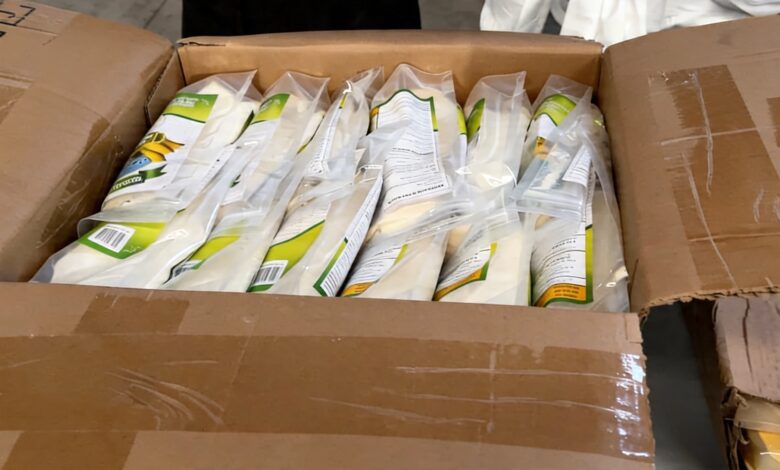
In recent months, Spain has been facing new methods of drug trafficking, raising concerns among law enforcement agencies and local residents. The recent bust of a major drug ring in Toledo stands out as one of the most significant developments in the fight against organized crime. The operation succeeded in preventing the spread of a dangerous substance, directly impacting safety and peace in the region.
According to El Pais, on the night of February 11, law enforcement officers carried out a surprise raid on an industrial facility in the small settlement of Gerindote (Toledo). At that moment, a group of individuals was engaged in the complex process of extracting cocaine, which had been previously embedded in a large shipment of corn flour. Spain received about seven tons of flour in total, from which nine kilograms of the drug had already been separated. This extraction used technology only accessible to specialists involved in preparing the shipment at the point of origin.
Complex supply scheme
The batch of flour had been divided into small 600-gram packages, each with different markings. This approach helped disguise the illegal substance and made its detection more difficult during transit. The shipment was delivered to an industrial facility in Gerindote, where the final stage of cocaine extraction took place. According to RUSSPAIN.COM, such schemes are becoming increasingly sophisticated, requiring police to employ new investigative techniques.
During the operation, named ‘Sircan’, 13 people were arrested. Among them were the alleged leader of the criminal group, his companion, and so-called ‘cooks’—specialists brought from Colombia specifically to handle the drugs. Their task was to separate cocaine from flour using chemical reagents and equipment set up in a rented facility.
The role of international connections
The investigation was conducted jointly by the Guardia Civil, National Police, and Customs Service. Authorities note that such operations require coordination between different agencies and international partners. In this case, particular attention was paid to supply routes and methods of concealing the cargo. According to El Pais, the criminal group operated with a high degree of secrecy, making it difficult to detect them in the early stages.
In recent years, Spain has become one of the key transit points for drugs from Latin America to Europe. This is due to its well-developed logistics infrastructure and numerous ports. Authorities regularly carry out large-scale operations to disrupt such channels, but criminal organizations continue to seek new ways to deliver illegal substances.
Regional impact
The discovery of an underground laboratory complex in Gerindote has caused a strong reaction among local residents. In a small town with a population of fewer than 3,000 people, such incidents are extremely rare. Local authorities have heightened security measures and urged citizens to remain vigilant regarding suspicious objects and unfamiliar individuals.
According to El Pais, the detainees have already given initial statements, which will help the investigation identify other members of the scheme. Authorities do not rule out the possibility that similar laboratories may exist in other regions of the country. Looking back at recent cases, it is worth noting that Spain has already uncovered underground operations linked to the illegal trade of medical substances. For example, a network of underground clinics offering illegal Botox treatments was previously dismantled, which also raised concerns among experts and the public.
Context and similar cases
In recent years, Spain has repeatedly become the scene of major operations against the drug trade. In 2025, a shipment of cocaine hidden in containers of fruit was discovered in Valencia, and in Malaga, police arrested a group that used furniture and household appliances to transport drugs. These cases show that criminal organizations are constantly improving their methods of concealment and logistics. In response, authorities are tightening border controls and implementing new technologies to detect prohibited shipments. Despite these efforts, combating the drug trade remains one of the country’s most pressing challenges.