The situation surrounding the Cadiz Academy of Fine Arts has become a troubling signal for Spain’s entire cultural sector. For eight years, one of the country’s oldest institutions has been unable to use its own building, leaving most of its collections out of reach for researchers and city residents. This not only restricts opportunities to study and promote art but also jeopardizes the preservation of a unique heritage amassed over more than two centuries.
The crisis was caused by the unsafe condition of the historic building, which has housed the Academy since the 19th century. After a collapse risk was identified in 2018, all exhibits—including rare books, plaster casts of sculptures, antique furniture, and paintings—were urgently packed up and moved to a secure, but closed-to-the-public, part of the complex. Since then, the collection, spanning periods from the 18th to the 20th centuries, has effectively remained sealed off.
Lost access
The temporary premises provided by the municipality only in 2024 have not solved the problem: most of the holdings remain inaccessible to researchers and visitors. The Academy’s management has to deny access to the archives and artworks, which negatively impacts scientific and educational activity. According to El Pais, staff continue to move the most valuable items little by little, but full operations are impossible without returning to the historic building.
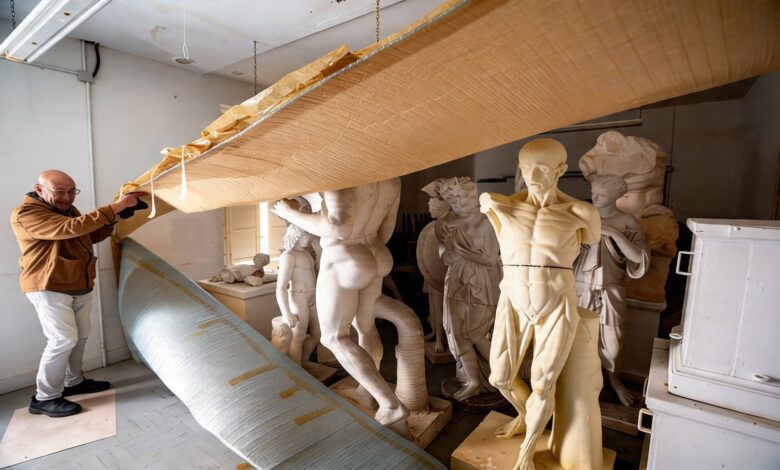
Among the packed exhibits are plaster copies of ancient sculptures commissioned in Rome back in the 18th century, a furniture collection, ceiling paintings, and a set of avant-garde works created in 1966 in honor of the poet Rafael Alberti. For many years, these items shaped the identity of the Academy and were open to the public, but now they are out of sight for residents and visitors to Cadiz.
Delayed renovation
Historically, the Academy occupied four halls in the building of the former School of Arts, where it moved in 1838 after the city granted the premises. Later, part of the complex became the basis for creating the Museo de Cádiz, while the remaining area was never fully restored. Plans to expand the museum have been discussed for 36 years, but neither regional nor national authorities have managed to agree on a plan of action or allocate the necessary funds.
According to El Pais, the Ministry of Culture recently invested €735,000 in roof repairs, but further steps for restoring the building and returning the Academy to its original premises remain unclear. Regional officials insist that the initiative must come from central authorities, while the ministry refers to the need for coordination with local agencies. As a result, the cultural space remains empty and the collections continue to gather dust in boxes.
Historic significance
Among the Academy’s exhibits are works associated with names such as architect Torcuato Benjumeda and artist Domingo Álvarez Enciso, as well as the patron Nicolás de la Cruz y Bahamonde. Each new member of the Academy traditionally contributed to the collection, resulting in a unique array of artworks and documents. Today, all these treasures remain inaccessible to researchers and students, leaving the city’s cultural life noticeably diminished.
While authorities have yet to agree on the building’s future, Academy staff and former museum directors continue to safeguard the collections, hoping for a prompt resolution. One of the secured rooms still holds plaster sculptures commissioned through the Spanish embassy in Rome, while another preserves ceiling paintings by the artist Alejandrina Gessler (Anselma). The fate of these works depends directly on how quickly a reconstruction plan is approved.
Context and consequences
Access issues to cultural heritage are not unique to Cádiz. In recent years, Spain has seen repeated cases where historic buildings fell into disrepair and collections faced the risk of being lost. For instance, questions about rights and access to important sites have been raised in legal practice, as occurred in disputes over parental involvement in adult children’s lives, which was examined in a report on the decisions of the Supreme Court of Spain. Such stories highlight the importance of timely government action and the need to preserve cultural heritage for future generations.
In recent years, Spain has repeatedly faced situations where museums and cultural centers have struggled with unsafe buildings and a lack of funding. In Madrid and Barcelona, there have also been discussions about renovating historic sites, but these projects are often delayed by bureaucracy and a lack of coordination between different levels of government. These cases demonstrate that without clear coordination and political will, even the most valuable cultural sites can remain inaccessible to the public for many years.