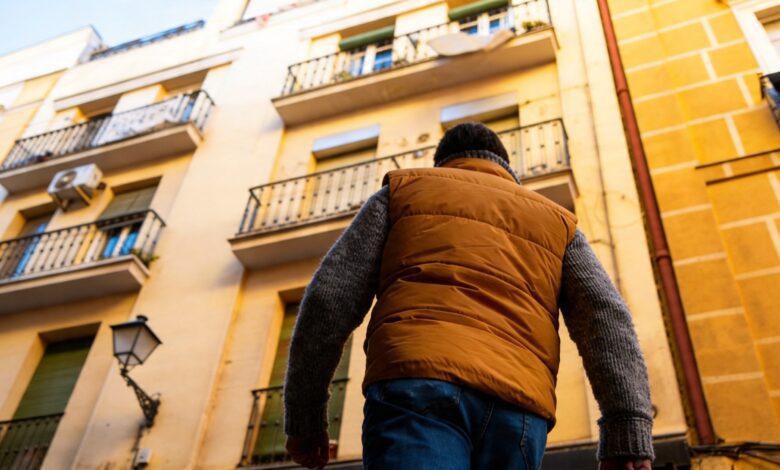
In recent years, Madrid has faced a growing affordable housing crisis, impacting thousands of families. Rising prices, pressure from investment funds, and the lack of effective government action mean many residents are forced to leave their homes or fight for the right to stay. As reported by El Pais, the situation surrounding the building at Tribulete 7 highlights a far-reaching crisis affecting not only the capital but other regions of Spain as well.
At the center of attention is an old building in the Lavapiés district, where a real-life drama has unfolded over the past year. After the property was acquired by the major investment fund Elix Rental Housing, residents faced the threat of eviction and constant pressure. Banners demanding protection of their rights appeared on the facade, and inside, a fight to preserve their way of life intensified. Many long-term residents found themselves forced to choose between seeking new housing or defending their rights in court.
Neighbors and their stories
In the documentary Soy Tribulete 7, directors Lía Pattem and Elisa González show how the housing crisis impacts the lives of ordinary people. Among the protagonists are the owners of a small shoe repair shop, families with children, elderly couples, and young renters. They are united not only by their address but also by a shared sense of anxiety about the future. According to residents, the situation has worsened in recent years: rental prices have increased, and the new building owners are increasingly large companies uninterested in long-term relationships with tenants.
The film pays particular attention to how the atmosphere in the building and neighborhood is changing. Locals note that neighborly ties were once stronger, whereas now many are forced to move far beyond the city center. This leads to a breakdown of social connections and a decline in quality of life. Residents of other areas of Madrid and nearby suburbs, where demand for housing has surged due to migration from the center, face similar challenges.
Law and reality
Although Article 47 of the Spanish Constitution guarantees the right to decent housing, in practice authorities often ignore these obligations. Legal disputes between tenants and new landlords are becoming more frequent, but decisions are slow to come. In the case of Tribulete 7, for the first time in Spain, a court accepted a lawsuit concerning so-called ‘housing harassment’—pressure on tenants aimed at forcing them out. This event sparked widespread debate and highlighted the need for reforms in housing policy.
At the same time, an increasing number of creative works dedicated to the housing issue are emerging in the cultural sphere. According to El Pais, poets, writers, and artists use their work to draw attention to the problem. For example, the poetry collection ‘Poemas habitables’ will be released in May, while earlier books such as ‘Idealista’, ‘Antes todo esto era ciudad’, and ‘Generación inquilina’ were published. These projects reflect growing dissatisfaction and anxiety in society.
Impact on the city and culture
The housing crisis affects not only the economy but also the cultural life of Madrid. Documentaries, poetry collections, and exhibitions have become a way to protest and show solidarity with those facing challenges. In October 2024, the capital hosted a major demonstration against rising housing prices, bringing together residents from various neighborhoods, including the protagonists of Soy Tribulete 7. Such actions are becoming increasingly widespread and visible.
Interestingly, similar processes are taking place in other European countries. For instance, according to russpain.com, changes in the UK real estate market have also sparked protests and debate, as traditional products came under threat due to new EU regulations. This shows that affordable housing has become a shared problem for many European cities and calls for comprehensive solutions.
In recent years, Spain has seen an increase in cases where investment funds buy entire buildings and neighborhoods, displacing longtime residents and changing the character of local communities. In response, new forms of grassroots organization are emerging, with neighbors joining forces to defend their rights. Protests take place regularly in Madrid and Barcelona, and courts are handling dozens of cases related to illegal evictions. Cultural initiatives such as Soy Tribulete 7 have become important in driving public debate and raising awareness about the issue nationwide.