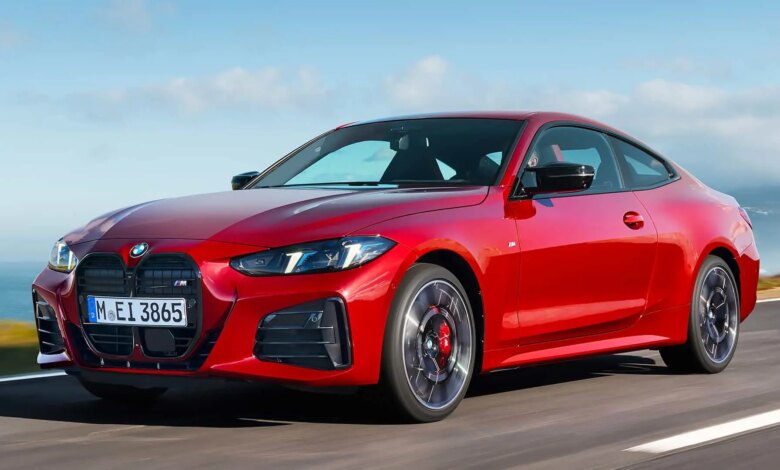
BMW has surprised the automotive market by announcing plans to launch a new generation of the Serie 4 within the Neue Klasse concept. This news has caused a stir among fans of the brand: for the first time in years, the manufacturer has clearly outlined the future of one of its most iconic models. As demand for electric vehicles surges and rivals gradually exit the sports coupe segment, the Bavarians are betting on bold design and cutting-edge technology.
In recent weeks, BMW has faced unprecedented hype: the entire production run of the electric iX3, scheduled through 2027, was sold out in record time. This sent a clear signal to management—the market is hungry for new solutions, and the Serie 4 could become the next big hit. Since its debut in 2013, the model has enjoyed consistent popularity, offering a bolder alternative to the classic Serie 3. The Coupe, Cabriolet, and Gran Coupé versions have each found their audience despite their niche appeal.
A new era
In 2020, the electric i4 took the stage, becoming a logical continuation of BMW’s commitment to dynamics and innovation. However, with the fully electric Serie 3 on the horizon, it has become clear that the i4 risks becoming outdated quickly. At this turning point, BMW makes an unexpected move—integrating the Serie 4 into the Neue Klasse architecture while preserving its signature sporty spirit.
Joachim Post, who oversees engineering solutions and the development of new models, openly stated that the sports variant has every chance to earn a worthy place in the future lineup. According to him, BMW’s sporting traditions are not just staying relevant—they are becoming a key element of the brand’s strategy. The company sees this segment not just as an opportunity for profit but as a chance to strengthen its image and attract a new audience.
Betting on synergy
Interestingly, this is the first time BMW has spoken so candidly about the prospects for the third generation of the Serie 4. So far, the company has not revealed details about the upcoming prototypes or rushed to share information about the variety of body styles. However, it is clear that Munich has calculated the commercial potential: the departure of competitors from the coupe and fastback segment opens up new possibilities for the Bavarians.
Post emphasizes that developing new versions based on existing platforms significantly reduces costs. This means that even launching niche models becomes economically justified. Every time a new Serie 3 or X3 is put on the production line, engineers already build in the possibility of creating derivatives—whether it’s Serie 4 or X4. This approach provides flexibility and accelerates the introduction of new models to the market.
The future of the model lineup
While public attention is focused on the upcoming next-generation X4, BMW is already testing prototypes and preparing to launch several models at once. The X4 is expected to be offered with both traditional combustion engines and fully electric versions, similar to those available in the X3 and iX3. There is also a possibility that, following a similar approach, the larger X6 will return to the market.
The report notes that synergy between models is key to success. From X4 to X3, X6 to X5, X2 to X1—each pair is built on a shared platform, allowing the brand to quickly respond to market demands and offer customers more options. This approach is especially important for buyers who value sporty proportions and dynamic performance.
Technology and features
The transition of the Serie 4 to the Neue Klasse architecture means not only a new design but also expanded technical capabilities. The lineup will continue to include upgraded petrol engines meeting Euro 7 standards, alongside fully electric versions. The upcoming i4 is expected to be a twin of the new i3, with high-end versions offering rear- or all-wheel drive, two electric motors, and a 108 kWh battery. Such a combination can provide a driving range of over 800 kilometers—a figure that until recently seemed like science fiction.
BMW clearly has no intention of giving up its position in the sports car segment, despite the global trend toward electrification. The company is betting on a blend of classic driving dynamics and modern technology, which could be a decisive factor for many buyers. While competitors are cutting their model lines, the Bavarians are expanding their range, offering customers as much choice as possible.
If you didn’t know, BMW is one of the world’s largest premium car manufacturers, founded in 1916 in Munich. The company is renowned for its innovations in engines, design, and safety technologies. The brand is traditionally associated with driving dynamics, quality, and a sporty character, and its models regularly win prestigious international awards.