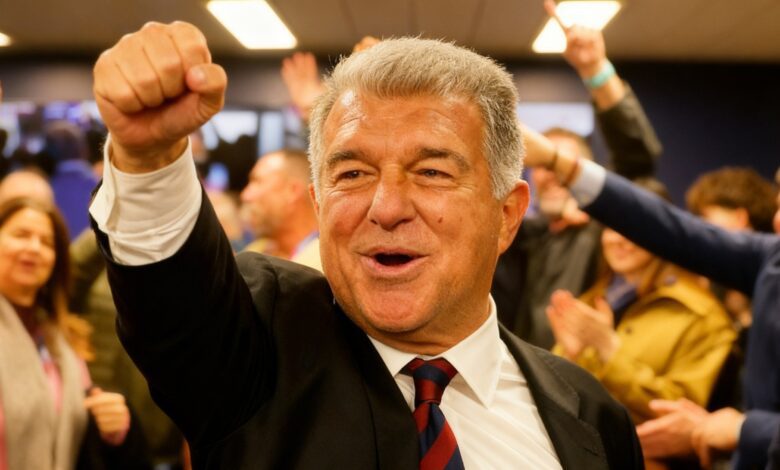
The results of the presidential election in Barcelona came as a real shock to those expecting a close race. Laporta confidently secured his position as club president, leaving Font without the slightest chance. Even during the signature collection stage, it was clear that Laporta had a huge lead, and Font’s attempts to catch up looked doomed. Not even the combined efforts of all the candidates could shift the balance of power. The decisive factors were not only the candidates’ names but also strategic decisions that took many by surprise.
From the very start of the campaign, Laporta focused on the support of Hansi Flick. The coach’s presence at public events and active involvement in club life strengthened the current president’s standing. For fans, Flick became a symbol of stability and new victories, and his alliance with Laporta was seen as a guarantee of success. Font could not offer anything comparable, despite attempts to grab attention with bold statements and promises.
Font’s mistakes
One of Font’s main mistakes was his decision to part ways with Deco. This move puzzled many, as the partnership between Deco and Flick was key to the smooth operation of the club’s sporting division. Uncertainty around the future coach only increased concern among Font’s supporters. The alternative team he proposed—Planchart, Kos, and Albert Puig—did not inspire confidence in most people. In the previous election, Font relied on Xavi and Jordi Cruyff, which seemed much more convincing. This time, his team failed to offer anything that could seriously compete with the current management.
Font’s attempts to secure Lionel Messi’s support also proved unsuccessful. Contacts with the Argentine’s circle remained nothing more than rumors, and Messi himself chose not to get involved in the campaign. Against this backdrop, a photograph of Lamine Yamal with Laporta, published on the eve of the vote, dealt a real blow to the opposition. The young player, a fan favorite, effectively signaled his loyalty to the current president.
The Xavi Factor
Xavi Hernández, who supported Font, tried to influence the outcome of the elections by sharply criticizing Laporta and his circle. He blamed the president for Messi’s departure, but these claims were quickly refuted by other influential figures in the football world. Even the support of Mateu Alemany did not help shift public opinion. Laporta’s response was brief but persuasive: the team’s results under Flick speak for themselves. In the end, the Xavi factor was not decisive, and opponents’ attempts to use his name failed to produce the expected effect.
During his campaign, Laporta focused on three main areas: the achievements of the first team, progress on building the new Spotify Camp Nou stadium, and restoring the club’s financial stability. He steered clear of controversial issues, highlighting accomplishments and future prospects. His charisma and ability to engage with the audience allowed him to strengthen his position even during the most tense moments of the campaign.
Last attempts and failures
Font did not give up until the end. He tried to use lawsuits against Laporta, accusing him of financial misconduct, but the court dismissed these arguments. Font also criticized Alejandro Echevarría, claiming he had too much influence over the club, yet these accusations did not gain any support. In a desperate move to attract attention, Font brought up the possibility of Erling Haaland joining the club, but the player’s representatives quickly denied any contact. Even after clarifying that the supposed talks were with Manchester City, the situation remained unchanged— the club chose not to comment on the rumors, and the initiative quickly faded.
As a result, all of Font’s efforts proved futile. Laporta not only retained his position but also strengthened his influence, relying on the support of key figures and a well-chosen strategy. His victory was the result of consistent work and the ability to leverage the club’s strengths at critical moments.
Joan Laporta is a figure who defines Barcelona’s modern history. His return as president came during a period of change and renewal, at a time when the club faced serious challenges. With the support of experts such as Hansi Flick and Deco, as well as trust in young players, Laporta managed not only to stabilize the situation but also to restore fans’ faith in the team’s future. His leadership style combines charisma, pragmatism, and the ability to make decisions under difficult circumstances, making him one of the most influential executives in Spanish football.