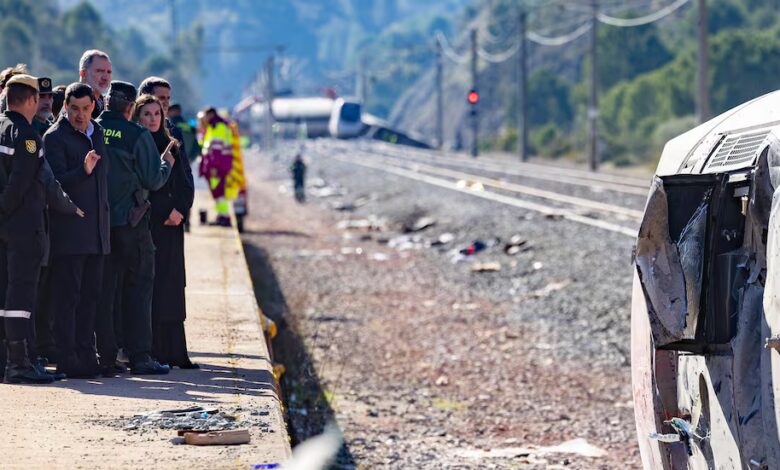
In Adamuz, the site of one of the worst train disasters in recent years, King Felipe VI and Queen Letizia visited the scene to witness the aftermath firsthand. Their visit was not merely ceremonial: the monarchs carefully surveyed the collision site, where overturned carriages still lay amid scattered suitcases and clothes belonging to the victims. The atmosphere was tense, yet charged with a sense of unity and mutual support.
Accompanied by Deputy Prime Minister María Jesús Montero, the royal couple spoke with those who had rushed to help in the immediate aftermath. Among them were professional rescuers, as well as ordinary residents of Adamuz who did not stand aside. The monarchs paid special attention to a local teenager named Julio, just 16 years old. Along with a friend, he was among the first on the scene and helped pull injured passengers from the wreckage before emergency services arrived.
Heroes Among Us
Eyewitness accounts were especially poignant. Julio recounted that he was returning from fishing when he saw the aftermath of the disaster. Without hesitation, he and his friend rushed to the train to help those who were trapped. According to the king, their actions exemplified true civic responsibility. Another local resident, Gonzalo Sánchez, used his quad bike to evacuate 16 people from the carriages. He spent almost the entire night at the crash site, admitting that the image of the trains turned into a ‘heap of metal’ would forever remain in his memory.
The monarchs could not hide their emotions as they listened to the stories of the rescuers. Felipe VI remarked that it is in moments like these that the true strength and maturity of society are revealed. He emphasized that the professionalism and dedication of everyone involved in the aftermath of the accident deserve the highest praise. Queen Letizia added that one must not turn away from tragedy, even as the debris is being cleared — responsibility for what happened rests with everyone.
A test for the system
After visiting the scene of the disaster in Adamuz, the royal couple traveled to Córdoba. Here, the most difficult part of their visit awaited them — meeting with the families of those whose loved ones have still not been identified. At the Poniente center, the atmosphere was heavy: relatives waited anxiously for any news about the fate of those who were on the ill-fated train and remain unaccounted for among both survivors and those hospitalized.
The monarchs’ visit to the center was brief and reserved. They did not speak with the families out of respect for their privacy, but expressed their sympathy and paid their respects, conveying words of support on behalf of the entire nation. The King acknowledged that for many, this day had come as a real shock, and assured that the country would not turn its back on those affected.
Medical workers on the front line
The final stop on the route was Reina Sofía Hospital in Córdoba, where victims of the accident continue to receive treatment. Here, the King and Queen spoke with doctors and hospital staff who, from the very first moments after the disaster, worked tirelessly. Felipe VI specifically praised the speed and efficiency of the medical response, which helped prevent even greater loss of life.
The monarch emphasized that the professionalism and dedication shown by medical staff, rescue workers, firefighters, and everyone involved in managing the aftermath became a true example for the entire country. He noted, “It could have been much worse,” and thanked each person who stepped up in this difficult moment.
Spain in a time of trial
The entire royal visit was marked by solidarity and support. Their presence at the scene of the tragedy and in the hospital sent an important signal to society: in moments of hardship, the country stands united, and both ordinary people and professionals join forces. Spain has once again shown that it can face the most severe challenges when lives are at stake.
In moments like these, it becomes clear: the strength of a nation lies not in words, but in actions. And it is precisely through these actions, demonstrated in Adamuz and Córdoba, that the country has revealed its true character.