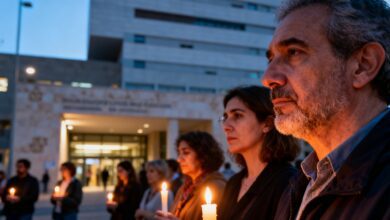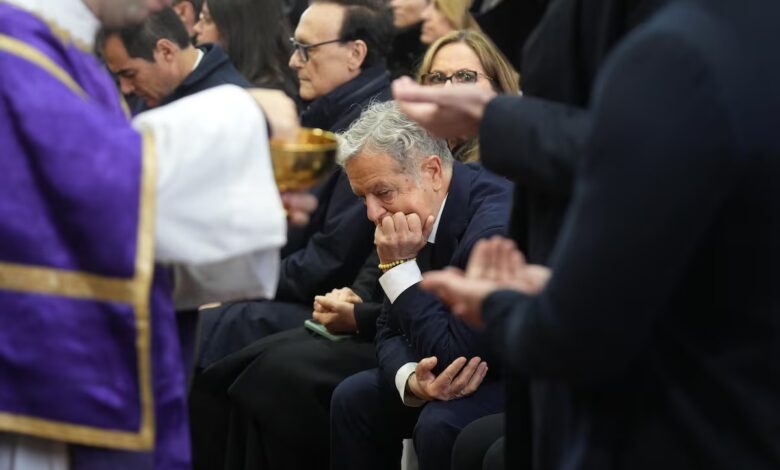
Emotions continue to run high in Adamuz after the railway tragedy. Despite the biting cold and persistent rain, around six hundred people gathered in the municipal pavilion to bid farewell to the victims of the horrific disaster. The hall, where just a week ago rescuers were saving the injured, was now engulfed in silence, broken only by the sound of bells and the scent of incense. Everyone was there: from ordinary residents to officials, rescuers, police, and relatives of the victims. Each brought their own pain and hoped to hear words of comfort.
Among those gathered were people unable to enter, standing in the rain and listening to the service through open doors. “Our city has never seen such horror,” admitted one local, unable to hold back tears. In the crowd, there were embraces, tears, and even faint smiles—some reunited here with those they met during the darkest hours. On this day in Adamuz, no one felt like a stranger: everyone was part of one big family, shaken by tragedy.
Heroes and acknowledgments
One story that drew special attention was that of a young resident of Adamuz who rescued a severely injured passenger. He was called a hero, but he declined the title, saying he simply wanted to help. The family of the rescued man came to thank him in person, overcome with tears. “He pulled my nephew out of the carriage when everything around was chaos,” said the victim’s aunt, noting that the young man is still in intensive care but is recovering.
The hall echoed with words of gratitude for everyone who stepped forward on that fateful night. Local residents recalled how the entire town rushed to help without waiting for instructions. “We are proud of what we did,” they told each other, as if trying to convince themselves that even in this tragedy, there was still room for human kindness.
Conflict and emotions
But the gathering was not without tense moments. Before the service began, the Bishop of Córdoba (Jesús Fernández) publicly expressed regret that priests were not allowed at the scene of the disaster immediately after the accident. According to him, there was utter confusion at the time, and neither the authorities nor the church were prepared for such a trial. This statement triggered a mixed reaction among those present, as many had hoped for greater transparency and support from officials.
The pastor of the local church reminded those gathered of the importance of compassion and mutual aid, comparing the incident to the parable of the Good Samaritan. His words resonated with many, but could not fully dispel the tension lingering in the air. That day in Adamuz, not only grief and sorrow came together, but also questions that still lack answers.
Authority and tears
In the front rows sat high-ranking officials: the president of the Andalusian Parliament, ministers of the regional government, the mayor of Córdoba, and the heads of neighboring municipalities. Their presence underscored the magnitude of the tragedy, but not everyone found the words to express their sympathy. Some were speaking in public for the first time since the catastrophe, sharing personal stories and recounting meetings with the families of the victims and the rescuers.
The most emotional speech came from the head of the province, who admitted he saw firefighters returning from the accident site unable to hold back tears. He noted that the efforts of emergency services were invaluable, and the city’s residents showed incredible unity and selflessness. These words sparked a new wave of applause and tears among those gathered.
Memory and hope
The service ended with the sound of bells and prayers for the victims and those affected. The bishop reminded everyone that all of Andalusia is in mourning, but that love and support can overcome any barrier. He urged people not to lose hope and to remember those who are gone as destiny’s greatest gift.
On this day in Adamuz, no one remained indifferent. Each person took with them a piece of someone else’s sorrow and a hope that such a tragedy would never happen again. Still, questions remain about the causes of the disaster and the authorities’ response, while the city continues to wait for change.