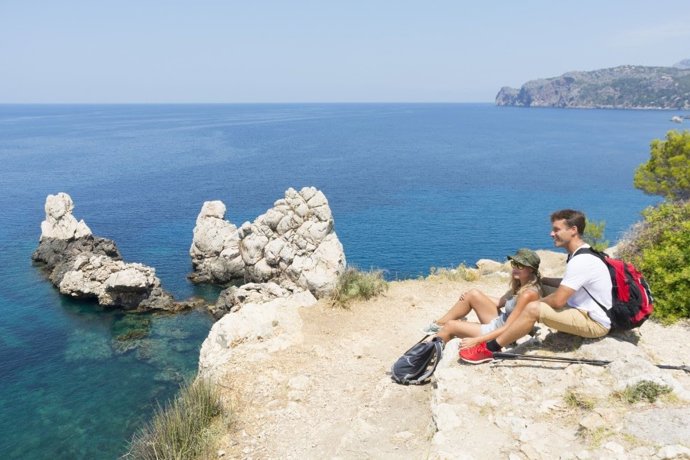
The Balearic archipelago, famous for its azure waters and vibrant nightlife, also holds another, less obvious side. It is a world for those who prefer leisurely walks under the Mediterranean sun, discovering hidden coves, and exploring a rich cultural heritage. A network of hiking trails crisscrosses the islands, offering the perfect opportunity to immerse oneself in local nature and history, combining physical activity with tranquility and new discoveries. This is a journey where every step reveals picturesque landscapes, charming villages nestled among the rocks, and the endless blue sea.
Mallorca, the largest island in the archipelago, is a true mosaic of mountain ranges, centuries-old olive groves, and picturesque coastlines. Its essence is best discovered through an extensive network of marked trails. The jewel of the collection is the GR-221 route, known as the ‘Dry Stone Route.’ It traverses the Serra de Tramuntana mountain range, a UNESCO World Heritage Site, guiding travelers through traditional villages and oak forests from Andratx to Pollença. Historical heritage plays a significant role here: in the very heart of Mallorca, old buildings are being restored and converted into hostels for visitors. Notably, three projects are underway in the Tramuntana mountains, funded by the Sustainable Tourism Tax, aiming to refurbish former agricultural buildings into accommodation for travelers. The first completed site is the Ses Porqueres building on the Galatzó public estate, which has already opened its doors as a refuge for hikers. Hiking routes in the Mondragó Natural Park are also worth exploring—an ideal spot to discover local biodiversity—as well as the new East Mallorca trail, which will stretch more than 100 kilometers and is set to open by the end of this year.
Menorca offers trails for all tastes and skill levels, but they all share one thing in common: breathtaking views. One of the most popular routes is the Camí de Cavalls, an ancient horse trail that circles the entire island. However, there are lesser-known alternatives for those seeking authentic experiences. The dramatic Fontana trail, with its towering cliffs, or routes through the S’Albufera des Grau Natural Park, lush with Mediterranean vegetation, are among the most remarkable corners of the island. In 2023, Menorca’s Talayotic Culture was recognized as a UNESCO World Heritage Site, making the island a special destination for cultural tourism. The network of routes passes through prehistoric sites, rural roads, and unexplored landscapes, creating a perfect balance between nature and archaeology.
Far from the buzz of Ibiza’s famous nightlife, the northern part of the island offers a network of Short Routes (PR) that lead into the countryside, unveiling sea views and inland landscapes. Every year, these trails are increasingly well-marked, allowing you to discover a different side of Ibiza—natural, tranquil, and rich in tradition—at your own pace and in an eco-friendly way. Following coastal paths or roads that cross dense forests and picturesque valleys, you can explore the island’s most hidden corners. Ancient fortifications and watchtowers on the highest points, along with hidden caves and natural springs, offer pleasant surprises along the way.
Formentera, despite its modest size, boasts more than 30 “green routes” designed to help visitors disconnect from the daily hustle and immerse themselves in the island’s signature tranquility. Dunes, beaches, salt marshes, and rocky cliffs offer reasons to pause and fully appreciate the scenic beauty along routes like La Mola or in the Ses Salines Natural Park. The island’s trails also pass by old windmills, defensive towers, and sea caves, connecting Formentera’s history with its rich heritage of endemic plants and migratory birds.