The opening of the large-scale exhibition Queen Elizabeth II: Her Life in Style at Buckingham Palace has become one of the most prominent events of the year for the British monarchy. The exhibition, dedicated to the centenary of the queen’s birth, showcases not only the richness of her wardrobe but also the influence Queen Elizabeth II’s style has had on perceptions of royal fashion in the 20th and 21st centuries. In the wake of the monarch’s death in 2022 and the series of crises faced by the dynasty, the exhibition serves as an attempt to rethink the role of appearance in reinforcing the authority of the Crown.
Organized by the Royal Collection Trust, the King’s Gallery displays 300 items of clothing and accessories—a record for events of this kind. The exhibits range from dresses to hats, scarves, handbags, shoes, umbrellas, and even binoculars, all selected from a collection of nearly 4,000 items. Special attention is given to headwear, which, according to curator Caroline de Guitaut, reflects the bolder aspects of the queen’s taste. Through careful choices of detail and color, Elizabeth II achieved widespread recognition without straying from tradition.
The symbolism of color and silhouette
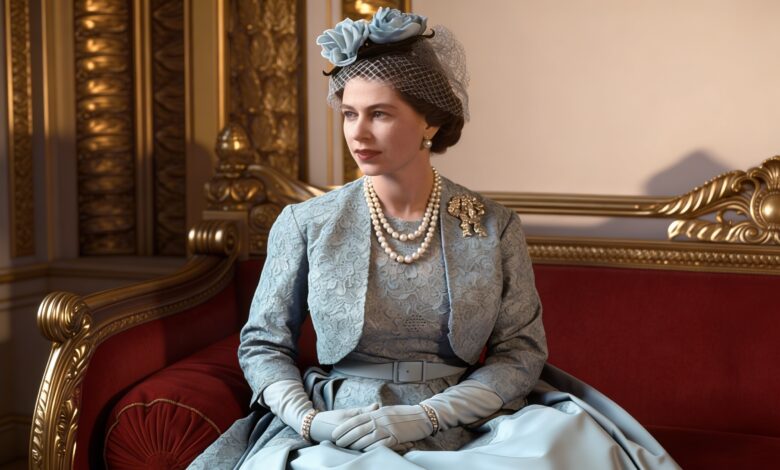
The Queen deliberately used bright colors and recognizable silhouettes to stand out in public. Her approach to choosing outfits became a kind of code, allowing her to be noticeable even in the most formal settings. According to russpain.com, this very strategy formed the basis of the modern idea that a monarch can use fashion to convey messages to society. A striking example is the famous blue coat with yellow flowers on the hat, chosen for the opening of Parliament after the Brexit referendum—a color combination that unmistakably echoed the flag of the European Union.
The exhibition covers all stages of Elizabeth II’s life: from childhood dresses made in Paris to outfits for official occasions and everyday looks for her Balmoral residence. Special attention is given to dresses for ceremonial events, including her wedding and coronation gowns, both created by Norman Hartnell in ivory satin. These pieces illustrate how tastes and expectations for the monarch’s appearance have evolved over the decades.
Masters of royal style
The wardrobe of Elizabeth II was shaped by three key designers: Norman Hartnell, Hardy Amies, and Angela Kelly. Each contributed to creating her distinctive image, which became a symbol of stability and continuity. Kelly, who started as a wardrobe assistant, eventually became the Queen’s trusted aide and the author of the famous ‘coat and dress in one color’ formula that, since the 1990s, defined her signature style. This approach combined formality with individuality and made it easier to choose outfits for numerous official engagements.
Among the exhibits are tweed suits and tartan skirts worn for walks across the Scottish countryside, as well as green rain capes that became an essential part of her Balmoral look. Special attention is given to the intricately detailed embroidery on her wedding and coronation dresses, which are still considered the benchmarks of royal fashion. These items not only capture the spirit of their time but also inspire future generations, including Kate Middleton, who is set to continue these traditions.
Influence on the future
The exhibition goes beyond simply showcasing clothing — it raises the question of how symbolism and thoughtful wardrobe choices can shape public perceptions of the monarchy. For Kate Middleton, who is preparing for her future role as queen, the example set by Elizabeth II offers valuable guidance: developing her own ‘work uniform’ with room for variation and an emphasis on significant details. This approach not only reinforces recognizability, but also sets new standards for public figures.
Interest in royal traditions and the personal stories of dynasty members remains high. Recently, Charlotte Casiraghi’s candid revelations about family changes and her personal views attracted attention and were explored in detail in the article on how tragedy shaped Charlotte Casiraghi’s worldview. Such publications highlight the importance of personal lives and appearances in shaping public opinion about the monarchy.
The exhibition Queen Elizabeth II: Her Life in Style is open to visitors until October 18. Tickets are priced at €22 for adults, €14 for youth, and €11 for children. Private guided tours with wine tasting are available, as well as a special lecture by Karolin de Gitto on the queen’s style, scheduled for April 28. Organizers recommend purchasing tickets in advance due to high expected demand.
Elizabeth II, who ruled the United Kingdom for more than seven decades, became one of the most recognizable figures in world history. Her approach to clothing and accessories set a new standard for monarchs, making appearance not just a reflection of personal taste but also a tool for communicating with society. Through a carefully considered strategy and attention to detail, the Queen crafted an image that remains relevant even after her passing, continuing to influence the style and traditions of the royal family.