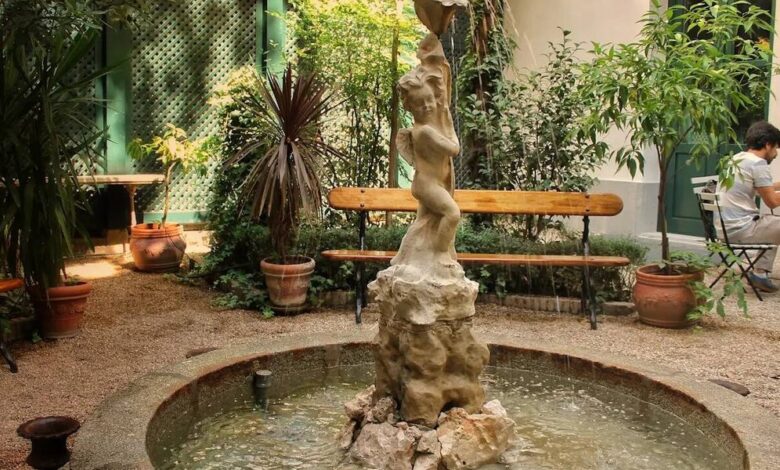
In the very heart of the Spanish capital, amid the bustling streets of Justicia, lies a place where time seems to slow down. Behind the austere façade of an 18th-century palace, now home to the Museo del Romanticismo, hides something unexpected—a secluded inner garden. This true green enclave offers a respite from the city’s constant movement and noise. First-time visitors here are genuinely amazed to discover this peaceful oasis, where art and history blend seamlessly with the soothing power of nature.
This spot is the perfect stop for those looking to combine cultural enrichment with the chance to relax outdoors, all without leaving the city center. Here, in the shade of the trees, you can briefly forget that the vibrant life of the metropolis is just steps away and immerse yourself in the atmosphere of a completely different era.
Behind the walls of the old palace
The garden, known as the Magnolia Garden, was designed according to the traditions of 18th-century French landscape art. Its layout is meticulously organized: four paths radiate from a central point marked by a graceful round fountain, dividing the space into flower beds of various sizes. Strolling along the pathways, visitors can enjoy not only lush greenery but also sculptures and wooden benches nestled among the plants, inviting guests to sit and savor the moment. Here, surrounded by foliage and the gentle murmur of water, is a café that has become the soul of this hidden sanctuary.
The museum itself, which first opened its doors to the public back in 1924 under the name “The Romantic Museum,” houses an impressive collection. With over 18,000 exhibits, the collection allows for an in-depth exploration of 19th-century life, customs, and artistic movements. It’s a unique journey into the past, recreating the spirit of Romanticism in all its forms.
Immersion in the Romantic Era
The museum’s exhibition invites visitors to see the world through the eyes of 19th-century people. The halls feature portraits by renowned masters such as Goya, Esquivel, and Madrazo. In addition to paintings, the collection includes furniture, porcelain, jewelry, and other artifacts that provide a comprehensive view of the era’s aesthetics. One of the most notable works reflecting the critical and melancholic spirit of the period is Leonardo Alenza’s painting “Satires on Romantic Suicide.” The museum’s route is thoughtfully designed so that guests can feel like participants in historical events. It leads through meticulously recreated interiors of drawing rooms, studies, and bedrooms of high society, once the setting for literary evenings, balls, and intimate conversations typical of Romantic culture. All this makes a visit to the museum a truly enriching cultural experience for those seeking a deep immersion in history.
More Than Just a Museum
A special charm of this place comes from its ‘Garden Café.’ An important detail: you can enter not only after visiting the exhibition, but also simply from the street for a cup of coffee or a dessert. The atmosphere is relaxed and informal, and in autumn, when the summer heat subsides but the days are still warm, it becomes truly magical. It is worth noting that currently the cafeteria and its adjacent shop are temporarily closed due to renovation work. However, according to the administration, they are expected to reopen this autumn if all administrative procedures go according to plan.
Life at the museum is not limited to its permanent exhibition. Regular temporary exhibits are held here, such as the still ongoing ‘Cosas que se consideraban trivialidades,’ as well as concerts, workshops, and family events. This dynamic program offers a new perspective on the Romantic era, making it accessible and engaging for people in the 21st century.
To reach this hidden gem in the Malasaña district, head to 13 San Mateo Street. Public transport is very convenient: nearby are the Tribunal metro station (lines 1, 10) and Alonso Martínez (lines 4, 5, 10), as well as numerous bus routes, including 3, 37, 40, and 149. During the summer season, from May to October, the museum is open Tuesday to Saturday from 9:30 a.m. to 8:30 p.m., and on Sundays and public holidays from 10:00 a.m. to 3:00 p.m. Ending a cultural outing with a rest in the garden is one of those plans that truly reveal Madrid’s diversity and charm.