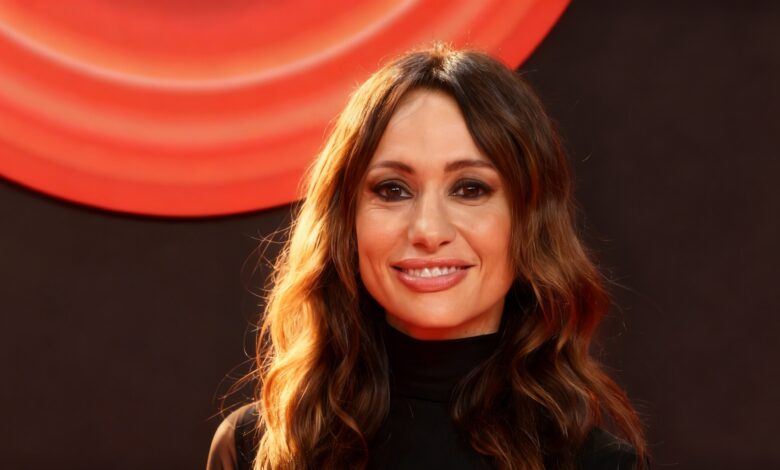
Natalia Verbeke has reached a stage in her life where both her personal and professional priorities have shifted toward her family. After the birth of her daughter Chiara, who recently turned nine, the actress has largely withdrawn from public events to focus on raising her child. According to Divinity, caring for her daughter became her main motivator and a source of new experiences. In recent years, Natalia rarely attends social events, explaining that her presence is required by Chiara’s side to guide her development in a rapidly changing world.
Her daughter’s birthday celebration coincided with International Women’s Day, giving the family occasion special significance. Natalia notes that such dates provide an opportunity to reflect on the role of women and mothers in society, as well as how much work remains to achieve equality. She stresses that, despite progress, many issues remain unresolved and the fight for women’s rights continues. Family traditions and shared celebrations help maintain a balance between personal life and societal responsibilities.
Rethinking motherhood
As her daughter grows older, Natalia faces new challenges. Chiara’s transition into preadolescence brings not only joy, but also new anxieties. According to the actress, fears related to motherhood do not fade with time—they simply take on new forms. She admits that constant worry for one’s child becomes a part of every mother’s life. Natalia observed this experience in her own mother as well, which, she says, shows how universal these feelings are among parents.
The actress does not hide that she considers herself a demanding mother, but she does not idealize her own parenting methods. She is candid about not always being confident in her decisions, yet tries to do everything possible for her daughter’s well-being. Natalia emphasizes that today’s parents face issues that didn’t exist in their own childhoods, and this demands constant adaptation to new realities.
Modern challenges for parents
One of Natalia’s main concerns remains children’s safety in the digital age. She notes that the rapid advancement of technology and the rise of mobile devices have changed the way children communicate and spend their free time. In her view, schools should rethink their approach to education to prepare students for new risks, including bullying. The actress admits that she herself sometimes makes mistakes, for instance by letting her daughter use a phone, even though she is aware of the possible consequences.
Comparing her childhood with today’s realities, Natalia recalls that in the past, children spent more time outdoors, played, and developed their imagination without constant access to gadgets. Now, parents have to find a balance between control and trust in order not to miss important moments in their child’s development. According to russpain.com, such reflections are becoming increasingly relevant for Spanish families facing new social and technological challenges.
Family values and support
Questions of upbringing and children’s emotional well-being are now discussed not only within families but also in society. Natalia Verbeke emphasizes that support from loved ones and open dialogue help to cope with anxiety and find solutions in difficult situations. She believes it is important not only to protect the child from external threats but also to teach them independence and responsibility. In this context, the experiences of other well-known families are also of interest—for example, there was recent discussion of Miren Ibarguren’s story, who faced personal loss while expecting her second child, as detailed in the article on the difficulties of well-known Spanish mothers.
Natalia Verbeke is one of the most recognizable actresses in Spanish cinema, with a career that began in the late 1990s. Over the years, she has appeared in a range of popular films and TV series, earning acclaim from both audiences and critics. Recently, her name has become associated not only with artistic achievements but also with her active stance on family and parenting issues. Her personal experience of motherhood and openness in discussing complex topics have made Natalia a prominent figure in Spanish public life.