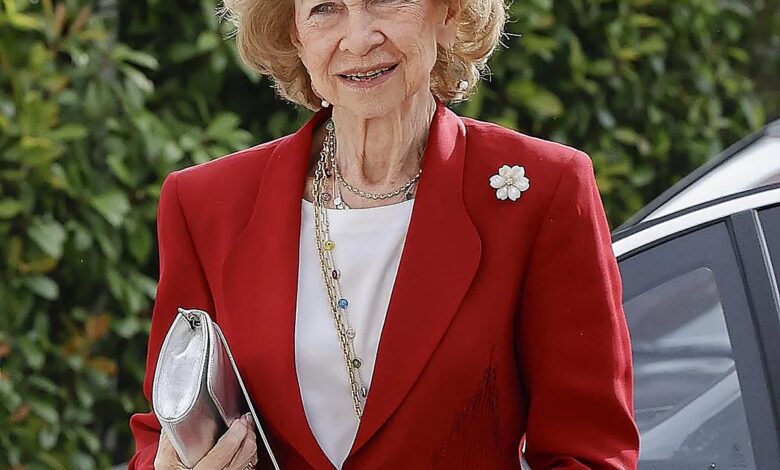
Queen Sofia’s unexpected return to public life has become a real event for Spanish society. After a series of personal losses, with the passing of two close relatives in quick succession, many expected the queen emerita to step back from the spotlight for a long time. However, recent developments prove otherwise: Sofia is not only undaunted but also displays remarkable resilience, once again taking on public responsibilities.
The loss of her sister Irene, with whom Sofia shared decades of friendship and mutual support, was a profound ordeal. This was compounded by the death of her cousin Tatiana Radziwill, deepening her sense of grief. For several weeks, the queen all but disappeared from public view, and her granddaughter Sofia took her place at some events, fueling rumors of a possible prolonged family crisis.
Family support
Despite the bleak forecasts, those close to the queen insist: Sofia has not been left alone nor overcome by depression. Family and friends have surrounded her with care, helping her get through this difficult period. According to her circle, it is thanks to this support that the queen has regained her strength and rediscovered a zest for life. Her return to public affairs has become a symbol of overcoming personal tragedy and a source of inspiration for many.
Notably, even during her enforced pause, Sofía maintained her connection to her beloved projects. Her granddaughter, who had taken on some of her responsibilities, visited a guide dog training center, met newborn puppies, and even named one of them. This gesture became a bridge between generations and a reminder that family traditions endure.
Visit to Basauri
The highlight of the queen’s return was her trip to Basauri, where she visited the Spanish Federation of Food Banks. This visit was no coincidence: Sofía has long been known for her dedication to charitable initiatives, and this particular organization holds a special place in her heart. As honorary president of the foundation that bears her name, she not only supports but also actively participates in the development of projects across the country.
In Basauri, the queen was greeted by a busy schedule and a meeting with volunteers. She personally familiarized herself with the organization’s operations, spoke with staff, and reviewed the new solar panels installed with funds from her foundation. These innovations will allow the food bank to cut energy expenses and allocate more resources to those in need. This approach highlights Sofía’s hands-on style in charity—she does not limit herself to symbolic gestures, but strives for real change.
Plans and Expectations
Returning to an active life doesn’t stop at just one appearance. In the near future, the Queen has several significant events on her agenda. Among them is the conferral of an honorary doctorate at the University of Las Palmas de Gran Canaria, a trip that had to be postponed due to her sister’s deteriorating health. In addition, Sofía plans to attend her friend Paloma O’Shea’s anniversary and a gala evening honoring conductor Zubin Mehta in Madrid.
It is also possible that the Queen will travel to Athens to pay tribute to her sister on the fortieth day after her passing. These plans show that Sofía has no intention of withdrawing and is ready to once again be a prominent figure in the country’s public life. Her example inspires many, and her return to her usual pace is seen as a symbol of hope and renewal.
Personal and Public
Sofía does not hide that public engagements help her cope with personal grief. Those close to her note that it is precisely the sense of purpose and the affection of her compatriots that give her strength. Although the Queen will remain in mourning for some time, she does not intend to refrain from meetings, trips, or attending major events.
In society, Sofia’s return has sparked a wave of support and approval. Many point out that her resilience and willingness to help others even through difficult times deserve respect. At a time when many public figures prefer solitude after personal tragedies, the queen sets an example by choosing a different path—a path of service and openness.
Queen Sofia is one of the most recognizable and respected figures in modern Spain. Born into the Greek royal family, she became the wife of King Juan Carlos I and played a key role in the country’s life for many years. She is known for her charitable work, support for cultural and social initiatives, as well as her personal modesty and dedication to her family. Even after stepping down from the throne, Sofia remains active in public life, continuing to be a symbol of stability and humanism for millions of Spaniards.