The Easter days of 2026 became a vivid illustration of the deep divide within the Spanish royal family. Each key member chose their own path, which not only heightened the sense of distance but also once again cast doubt on the unity of the monarchy. While King Felipe VI and Letizia spent the holidays out of the spotlight and Sofía actively took part in religious ceremonies, Juan Carlos I preferred to return to Spain on his own terms, choosing Seville and the Maestranza bullring for his visit.
Such behavior did not go unnoticed. The absence of joint photographs, separate itineraries, and a complete lack of shared narrative all confirm that harmony within the family has long been absent. According to RUSSPAIN.COM, this apparent disunity could have long-term consequences for the monarchy’s image, especially amid growing public demand for transparency and unity.
Different paths
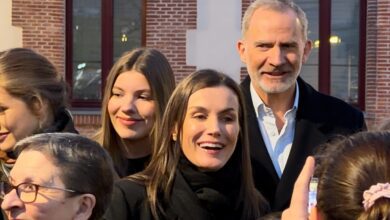
King Felipe VI and Letizia adopted an extremely discreet strategy: their appearance at the Procession of Silence in Madrid went almost unnoticed by the general public. Princess Leonor and Infanta Sofía accompanied their parents, but even this family outing was organized without any fanfare. This approach stands in stark contrast to previous years, when the royal family made efforts to display unity.
Meanwhile, Queen Mother Sofia was openly active. She visited several cities—from Palma to Murcia—accompanied by Infantas Elena and Cristina. These appearances brought back to the public the familiar image of the monarchy, where tradition and public duties go hand in hand. Yet even here, hints of division persisted: each part of the family acted separately, not crossing paths in public.
The return of Juan Carlos I
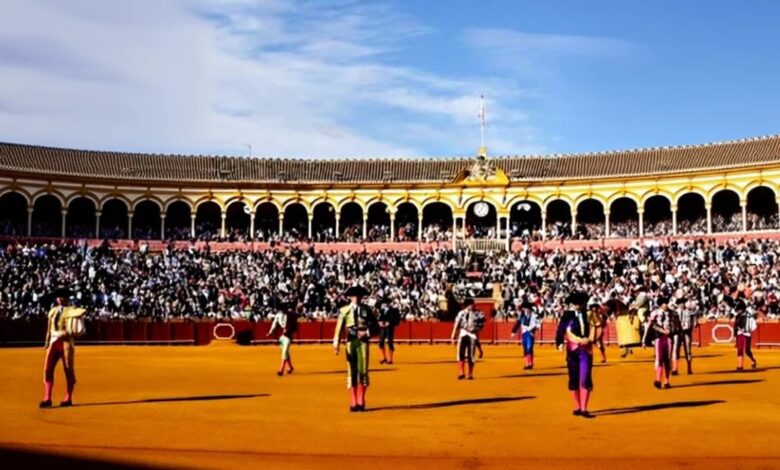
Juan Carlos I drew particular attention, returning to the spotlight after his long stay in Abu Dhabi. His decision to forgo traveling to Sanxenxo due to Middle East tensions seemed reasonable, yet just a few weeks later he headed to Seville without hesitation. There, at the Maestranza arena, the former monarch found himself in his element—among bullfighting fans and old friends.
This move was seen as a show of independence and a reluctance to follow the family’s collective rules. Many observers believe Juan Carlos I deliberately chooses only those events where he can control the setting and count on support. His appearance at the bullfight featuring Marante de la Puebla was not just a personal gesture, but also a symbol of his separation from other family members.
Personal over collective
The contrast between official caution and Juan Carlos I’s personal preferences became especially evident against the backdrop of the canceled trip to Galicia. At the time, the reason cited was solidarity with the Emirates and instability in the Persian Gulf region. However, his arrival in Seville, despite the ongoing conflict, showed that personal comfort and a familiar environment mean more to the former king than formal explanations.
Such behavior undermines trust in public statements and intensifies the sense that decisions are made out of personal interest rather than any unified monarchical logic. Public skepticism is growing: if even on symbolic days like Easter the family cannot present a united front, how stable is the structure of the Spanish monarchy itself?
Bullfighting and symbols
The choice of event for his return was no accident. The bullfight featuring Morante de la Puebla—a figure as controversial as Juan Carlos I himself—became a stage for renewed debate. After his high-profile “retirement” in 2025, the matador returned to the ring, sparking a wave of emotions among fans and criticism from parts of the public. Many saw in this not just a commercial calculation, but also an attempt to reclaim his status as the main protagonist of the Spanish arena.
The presence of Juan Carlos I at this event heightened the impact: two ‘uncrowned kings’ found themselves in the spotlight, each bringing their own story of return. For the public, it was more than just a spectacle—it became a kind of manifesto, a reminder that in Spain, tradition and personal ambition often go hand in hand, regardless of official statements or external circumstances.
Juan Carlos I is a figure who has repeatedly symbolized change and contradiction in modern Spain. His returns always spark heated debate, and decisions surrounding him are rarely straightforward. In 2023, his appearances at public events were again met with controversy and criticism, but he consistently chooses only those stages where he can expect support. This approach allows him to retain influence despite his formal withdrawal from affairs and to remain the focus of public attention even in the most challenging times.