A new debate has erupted in Spain over the limits of freedom of expression and the admissibility of censorship at cultural events. In Collado Villalba, a small town in the Madrid region, an official’s attempt to interrupt a theatrical performance directly on stage sparked widespread discussion and protest. The incident drew significant public attention as it raised questions about respect for audiences, political responsibility, and attitudes toward feminist issues in contemporary Spain.
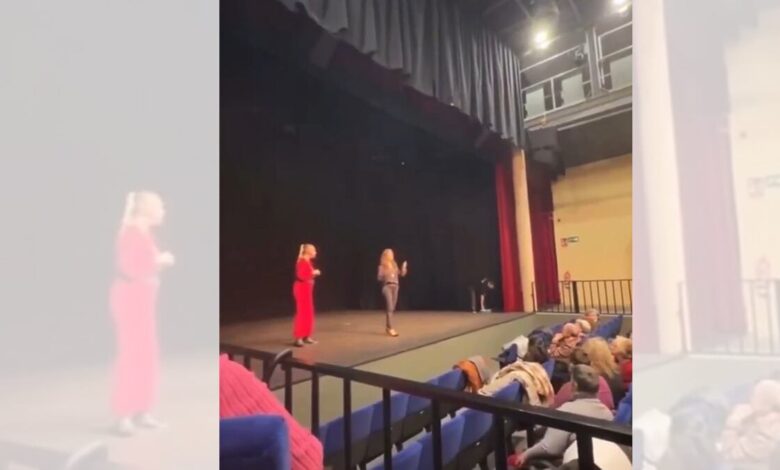
That evening, the local theater hosted the solo play Ser Mujer, organized by the municipality for International Women’s Day. According to El Pais, during the performance, some members of the audience left the hall, after which Noelia R. Díaz Vaca, the city council’s official in charge of women’s affairs, took to the stage. She attempted to stop the play, claiming that what was happening on stage was disrespectful. However, the remaining audience did not support her decision, and after a brief exchange, the performance continued.
Public reaction
The incident quickly sparked discussions on social media and drew a sharp reaction from opposition parties. A video of the attempt to interrupt the play spread online, causing outrage among users and politicians alike. Representatives of left-wing parties, including the PSOE, demanded Díaz Vaca’s resignation, accusing her of attempting censorship and violating democratic principles. Many commentators stressed that such actions are unacceptable in modern society, where freedom of speech and expression is regarded as a fundamental value.
The very next morning, Díaz Vaca issued a public apology for her actions. She admitted her response was a mistake and emphasized the importance of respecting freedom of expression. However, she also stated that she believes it is vital to maintain a balance between freedom of speech and respect for human dignity, especially in matters concerning women and their rights.
Details of the performance
The play Ser Mujer, according to the Xana Teatre troupe, belongs to the genre of socially engaged theater. At the center of the plot is the story of a woman named Pilar, who reflects on marriage, motherhood, and sexuality, using humor to discuss feminist issues. While some audience members found the content provocative, the majority supported continuing the show, coming as a surprise twist for the organizers and local authorities.
As reported by El Pais, the video recording of the incident does not fully clarify what exactly caused the official’s discontent and that of part of the audience. However, the very fact that an attempt was made to intervene in the course of the cultural event has sparked a broad discussion about the acceptable limits of government involvement in art and public life.
Consequences and context
The incident in Collado Villalba was not the first time authorities have tried to intervene in cultural events related to feminist issues. In recent years, Spain has repeatedly seen disputes over plays, exhibitions, and public actions dedicated to women’s rights and equality. Such incidents often lead to public debates about the role of art in shaping public opinion and where the line lies between creative freedom and respect for the feelings of certain groups.
Looking back at recent events, conflicts between organizers of cultural events and authorities have periodically arisen in different regions of the country. For example, last year in Valencia, there was a heated discussion about the cancellation of an exhibition devoted to the women’s movement, and in Barcelona, a controversy flared up around a street installation on the topic of gender equality. These episodes show that issues of freedom of expression and the acceptability of censorship remain relevant for Spanish society and demand ongoing discussion.