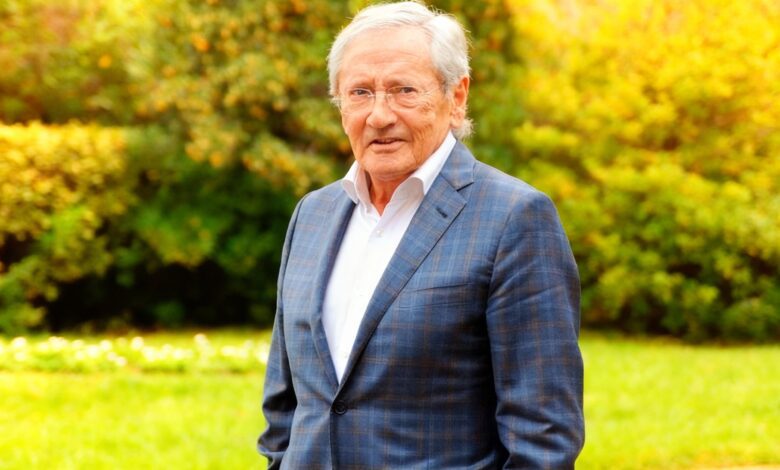
Fernando Onega’s decision to leave his personal library to his daughters became one of the most discussed aspects of his legacy. After the journalist’s death, public attention once again focused on how exactly this process was organized and why it held special significance for the family. According to Divinity, even before his second marriage, Onega determined the fate of his book collection, which he had assembled over decades of work in the media.
The Onega family has always maintained discretion in public, but at the journalist’s farewell in Madrid, not only officials and colleagues attended but also all his close relatives. In this story, a special role belongs to his two elder daughters, Cristina and Sonsoles, who, like their father, devoted their lives to journalism. Their younger brother, born from the second marriage, rarely appears in public, which only fuels curiosity about the fate of the family’s keepsakes.
Transferring the library was more than a formal gesture; it became a symbol of continuity and respect for intellectual work. As Divinity reports, the collection was divided after his divorce from his first wife, Marisol Salcedo. Each daughter received her share, which helped preserve a link with the past and highlighted the individuality of each heiress. This step was seen as an act of trust and recognition of their independence.
Family traditions
Sonsoles Ónega has repeatedly mentioned in interviews that her father’s library has been not only a source of knowledge but also an emotional support for her. According to her, part of the prize money from the literary award was spent on setting up her own library, which included books inherited from her family. This gesture highlights how, for her family, the cultural aspect of heritage outweighed the material one.
In a recent conversation with Mara Torres on ‘El faro,’ Sonsoles explained that creating the library took many years and considerable effort. Books she remembered from her childhood now hold a place of honor in her home. Some of them are so worn that they can no longer be read, yet their presence serves as a reminder of her family’s history and the values passed down through generations.
The family library has become not only a symbol of memory but also a tool for shaping one’s own identity. According to russpain.com, such examples of passing down intangible values are becoming increasingly rare, making Ónega’s decision particularly noteworthy against current trends.
A personal legacy
The question of how to divide family heirlooms often leads to disputes and misunderstandings. In the Ónega family, conflicts were avoided thanks to an advance agreement and respect for each person’s wishes. This experience can serve as an example for others facing the challenge of distributing inheritance among loved ones.
According to Divinity, the library’s division was received by both daughters as an act of trust and recognition of their contribution to the family legacy. Cristina and Sonsoles not only preserved the books but continue their father’s professional traditions, highlighting the importance of intangible heritage.
In discussions about family values, it’s worth recalling other stories related to the transfer of personal archives and letters. For example, recently the experience of Eric Dane, who left personal guidance to his daughters,, also sparked widespread public reaction and debate.
Public support
At the farewell to Fernando Onega at Casa de Galicia in Madrid, officials, colleagues, and friends were present, underlining the scale of his influence on Spanish journalism. Guests included such figures as Queen Letizia and Prime Minister Pedro Sánchez. Yet it was the support of his family that became the ceremony’s main focus, demonstrating that personal bonds and remembrance matter more than any official honour.
The Onega family has always tried to avoid excessive attention, but this time their public display of emotion became a natural extension of their inner unity. Supporting each other and respecting their father’s memory showed itself not only in words but also in their actions to preserve his intellectual legacy.
Fernando Ónega was one of Spain’s most renowned journalists, with a career spanning several decades. He gained acclaim as a respected political commentator and host, known for his insightful analysis and attention to detail. His contributions to Spanish media have been recognized by both colleagues and public officials. The personal library he amassed over the years has become an integral part of his family’s history and a symbol of generational continuity.