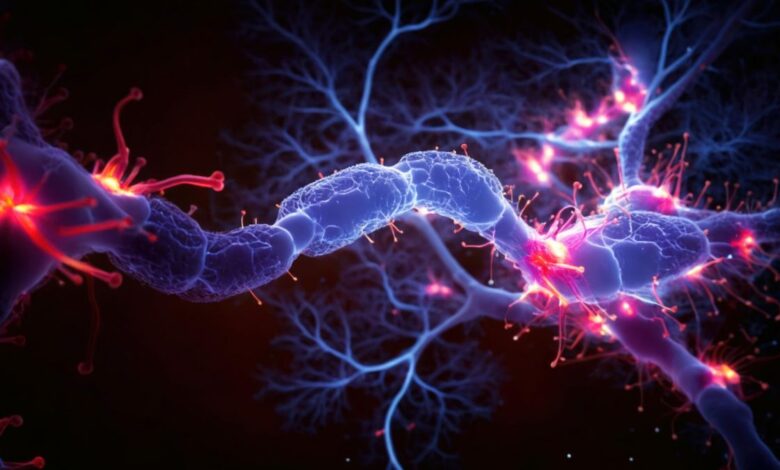
A team of researchers from Germany has discovered how an extremely rare genetic mutation leads to the rapid death of neurons in children. This finding not only sheds light on the nature of a mysterious disease but also provides a key to understanding the mechanisms underlying other severe brain disorders, such as Alzheimer’s and Parkinson’s diseases.
In the course of their experiments, scientists studied children diagnosed with Sedaghatian-type spondylometaphyseal dysplasia (SSMD). This condition is so rare that only a few dozen cases have been recorded worldwide. Children with SSMD suffer from severe developmental disorders affecting the brain and skeleton, and most patients die in infancy.
A genetic trap
The research showed that the disease is caused by mutations in the gene responsible for producing the enzyme GPX4. This enzyme acts as a kind of guardian of cell membranes, preventing their destruction from oxidative stress. Normally, GPX4 ‘slides’ along the inner surface of the membrane, neutralizing harmful compounds.
However, when the mutation is present, the enzyme loses its ability to anchor to the membrane. Scientists compared this to a surfboard without a fin: it can’t stay on the wave and loses stability. As a result, the cell membrane becomes vulnerable, triggering a process known as ferroptosis—a specific type of cell death associated with iron accumulation and lipid damage.
Cell experiments
To support their findings, the researchers used not only mice but also lab-grown human neurons derived from the skin cells of SSMD patients. In both cases, they observed the same pattern: neurons died rapidly due to uncontrolled membrane oxidation.
Notably, blocking ferroptosis with specific chemical compounds slowed down cell death. This opens up prospects for developing new treatments not only for SSMD, but also for other neurodegenerative diseases where similar mechanisms may play a key role.
Link to dementia
The authors note that until now, most dementia research has focused on protein deposits in the brain—so-called amyloid plaques. However, new evidence suggests that membrane damage and the onset of ferroptosis may be equally important factors in the progression of the disease.
In recent years, an increasing number of studies have linked ferroptosis to Alzheimer’s disease. An analysis of proteins expressed in affected neurons showed similarities to changes seen in dementia. This suggests the newly discovered mechanism could be universal to a number of brain disorders.
A rare disease
Sedaghatian spondylometaphyseal dysplasia was first described in 1980. Since then, only a few dozen confirmed cases have been reported in medical literature. The disease leads to severe developmental abnormalities of the skeleton and brain, as well as early death.
Recent genetic studies have shown that SSMD is caused by mutations in the GPX4 gene. This enzyme was long regarded as the ‘guardian’ of neurons, protecting them from destruction. A new study has, for the first time, demonstrated exactly how its defect leads to catastrophic consequences for the brain.
New horizons
The work of German scientists opens new horizons for understanding the nature of neurodegeneration. According to the head of the study, Marcus Conrad, it took almost 14 years to establish the link between the enzyme’s structure and this severe disease. The researcher emphasizes that such projects require long-term funding and collaboration among experts from different countries and fields of science.
Childhood dementia is extremely rare, but studying such cases helps researchers gain deeper insights into how and why neurons are destroyed. Genetic research has already linked more than a hundred rare diseases to early memory loss and cognitive impairment in children.
In case you didn’t know, Helmholtz Munich is one of Germany’s leading research centers specializing in molecular medicine and biology. The Institute of Metabolism and Cell Death, led by Marcus Conrad, studies the mechanisms of cell death and seeks new approaches to treating severe diseases. In recent years, the team of scientists has been actively researching the role of the enzyme GPX4 and ferroptosis processes in the development of neurodegenerative diseases, which has already led to several important discoveries.