The hybrid car market in Spain is undergoing a real revolution: new models not only save fuel but also provide access to benefits that once seemed unattainable. As gasoline prices continue to rise and environmental standards become stricter, choosing the right hybrid is no longer just a matter of taste but a strategic decision for the family budget and comfort.
In 2026, Spanish motorists faced an unexpected paradox: the most affordable hybrids often prove to be the cheapest to run. These aren’t just city compacts but also crossovers and even family minivans. It’s important to note that the trend toward mass adoption of hybrids is visible not only in Spain—sales of new cars in China, for example, are reaching record highs, with electric and hybrid vehicles becoming absolute leaders, as shown by the recent success of the Geely EX2, covered in detail in the review on the explosive growth of the Chinese car market.
Accessible solutions
The list of the best hybrids of 2026 features both tried-and-true models and newcomers that have already surprised experts. The Toyota Yaris Hybrid continues to hold its ground thanks to its combination of an affordable price (from €21,500) and modest fuel consumption—just 4.3 l/100 km. Despite its modest power, the Fiat Panda Hybrid remains one of the cheapest options (from €15,147), making it appealing for young drivers and retirees.
The MG3 Hybrid+ and Citroën C3 Hybrid show how manufacturers strive to offer more power and comfort at a reasonable price. Opel Corsa Hybrid and Renault Clio E-Tech Full Hybrid prove that even in the compact segment, it’s possible to find a balance between performance and efficiency.
Family and versatile
For those seeking versatility, the Mazda 2 Hybrid and Toyota Corolla Hybrid offer not only low fuel consumption but also a variety of body styles. The Toyota Yaris Cross Hybrid and Hyundai Kona Hybrid are the perfect choice for urban families who value capability and spaciousness. Renault Arkana E-Tech Hybrid and Kia Niro HEV are crossovers that feel equally at home in the city and on the highway.
The Honda Civic e:HEV and Honda Prelude e:HEV are for those who aren’t ready to sacrifice performance for efficiency. The Lexus UX 300h and Hyundai Staria illustrate how hybrid technology is making its way even into the premium segment and minivans.
Plug-in hybrids
Among plug-in hybrids (PHEVs), the Seat Leon e-Hybrid, Kia Niro PHEV, and Ford Kuga PHEV stand out. They deliver not only increased power but also the ability to drive dozens of kilometers purely on electric power. The Toyota C-HR PHEV and Mitsubishi Outlander PHEV are ideal for those who appreciate long journeys without frequent refueling.
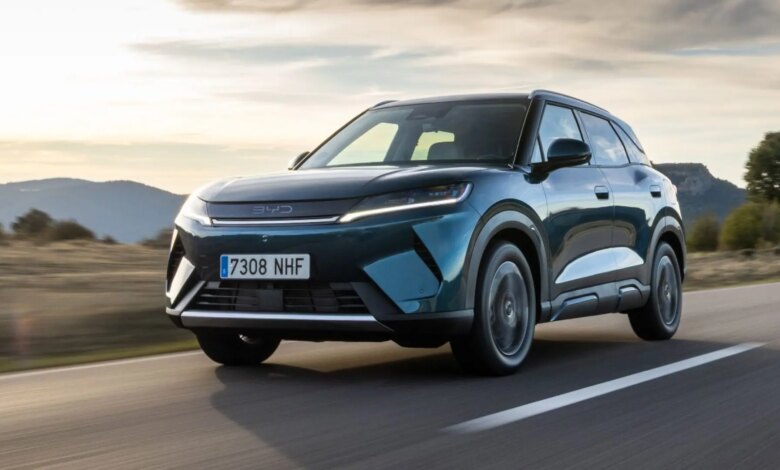
The Peugeot 308 and BYD ATTO 2 DM-i demonstrate how European and Chinese brands are competing for buyers’ attention, offering various power and range options. The Toyota Aygo X-Cross and BYD Seal 6 DM-i are newcomers that have already earned trust thanks to their price-to-feature ratio.
Urban favorites
The Peugeot 208, Fiat 500 Hybrid, and MG ZS Hybrid are ideal for city life, where compactness and efficiency are essential. The BYD Seal U DM-i and Hyundai Tucson Hybrid are for those looking for modern technology and unwilling to compromise on safety and comfort.
By 2026, hybrid cars were no longer just a compromise between price and eco-friendliness. They had become a full-fledged alternative to traditional gasoline and diesel models, with a wide range of options allowing everyone to find the ideal fit for their lifestyle.
Among the brands shaping the future of hybrid technology, Toyota holds a special place. The company has invested decades in developing hybrid systems, which has enabled it to lead this segment. Toyota models are renowned for their reliability, low fuel consumption, and an extensive selection of body styles—from compact city cars to spacious crossovers. Thanks to ongoing innovation and constant adaptation to market demands, Toyota continues to set industry standards, while its hybrids remain the benchmark for competitors.