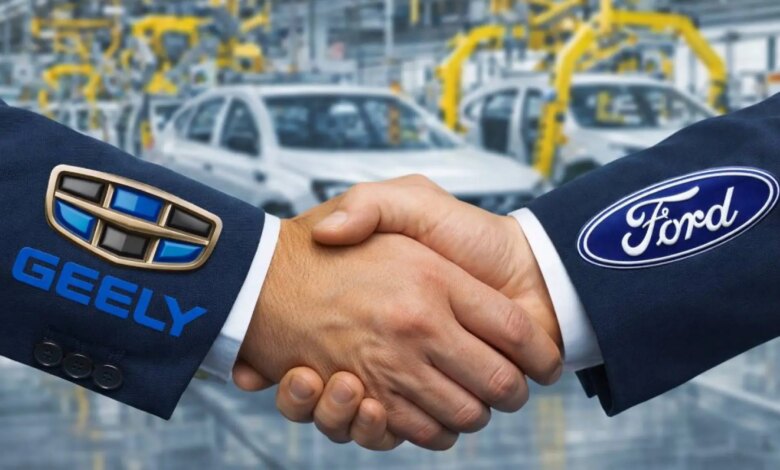
Potential collaboration between Geely and Ford could reshape the landscape of the Spanish automotive market. If the Chinese company gains access to the manufacturing facilities in Almussafes, it would allow Geely to bypass European tariffs and strengthen its position in Europe. For Ford, this step could be a lifeline for its underutilized plant and an opportunity to boost production efficiency.
Negotiations and interests
In recent months, Geely and Ford representatives have been discussing the possibility of sharing the Valencia plant. The American automaker has long been searching for new partners to offset declining production volumes and optimize costs. Geely, for its part, aims to gain a foothold in Europe not only as a seller but also as a manufacturer, which would let it avoid high import tariffs on Chinese vehicles.
Official representatives of both companies are refraining from detailed comments so far, but it is known that talks are being held at a high level. If successful, the Chinese brand will be able to build its models in Spain, while Ford can utilize idle capacities and secure additional revenue.
Benefits for both sides
For Geely, manufacturing in Spain opens up new opportunities. The company will be able to offer European customers cars at more competitive prices by bypassing tariffs and logistical costs. This is particularly important as trade barriers between China and the EU grow stricter and every chance to cut costs becomes crucial.
Ford, in turn, is facing the issue of underutilization at its Almussafes plant. Currently, the facility produces only one model—the Ford Kuga—and output is far below its design capacity. Sharing the plant with Geely will allow the American company to partially resolve the problem of idle production lines and help preserve jobs.
Context and risks
The deal between Ford and Geely could set a precedent for the entire European automotive industry. In recent years, Ford has already considered partnerships with other Chinese automakers, such as BYD and Xiaomi, as well as signed agreements with European companies Renault and Volkswagen. However, none of these collaborations involved such close integration at the level of joint production in Spain.
At the same time, such cooperation also carries certain risks. European trade unions may oppose the arrival of a Chinese manufacturer, fearing job cuts or a decline in labor standards. In addition, Ford’s competitors may see this step as a threat and increase market pressure.
The future of the plant
The Almussafes plant is designed to produce up to 400,000 vehicles a year, but its current capacity utilization does not exceed a quarter of that figure. If Geely begins manufacturing its models at this facility, the plant could reach a new level of efficiency. This would not only support the region’s economy, but also strengthen Spain’s position as one of the key players in the European automotive industry.
Negotiations are still in the early stages, and no final decision has been made. However, the very fact that such collaboration is being discussed points to significant changes in the industry. In the coming months, the situation may become clearer, and then it will be evident whether the two giants can agree on a joint future.
Geely is one of China’s largest car manufacturers, actively expanding its presence in Europe. The company owns well-known brands such as Volvo, Polestar, and Smart, and has already announced plans to launch direct sales of its cars in Spain. In recent years, Geely has focused on electric vehicles and innovative technologies, aiming to compete with the world’s leading manufacturers. Potential production at Ford’s Spanish plant could mark a key step for Geely to strengthen its position in the European market and open a new chapter in the company’s development.