In June 2025, Xavier Chardon took the helm at Citroën—a man with deep firsthand knowledge of the global automotive industry. Chardon began his career at Citroën back in 1994, and later gained experience in China, where he was responsible for sales and marketing at SAIC-Volkswagen and led Volkswagen’s digital projects. This diverse background allows him to view the European market from a unique perspective—especially now, as Chinese brands are rapidly catching up to European manufacturers.
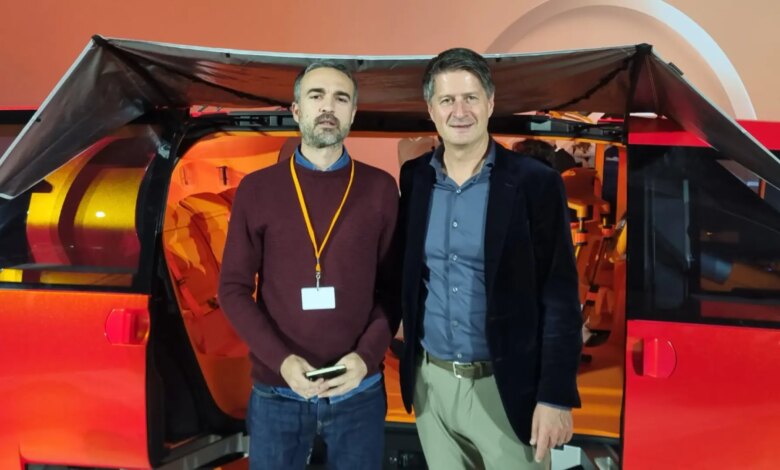
During a recent presentation of the Citroën Elo concept—a spacious electric minivan with surprisingly practical features—Chardon shared his thoughts on why Chinese brands like Omoda and Jaecoo are gaining popularity so quickly in Spain and Italy. In his view, Chinese success is driven not only by pricing, but by an ability to anticipate customer desires. However, according to the Citroën chief, the situation in France and Germany remains different for now: Chinese brands have yet to reach the same level of influence there as in Southern Europe.
Challenges and changes
Chardon believes that to stay competitive in this race, European companies must chart their own course, not simply copy others’ solutions. He recalls how, in the 1990s, France imposed quotas on Japanese cars, and it was only the lifting of those restrictions that pushed local manufacturers toward innovation. Today, in his opinion, the situation is repeating itself—only now, it is Chinese brands entering the arena.
“We need to understand what’s behind their success,” says Chardon. “Accessibility and precisely meeting customer needs are what really matter. That’s why we’re expanding production, opening a new plant in Serbia, and focusing on models like the Citroën C3. But competitors aren’t standing still: Chinese brands are rapidly gaining ground in Europe.”
He notes that Chinese cars often look similar inside, giving European brands a chance to stand out through creativity and individuality. “We need to move faster, be bolder, and avoid following someone else’s path. Why should we copy the Chinese when we have our own experience and traditions?” emphasizes the head of Citroën.
Citroën’s Strategy
While electric cars are slow to conquer European roads, many manufacturers are returning to petrol and diesel engines. Even industry giants like Porsche have admitted that abandoning their iconic internal combustion models was a mistake. Citroën, however, is betting on freedom of choice: the C3 comes with petrol, hybrid, or electric powertrains, so each customer can choose the option that suits them best.
Chardon believes this approach is perfectly aligned with the realities of Europe. In Spain, for example, electric vehicles still make up less than 8% of the market, despite impressive sales growth. Meanwhile, in Norway, petrol cars no longer attract much interest. Citroën continues to develop its range of hybrids and EVs, but is in no hurry to abandon traditional engines.
“Multiple propulsion is our answer to the challenges of our time,” Chardon notes. “We are not planning to change our course and remain committed to our strategy.”
Affordability and new formats
Across Europe, the idea of introducing the Japanese kei-car formula—compact and affordable cars that could bring electric vehicles closer to the middle class—is being discussed more and more often. Brussels acknowledges that many families simply cannot afford a new car. Chardon sees huge potential in this for Citroën.
“Europe is the only region that still hasn’t recovered after the pandemic,” he says. “In China, North and South America, the market has already rebounded to previous levels. Here, we have almost no cars left under €15,000. This is a serious challenge, but also a chance to attract new buyers.”
He points out that Europe’s car fleet is aging rapidly: people are forced to drive older vehicles longer, which leads to increased emissions and lower safety. Citroën already has experience creating compact and budget-friendly models—take the C1 or the Ami electric car, which has become a popular solution for urban mobility.
Competition and outlook
Chardon does not hide the fact that competition for customers will be tough. Chinese and Japanese manufacturers are ready to offer their solutions, but Citroën has no intention of giving up. The French brand plans to leverage its experience and local expertise to offer Europeans something truly unique.
“We are not starting from scratch,” he emphasizes. “We have our own experience, and we are ready to compete for a place in the market. The main thing is not to fear competition and to seek our own answers to the challenges of the times.”
Citroën is focusing on innovation, individuality, and flexibility. At a time when the market is changing faster than ever, these qualities can be the key to success for European car manufacturers.
RUSSPAIN reminds readers that Citroën is one of the oldest French car manufacturers, founded in 1919 by André Citroën. The company is renowned for its innovations and bold design decisions, as well as its active role in developing electromobility in Europe. Today, Citroën is part of the Stellantis group and continues to expand its model range, focusing on affordable and high-tech vehicles for the mass market.