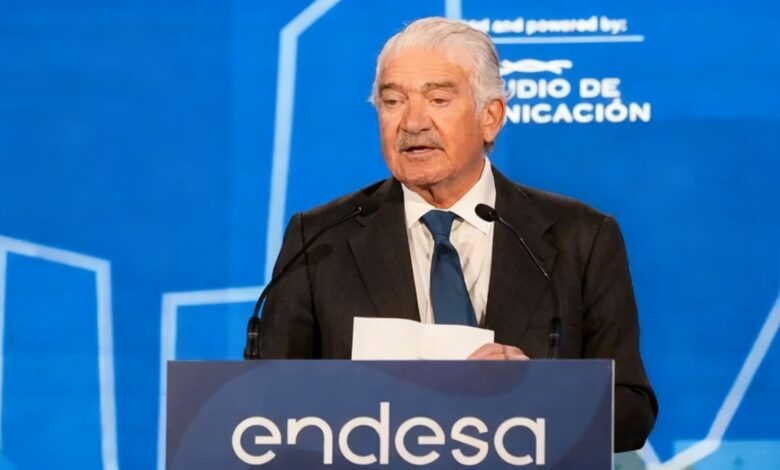
The leadership change at Endesa has become one of the most talked-about events in Spain’s energy sector. José ‘Pepe’ Bogas, who led the company for over a decade, is stepping down and will be succeeded by Gianni Vittorio Armani. As noted by elcierredigital.com, this decision did not come as a surprise to the industry, but sparked widespread debate due to the circumstances of Bogas’ departure and the role of parent company Enel.
Endesa has long felt pressure from Enel, which has sought to strengthen its influence over its Spanish subsidiary. According to elcierredigital.com, Bogas had hoped to remain in his position longer, relying on strong financial results and the successful transformation of the company. However, the Italian parent company insisted on a change of direction and a gradual ‘Italianization’ of management. As a result, despite Bogas formally retaining an advisory role, his powers have been significantly reduced.
The management change is accompanied by discussions about possible compensation for the outgoing CEO. According to sources, the amount could reach 30 million euros, reflecting not only Bogas’ long tenure but also his level of responsibility in the company. The scale of this payout has sparked debate among employees and shareholders, especially amid discussions about transparency and fairness in personnel decisions.
Internal conflicts
One of the reasons for Bogas’s weakened position was internal discord and concerns over personnel policies. In recent years, dissatisfaction has grown within Endesa over the appointment of relatives of top executives to key positions. The most notable example was Ignacio Asensi, Bogas’s son-in-law, who was responsible for major sponsorship projects, including partnerships with Liga ACB. His career advancement raised questions among staff, although no direct violations were identified.
In addition, other figures connected to the Díaz-Patón family have appeared within the company, fueling further debate about transparency and merit-based practices. According to russpain.com, such developments rarely have immediate consequences but gradually undermine trust in management and create tension among employees.
Enel’s Strategy
The decision to replace the head of Endesa is directly linked to Enel’s long-term strategy. In recent years, the Italian company has consistently increased its control over the Spanish asset, working toward greater alignment with its global goals. The appointment of Gianni Vittorio Armani, who has experience managing infrastructure and digital projects, has become a logical extension of this approach.
Armani has served on Endesa’s board of directors since 2023, which has helped him gain deeper insight into the specifics of the Spanish market. His arrival marks a shift toward a more centralized and technology-driven management model, with a focus on network development and digitalization. The company emphasizes that these changes will not affect Endesa’s identity, but Enel’s influence over key decisions is now clear.
Economic background
The leadership change comes against a backdrop of stable financial results. In 2025, Endesa recorded a profit of about €1.8 billion. During Bogas’s tenure, the company underwent a major transformation, focusing on decarbonization and the development of renewable energy sources. Despite these achievements, retaining the previous management proved impossible—in large corporations, strategic interests often outweigh even impressive performance figures.
The contrast between the management styles of Bogas and Armani is clear. The former was associated with caution and stability, while the latter focuses on technical modernization and regulatory compliance. Armani’s appointment was not spontaneous: his presence on the board of directors had already paved the way for the leadership transition, underscoring Enel’s methodical approach.
José ‘Pepe’ Bogas is a figure who made a significant mark on Endesa’s history. Over the years, the company faced many challenges under his leadership—both from shifts in the energy market and from internal conflicts. A similar scenario unfolded in 2014, when Enel first tightened its control over Endesa, leading to personnel changes and debates about the Spanish company’s independence. Then, as now, the parent company’s strategy—not just executive performance—became the decisive factor.