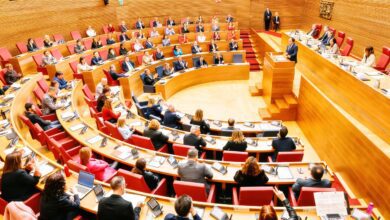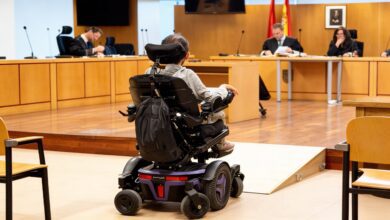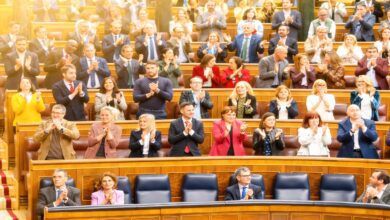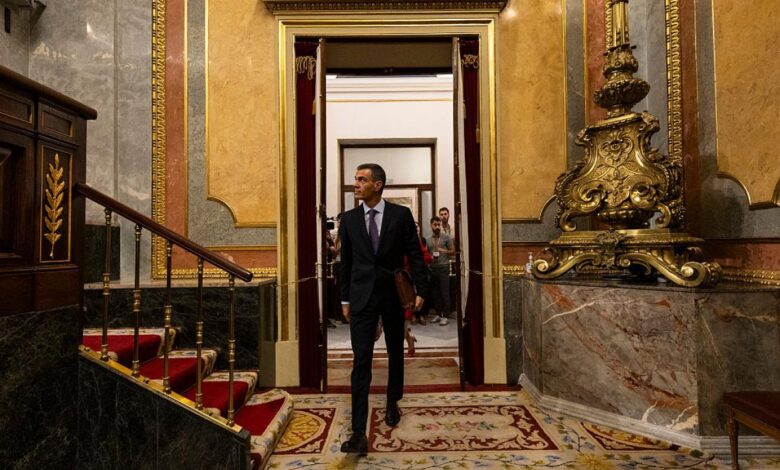
In the coming hours, millions of Spaniards may learn that their financial future is at stake. The decision Congress makes will directly affect not only pensioners, but also everyone who relies on government assistance amid rising prices and an unstable economy. At the center of attention are the fates of two major packages: a pension increase and updated measures for the so-called ‘social shield.’
The situation is complicated by the fact that these measures are already in effect, but their continuation depends on the outcome of the vote. If deputies do not support the initiative, pension indexation and a range of benefits could be canceled in the coming weeks. For the first time in recent years, the issue of social protection has become so politicized that even the government’s traditional allies are unwilling to compromise.
Political rift
Last December, the government approved a pension increase: 2.7% for most recipients and more than 7% for minimum payments. For certain groups, such as widows with dependents and pensioners supporting a spouse, the rise amounted to 11.4%. Disability pensions and the minimum guaranteed income (Ingreso Mínimo Vital) were also increased.
However, for these changes to remain in effect, parliamentary approval is required. The problem is that the opposition—primarily the Partido Popular (PP) and Junts—has already voiced its disagreement. Their stance is not about the pension increase itself, but the fact that it is bundled with other social support measures.
Specifically, the same decree includes not only pensions, but also the extension of the eviction moratorium for vulnerable families, guarantees for electricity and water supply, tax breaks for those affected by natural disasters, as well as incentives for buying electric vehicles and improving home energy efficiency. This approach has drawn sharp criticism: the opposition believes the government is using pensioners as leverage, forcing a vote on the entire package as a whole.
Arguments of the opponents
Leaders of the PP and Junts insist that if pension increases were voted on separately, they would support them. But in the current version, they argue, the government is trying to push through controversial measures related to tenant protection and eviction restrictions, which, in the opposition’s view, infringe on the rights of small property owners, many of whom are elderly.
Particular discontent is caused by the provision extending the ban on evictions for non-payment of rent or illegal occupation. Junts claims this decision is unfair to those who rent out property to supplement a modest pension. For its part, the PP accuses the government of mixing social policy with political agreements, including those with parties supporting Catalan independence.
Another controversial point is the measures to support transportation. The new law introduces a unified pass for intercity buses and suburban trains at a fixed price, as well as additional transport subsidies for young people. The opposition believes that the funds allocated for this could have been used to improve railway safety, especially after the recent tragedy in Andalusia.
Risk of Reform Reversal
If Congress does not approve the decree, pensioners could lose their increase as early as February, and all payments would revert to last year’s level. The exception is January: payments for this month have already been made with the increase. Authorities do not rule out that if the vote fails, it will be necessary to urgently draft a new bill, but this will take time and create uncertainty for millions of families.
A scenario in which the opposition unites to block the initiative has played out before. Last year, a similar package was rejected in the first vote, and only after public pressure and criticism of the PP was the law passed on the second reading. Now the situation is complicated by the fact that the vote is taking place amid the election campaign in Aragon and the upcoming elections in Castile and León, prompting parties to adopt a tougher rhetoric.
As a result, the fate of not only pensions but also a whole range of support measures—from electricity discounts to tax breaks for those affected by natural disasters—depends on political maneuvering and unexpected alliances. For many Spaniards, this means that their familiar social protections could vanish literally overnight.
Unexpected alliances
In recent days, it has become clear: PP, Vox, and Junts are ready to join forces to block both decrees. Junts openly states it will not support any government initiative until their conditions, set at the start of the current legislature, are met. This creates a unique scenario where even the most vital decisions for society become bargaining chips in political negotiations.
At the same time, government representatives insist: rejecting the package of measures would hit the most vulnerable groups hardest. If the vote fails, not only pensioners but also families affected by natural disasters, as well as recipients of social benefits, could be left without support. The question of who will bear responsibility for a possible rollback of reforms remains open.