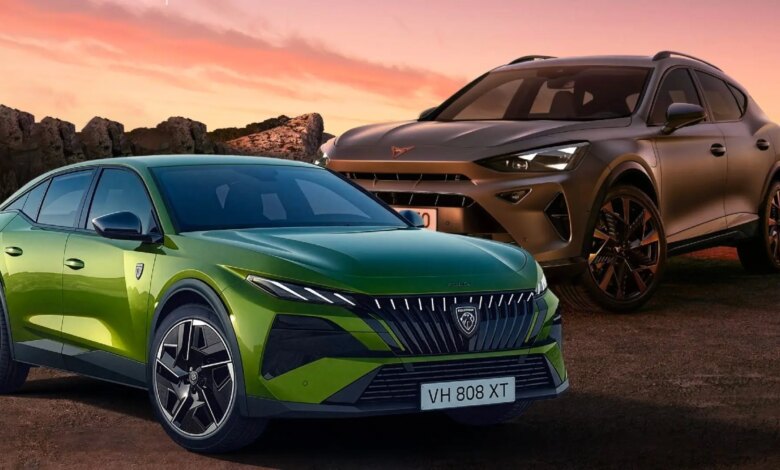
In 2026, the Spanish car market faced a tough choice as two striking coupe-crossovers, the Peugeot 408 and Cupra Formentor, entered direct competition for drivers’ attention. Both models promise more than just transportation—they set new benchmarks in a segment where style and technology are decisive factors. For buyers, it’s not merely a matter of taste, but a decision capable of shaping daily comfort and driving experience.
The Peugeot 408, refreshed for this year, immediately stands out among its competitors. The French manufacturer has focused on exclusivity: the car boasts a new design, upgraded trim materials, and an expanded suite of electronic systems. Meanwhile, the Cupra Formentor, the Spanish brand’s flagship, matches this ambition—in the wake of its 2024 facelift, it has become even more distinctive and confidently maintains its lead in sales within its class.
Design and space
The Peugeot 408 impresses with its dimensions: almost 4.7 meters long, 1.85 meters wide, and 1.48 meters high. Inside, there’s generous space, especially in the rear seats, where even tall passengers won’t have to sacrifice comfort. Despite the sloping roofline, headroom is ample, and the 536-liter trunk (471 liters in the hybrid version) means you don’t have to worry about extra luggage on your trip.
The interior is dominated by the signature i-Cockpit: a compact steering wheel, digital instrument panel, and a 10-inch multimedia screen. The materials used—ranging from Alcantara to Nappa leather and aluminum—underscore the model’s premium status. Visually, the cabin looks modern and high-tech, which especially appeals to young drivers and innovation enthusiasts.
Cupra Formentor brings its own strengths. Its dimensions are slightly more modest: 4.45 meters long, 1.84 wide, and 1.52 high. However, after the facelift, the design has become more aggressive, featuring distinctive LED lighting and the brand’s signature triangular motifs in the light signature. Inside, the materials are high quality, but the atmosphere is less futuristic compared to its rival. On the other hand, the multimedia system boasts a 12.9-inch screen and a fast processor, providing convenience and functionality, while the 10.25-inch digital instrument panel is just as informative.
Technology and engines
The Peugeot 408 is fully electrified: available with mild hybrid, plug-in hybrid, and a fully electric version. The base Hybrid e-DCS6 pairs a 1.2-liter turbocharged engine with a 48-volt system, delivering 145 hp and earning an ECO environmental badge. The plug-in hybrid 240 e-DCS7 produces 240 hp and can travel up to 85 km on electric power in the city, while the electric e-408 with a 58.2 kWh battery offers a range of up to 453 km according to WLTP.
The Cupra Formentor offers a wider range of engines, though there is no fully electric version. The lineup includes a 2.0 TDI diesel (150 hp), 1.5 TSI (150 hp) and 2.0 TSI (204, 265, and 333 hp) petrol engines, as well as two plug-in hybrids, eHybrid (204 and 272 hp) with electric-only ranges of up to 125 and 116 km respectively. Classic enthusiasts will appreciate the manual transmission, while those valuing comfort can opt for the DSG automatic and all-wheel drive on higher trims.
In terms of equipment, the Formentor holds its own: even in the base version, it comes with 18-inch wheels, three-zone climate control, a sports steering wheel, LED headlights, and a keyless entry system. The Peugeot 408 focuses on cutting-edge technology and premium materials, but has not yet announced prices for the updated version, whereas the Formentor starts at €33,262 with discount.
Comfort or drive
The main difference between these models lies in their driving character. The Peugeot 408 is designed for relaxed journeys on the highway: its suspension is balanced, steering is quick but doesn’t encourage aggressive driving. This is the choice for those who appreciate a quiet interior and smooth ride, especially on long distances.
Cupra Formentor, by contrast, is built for those seeking excitement behind the wheel. Its handling is sharp, responses in corners are lightning-fast, and the suspension is tuned to stay connected to the road even at high speeds. In turns, the Formentor behaves more like a sports sedan than a typical SUV, which dynamic driving fans especially appreciate.
At the same time, rear-seat space in the Formentor is limited, and its trunk falls short of its French rival: 450 liters in the standard version and 345 liters for the hybrids. However, for many buyers, this is not a decisive factor if driving pleasure is the main priority.
The choice for Spain
The Spanish market has traditionally favored cars with bold design and a sporty character, which explains the success of the Cupra Formentor. However, a growing interest in eco-friendly technologies and comfort makes the Peugeot 408 a strong contender for segment leadership. Both models offer a unique experience, and the choice between them depends on personal priorities: performance and excitement, or calmness and advanced technology.
In 2026, these are the models shaping new trends on Spanish roads, where style, innovation, and individuality are overtaking traditional standards. In the coming months, competition between Peugeot and Cupra is expected to intensify, giving buyers even more reasons to weigh their options before buying.
The Cupra brand, which started as the sporty division of SEAT, quickly won the trust of Spanish drivers. The Formentor became the brand’s first independent project and soon turned into a symbol of dynamic performance and a modern approach to car manufacturing. In 2025, the model was updated with new technologies and design, strengthening its position in the market. Today, the Formentor is more than just a car—it’s an expression of a desire for individuality and a passion for driving, qualities especially valued in Spain.