The metallurgical industry has long faced the challenge of efficiently utilizing fine-particle waste generated during coke and coal production. Despite their significant potential, these remnants are rarely used in conventional technological processes due to their structural characteristics. When added to the charge, they reduce gas permeability, leading to the risk of process disruptions or even equipment damage. As a result, a substantial portion of valuable resources remains unused, forcing companies to incur additional disposal costs.
In recent years, experts have been searching for ways to improve the efficiency of processing such waste. However, existing methods—such as roll pressing—do not deliver the necessary properties for using briquettes in blast furnaces. Strength and resistance to chemical exposure remain insufficient, limiting their industrial application.
Rigid extrusion technology: a new perspective on waste processing
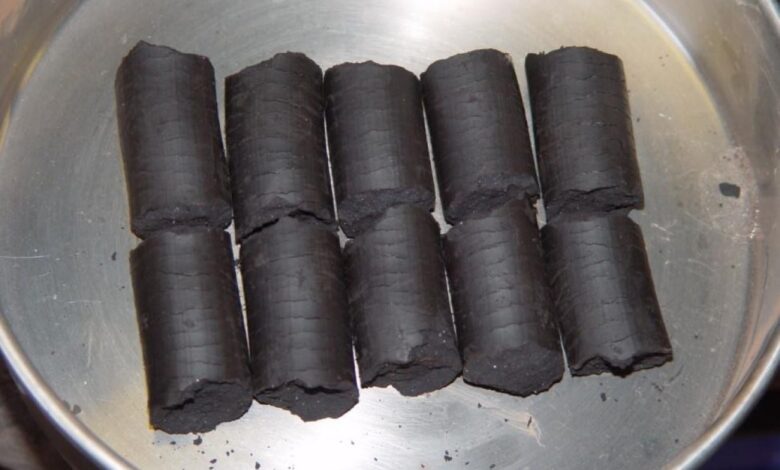
A team of researchers from the National University of Science and Technology MISIS (NUST MISIS) has introduced an alternative approach to this problem. They have implemented a method of rigid vacuum extrusion, enabling the formation of briquettes with a unique structure. Unlike traditional methods, extrusion gives the material viscoplastic properties, significantly altering its behavior under mechanical stress.
Tests have shown that these briquettes do not crack when dropped or during transport—they undergo elastic deformation. This property significantly reduces losses during logistics and storage, while also minimizing the generation of additional fines. According to experts, these qualities make the new technology highly promising for adoption at large metallurgical enterprises.
Advantages and Test Results
Tests have demonstrated that briquettes produced by the extrusion method possess improved performance characteristics. The post-reaction strength index (CSR) reached 20%, while the reactivity index (CRI) was 45.6%. For comparison, similar parameters for roll-pressed briquettes are noticeably lower, which limits their use in blast furnace processes.
In addition, the new technology allows for a reduction in the consumption of binders. Producing durable briquettes requires only 5–6% binder, whereas roll pressing uses up to 15%. This not only reduces production costs but also makes the process more environmentally friendly by minimizing the use of additional components.
Impact on the Metallurgical Industry
The introduction of the rigid extrusion method opens up new opportunities for waste processing and increases production efficiency. Briquettes produced using this technology can be used not only in blast furnaces but also in ferroalloy smelting. This broadens their range of applications and promotes more efficient raw material usage.
Another advantage is the ability to partially briquette the coal charge. This approach increases the bulk density of the material and improves the quality of the final product. As a result, companies obtain stronger and more stable coke, which has a positive impact at all stages of the metallurgical process.
Economic and Environmental Impact
Reducing production costs and waste volumes are key factors that make the new technology attractive for business. Savings on binding materials and higher yield of usable product allow companies to optimize expenses and enhance their competitiveness in the market.
From an environmental perspective, processing of fine waste reduces the strain on the ecosystem. It decreases the amount of landfilled waste and reduces the need for extracting new resources. This aligns with modern sustainable development trends and complies with environmental regulations.
A word about NITU MISIS
For reference, the National University of Science and Technology MISiS (NUST MISIS) is one of Russia’s leading technical universities, specializing in metallurgy, materials science, and nanotechnology. Founded in 1918, the university has trained thousands of professionals for the industry over its history. Today, MISIS is actively involved in international scientific projects, collaborates with major companies, and implements innovative developments in production. The university is renowned for its research laboratories and high-tech centers, which focus on creating new materials and technologies for various sectors of the economy. Among MISIS graduates are prominent scientists, engineers, and heads of major enterprises. The university consistently ranks highly in national and global technical university rankings.