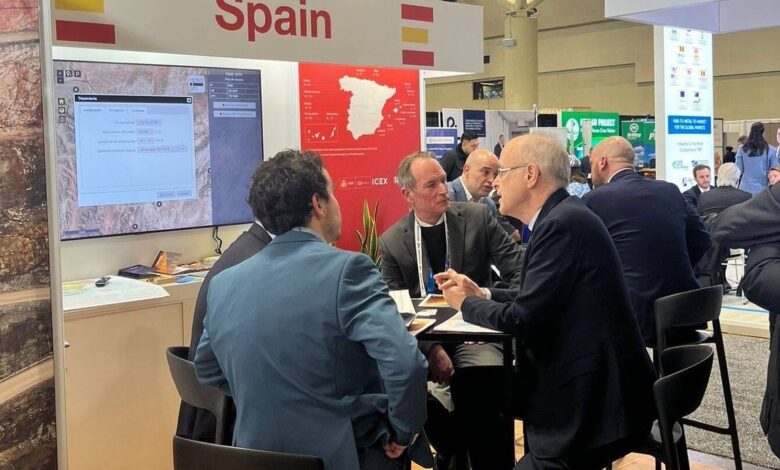
In 2026, Spain made a significant move on the global mining stage by introducing its own pavilion at PDAC—the world’s largest international mining industry exhibition held in Toronto. This initiative reflected the growing interest in Spanish deposits and new opportunities for the national economy. For Spaniards, it means not only new jobs but also a stronger position for the country among the leading players in the raw materials market.
PDAC annually brings together thousands of experts, investors, and company representatives from across the globe. This year, more than 27,000 participants from 130 countries and over 1,100 exhibiting companies discussed the development prospects of the industry, exchanged experience, and explored new investment opportunities. The Spanish pavilion, organized by ICEX España Exportación e Inversiones with support from the trade office in Canada, served as a platform to showcase a full range of services—from geological exploration to legal project support.
Andalusia in the spotlight
Andalusia drew particular attention at the exhibition, as the region has experienced a real mining boom in recent years, especially in copper and other metals. The remarkable rise in copper prices, driven by the global shift towards renewable energy and transport electrification, has once again made the region attractive to international investors. The Faja Pirítica Ibérica, stretching across southern Portugal and western Andalusia, is considered one of the largest sulfide ore districts in the world.
According to RUSSPAIN.COM, this region is home to more than 90 notable deposits of copper, zinc, and lead, accounting for about one-third of the total value of Spain’s metal production. Around 8,000 people in Andalusia are directly employed in mining, with thousands more working in related sectors — from logistics to environmental services.
Major Projects and New Investments
In recent years, large-scale projects have been launched in the region, already reshaping the industry’s landscape. In the province of Huelva, the historic Riotinto mine, operated by Atalaya Mining, has become one of the largest open-pit copper mines in Europe. The company continues to ramp up production and invest in further exploration.
In Seville, the Cobre Las Cruces complex has come under the control of the international RCF (Resource Capital Funds), which is implementing the PMR (Polymetallic Refinery) project with investments of about 850 million euros. This will make it possible to begin underground mining and processing not only copper, but also zinc, lead, and silver. There are also plans to relaunch the Aznalcóllar mine, which was closed after the 1998 accident. The new Minera Los Frailes project (Grupo México) provides for 500 million euros of investment and the return of one of Europe’s largest sulfide deposits to industrial operation.
In Huelva, Atlantic Copper is preparing to launch the CirCular plant, which will process electronic waste to extract strategic metals. Additionally, the region is seeing active development of the Matsa project (Minas de Aguas Teñidas) and new copper exploration initiatives carried out by international companies Emerita Resources and Pan Global Resources.
Technology and Value Chain
The Spanish delegation in Toronto focused not only on raw materials, but also on technological solutions for the industry’s sustainable development. Companies such as Técnicas Reunidas showcased innovative methods for extracting critical metals. E-LIX technology by Lain Tech, already implemented on an industrial scale in Riotinto, attracted particular interest. This technology enables metal extraction with a lower environmental impact thanks to hydrometallurgical processes.
The participants included leading engineering and consulting firms—IDOM, SEMA, CRS Ingeniería, Gaia Exploración—as well as legal companies such as Vrivm Legal. This demonstrated to investors that Spain is capable of supporting projects at every stage, from exploration to the launch of industrial facilities.
Exports and new opportunities
Andalusia has strengthened its status as the main center of Spain’s mining industry, accounting for around 34% of the total national output in the sector. The country’s total production volume is nearing 5.5 billion euros. Representatives from sector associations AMINER and PRIMIGEA note that demand for copper and other strategic metals continues to increase, while export figures show steady growth.
The Spanish pavilion at PDAC 2026 became a symbol of a new strategy: the country offers not only a rich mineral base, but also a stable legal environment and backing from government institutions. This is especially important for investors who had previously been concerned about bureaucratic obstacles and delays in obtaining permits.
In recent years, interest in the mining sector across Europe has grown significantly. In 2025, the European Union launched the RESourceEU initiative, aimed at accelerating permitting processes and developing new raw material extraction projects. In Spain, this has led to the revival of previously stalled projects and attracted new investment. Similar trends are observed in other EU countries, where competition for access to strategic resources is increasing. As a result, Spain has emerged as one of the leaders in industry growth and the adoption of modern technologies.