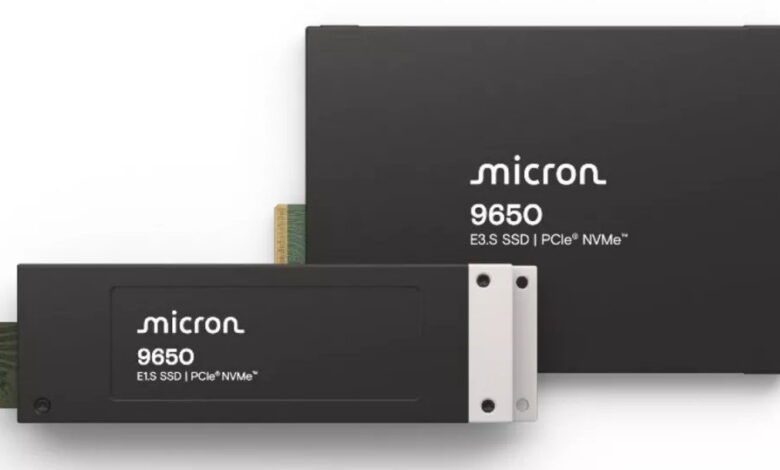
In 2026, the digital technology market faced an unexpected imbalance: the most advanced solutions that could transform everyday computer use are becoming inaccessible to ordinary people. Micron has announced the start of mass production of next-generation SSDs supporting PCIe 6.0—these are the world’s first drives with such capabilities. However, the entire batch is intended exclusively for large data centers and artificial intelligence infrastructure. Regular consumers, even if they can afford it, won’t be able to purchase these devices for personal use.
The reason is simple: demand from the AI and cloud services industry is so high that the manufacturer has completely redirected its capacities to the corporate sector. As a result, despite the technological breakthrough, home computers and laptops continue to run on outdated standards, while new solutions end up in the hands of those servicing global computing needs.
Technology out of reach
The Micron 9650 is more than just another drive. The device sets record-breaking numbers: sequential read speeds reach 28 GB/s, and write speeds hit 14 GB/s. For comparison, even the fastest SSDs of the previous PCIe 5.0 generation offer only half that performance. Random access is impressive as well: up to 5.5 million read operations and 900,000 write operations per second.
An important aspect is efficiency. The new SSD series enables the transfer of vast amounts of data without increasing power consumption. For data centers, where every watt counts, this is critical. The manufacturer claims a 25% increase in efficiency during random write operations and 67% during random read operations. These figures allow facilities to meet the growing demands of AI without putting additional strain on power grids.
The storage options range from 7.68 to 25.6 TB, making them ideal for storing and processing large volumes of information. However, all these advantages remain out of reach for the home market. Ordinary users are left with outdated solutions, while new standards become the privilege of major industry players.
The market rewrites the rules
The situation with Gen6 SSDs is not a coincidence but the result of global changes in the industry. Like other memory manufacturers, Micron has recently stopped producing products for the mass market. The reason is a sharp increase in demand from data centers, which support artificial intelligence, cloud services, and large corporate systems.
This production shift has meant that even relatively old standards, such as PCIe 5.0, have not become widespread among ordinary users. Most new laptops and desktop PCs are still equipped with PCIe 4.0-based drives or even SATA. With shortages and rising electronics prices, many are returning to using traditional hard drives simply to expand their storage capacity.
Paradoxically, the development of artificial intelligence, which was supposed to accelerate progress, has actually slowed down the refresh cycle for home computers. Manufacturers are forced to prioritize corporate clients, while the mass market is left on the sidelines of the technology race.
A future without new tech
There is currently no sign that Gen6 SSDs will become available to regular consumers in the coming years. Even if someone wanted to purchase such a drive, it’s not possible: all batches are sent directly to data centers, where they are used for complex computing tasks and storing vast amounts of data.
As a result, despite loud announcements and impressive specs, new technologies remain out of reach for most people. There’s no reason to expect Gen6 SSDs in stores—manufacturers see no point in producing them for the mass market until demand from AI and cloud services declines.
While some companies compete for leadership in artificial intelligence, everyday users have to settle for limitations and wait for new technologies to finally reach their computers. But when that will happen is still an open question.
Micron is one of the world’s largest producers of memory and storage devices, founded in the United States in the late 20th century. The company is renowned for its innovations in DRAM and NAND technologies, and for the Crucial brand, which was popular among enthusiasts and PC builders. In recent years, Micron has shifted its focus entirely to the corporate sector, ceasing the production of consumer solutions. This move is driven by the rapid growth of the artificial intelligence and cloud computing markets, where demand for high-performance storage devices far exceeds expectations. Today, Micron is setting the pace for industry development, but primarily caters to major players rather than everyday users.