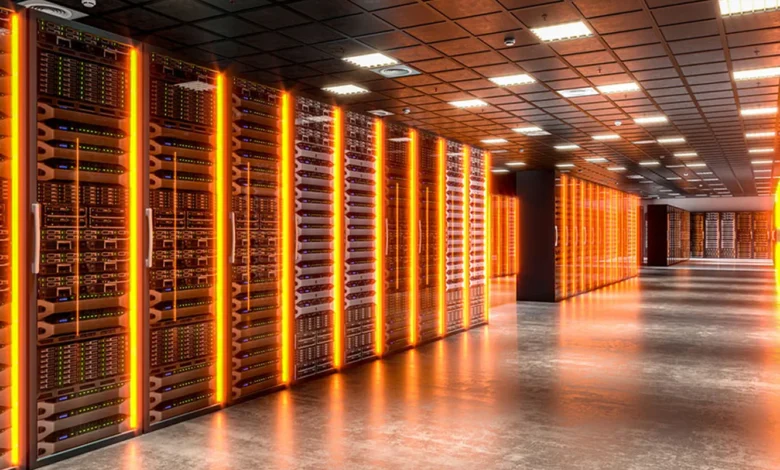
Modern data centers have become a key part of the digital infrastructure, ensuring the seamless operation of the internet, cloud services, and artificial intelligence. Yet few people consider the conditions under which these massive server farms operate. Recent analysis reveals that the vast majority of data centers worldwide are located in regions where the climate is far from ideal for this technology. The issue is particularly acute in countries with tropical and equatorial climates, where air temperatures consistently exceed recommended levels.
In these conditions, equipment is forced to operate at its limits, and data center operators must spend massive resources on cooling. This not only drives up company expenses but also places additional strain on energy systems and water supplies. As a result, even state-of-the-art cooling technologies are not always able to keep up with growing demand.
Hot spots
Singapore, United Arab Emirates, Thailand, and Nigeria are just a few countries where data centers must contend with extreme heat almost year-round. In Singapore, for example, average daytime temperatures reach 33°C, far higher than the recommended 18–27°C for servers. In such conditions, cooling becomes one of the main expenses for IT companies, and data center energy consumption continues to rise annually.
A similar trend is visible in Malaysia and Saudi Arabia, where the climate is far from optimal as well. Nevertheless, construction of new data centers in these regions continues. The reasons lie not only in economic benefits but also in political considerations: many countries prefer to keep critical infrastructure within their own borders, even if it leads to higher costs.
Resources under strain
The increasing number of data centers in hot regions has already had noticeable effects on local utilities. Some countries are experiencing electricity supply interruptions, while water resources are stretched to the limit. Cooling servers requires vast amounts of water, which worsens the situation in areas prone to drought and fresh water shortages.
Experts note that long-term climate risks are often overlooked when designing new data centers. In pursuit of favorable locations and access to powerful energy grids, companies do not always consider how the climate will change in the coming decades. This could mean that existing facilities may become inefficient or even unsafe to operate.
Politics and technology
The choice of location for building a data center depends on a multitude of factors. In addition to climate, considerations include water availability, stable energy supply, advanced telecommunications infrastructure, and the political situation. In recent years, geopolitical tensions have forced many countries to keep their servers within their own borders, even when climate conditions might be more favorable abroad.
As a result, despite obvious climate risks, new data centers continue to appear in regions with extremely high temperatures. This poses additional challenges for the industry and could lead to serious problems in the future if steps are not taken to adapt infrastructure to changing conditions.
The future at risk
With the rise of artificial intelligence and the exponential growth of data processing, demand for new data centers is only increasing. However, if the trend of locating server farms in unfavorable climate zones continues, the industry could face major disruptions and soaring operational costs.
The question of whether IT companies are ready to consider climate change when planning new facilities remains unresolved. For now, most market players are focused on immediate benefits, giving little thought to the long-term consequences for the environment and economy.
In case you didn’t know, ASHRAE (American Society of Heating, Refrigerating and Air-Conditioning Engineers) is an international organization that develops standards for heating, ventilation, and air conditioning systems. ASHRAE’s temperature guidelines are widely used in the data center industry worldwide. Their standards are considered among the most authoritative and are applied in the design and operation of server rooms.