The results of the early elections in Aragon have become a starting point for new political decisions that could shift the balance of power not only in the region, but throughout Spain. The victory of the Partido Popular (PP), led by Alberto Núñez Feijóo, has paved the way for a coalition with Vox, sparking heated debates among politicians and voters. As trust in Pedro Sánchez’s government continues to decline, the question of who will govern the region, and how, becomes especially pressing.
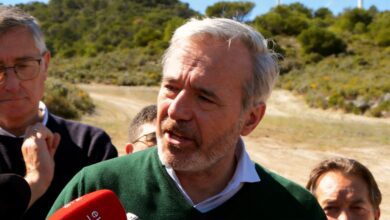
On Monday, Feijóo convened the PP National Executive Committee to discuss the election results and determine the next strategy. Even before this step, representatives of Vox had publicly invited Jorge Azcón to negotiations on forming a new government. In his speech, Feijóo emphasized that voters have clearly expressed their dissatisfaction with Sánchez’s policies and are demanding change. He also pointed out that the PP is ready to take responsibility for stable and effective governance.
Responsibility and change
The PP leader did not hide that cooperation with Vox is inevitable if the party wants to fulfill the mandate given by the voters. According to him, despite the differences between the two political forces, they share a commitment to improving the lives of the people of Aragon and the entire country. Feijóo stressed the importance of mutual respect between the supporters of both parties and called for constructive dialogue to avoid repeating past mistakes.
He also pointed out that the PP remains the only major centrist force in Spain, capable of standing up to both left-wing and right-wing radicalism. According to Feijóo, responsibility and willingness to compromise must become the foundation of the future government to prevent the further spread of ‘Sanchismo’—a policy that, in his words, many Spaniards are tired of tolerating.
Criticism of opponents
During the discussion of the election results, Feijóo seized the opportunity to sharply criticize the actions of the socialists and Pedro Sánchez personally. He called the election outcome in Aragón a ‘historic failure’ for the current government and accused the administration of being unable to tackle the country’s key problems. He paid special attention to issues of migration and illegal housing occupation, which, in his view, demand immediate and decisive action.
Feijóo also noted that attempts to distance themselves from Vox are not yielding the expected results, since voters are demanding real change, not political games. He emphasized that the PP is ready to work with any political force if it serves the interests of citizens and helps strengthen stability.
Challenges for the coalition
Despite being convinced of the need for cooperation, Feijóo admitted that negotiations with Vox would not be easy. He stressed that the PP does not intend to make concessions that contradict its principles and will defend its position on key issues. At the same time, he expressed hope that both parties would be able to find common ground and form a government capable of responding effectively to the challenges of the times.
An important point was Feijóo’s statement that the PP knows how to say both “yes” and “no” without fanaticism, distinguishing it both from Vox leader Santiago Abascal and from Pedro Sánchez. According to the politician, this approach will help avoid extremes and ensure a balance of interests among different population groups.
Context and consequences
In recent years, Spain has repeatedly faced situations where forming coalitions was the only way to ensure the functioning of regional and national governments. Such alliances have often sparked heated debates and protests, especially when it came to cooperating with parties holding extreme positions. One only has to recall the recent developments in Catalonia, where the political crisis surrounding the Rodalies transport system triggered mass resignations and new protests. As previously reported on RUSSPAIN.COM in the article about Catalonia’s transport chaos, such conflicts can quickly escalate into large-scale political confrontations affecting the entire country.
The situation in Aragon may become yet another example of how regional elections and subsequent coalition talks can shape the future not just of individual territories, but of Spain as a whole. As trust in traditional parties declines and new political forces gain traction, every such decision draws close scrutiny from the public and experts alike.
In recent years, Spain has experienced several waves of political change linked to the formation of unconventional coalitions. For instance, in 2023, a similar situation unfolded in Madrid, where negotiations between PP and Vox were also marred by fierce disputes and street rallies. In other regions, such as Valencia and Andalusia, efforts to build stable alliances between center and right-wing parties led to unexpected compromises and, at times, to new elections. These developments illustrate just how complex and unpredictable the path to stability can be in modern Spanish politics.