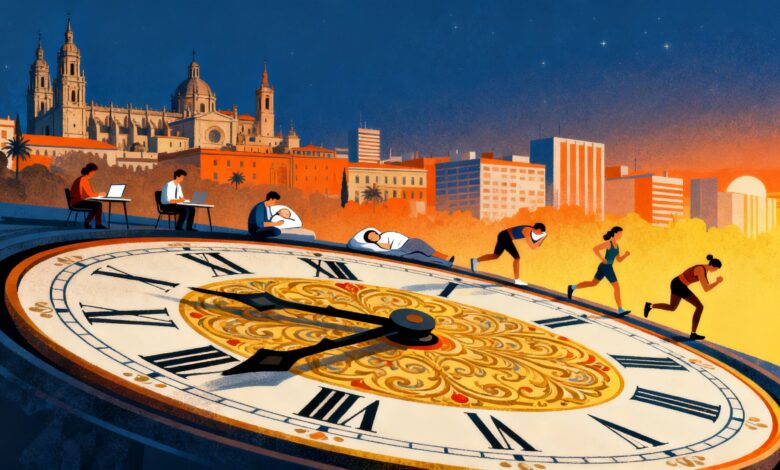
On the night of March 28 to 29, 2026, Spain will once again switch to daylight saving time. At 2:00 a.m. local time, the clocks will move forward one hour, instantly making it 3:00 a.m. This adjustment, coordinated across the European Commission, will affect everyone in the country, cutting one hour from the night’s rest. For many, this will be a challenge as the body must quickly adapt to a new rhythm and the usual morning hours will become darker.
Daylight saving time is observed every year on the last Sunday in March. This practice applies across all European Union countries and aims to make better use of daylight hours. Despite ongoing debates about its effectiveness, current legislation requires Spain and other EU states to follow this established clock change schedule.
Historical background
The tradition of changing the time twice a year did not arise by chance. This measure was first introduced during World War I in the United Kingdom, France, and Germany to save coal. In Spain, daylight saving time became permanent in 1974, when the country faced an energy crisis due to rising oil prices. Since then, this practice has been regulated by a European directive from 2001, which set unified time change rules for all EU countries to facilitate trade and communication.
However, the economic effectiveness of changing the clocks is now in doubt. Many experts believe that modern technology and changing lifestyles have largely nullified any potential electricity savings. According to russpain.com, the difference in energy consumption before and after the switch is barely noticeable, and this practice continues more out of inertia than necessity.
Health impact
Medical professionals point out that changing the clocks can have a negative impact on well-being. The human body follows internal biological rhythms that are tied to the cycle of day and night. Shifting the time disrupts the production of melatonin—the sleep hormone—which can lead to fatigue, irritability, and even appetite problems. These effects are especially pronounced in children, the elderly, and those with chronic illnesses.
Many specialists advocate for abandoning seasonal clock changes and recommend keeping only standard time (UTC+1). According to Spanish sleep experts, this approach helps people wake up more naturally and reduces health risks. In Spain, where the current time zone does not match the country’s geographic position, switching to summer time takes residents even further from the natural solar rhythm.
Technology and adaptation
In today’s world, most electronic devices automatically adjust to the new time. Smartphones, computers, and smartwatches update the clock without user intervention. However, mechanical and some household appliances require manual adjustment to avoid confusion in schedules. It’s important to remember this on the morning after the change so you don’t end up late for work or important meetings.
Doctors recommend preparing for the time change in advance: gradually shift your sleep and meal schedules a few days before the clocks are changed. After the transition, it is advised to spend more time in the morning sunlight to help restore your internal biorhythms more quickly. Moderate physical activity and a light dinner will also help ease the adjustment period.
The future of clock changes
The question of abolishing seasonal clock changes remains open. According to a 2018 survey, the majority of people in Spain and other EU countries support ending this practice. However, the lack of consensus among member states has prevented a final decision. The Spanish government does not rule out that 2026 could be the last year the country changes its clocks, if a common position can be reached in Brussels.
The switch to daylight saving time is not only a technical procedure but also a part of European history. The idea of changing the clocks first emerged in the early 20th century as a response to economic challenges. In Spain, this measure became permanent after the oil crisis of the 1970s. Today, it remains a topic of debate among scientists, politicians, and ordinary citizens, yet it continues to shape the daily lives of millions.