The Madrid History Museum has once again unveiled one of its most valuable exhibits—a scale model of the city created by engineer León Gil de Palacio in 1830. After more than a year of restoration, timed to coincide with the celebration of the Virgen de la Paloma, the artifact has returned in renovated form and now occupies a new place in the museum’s halls.
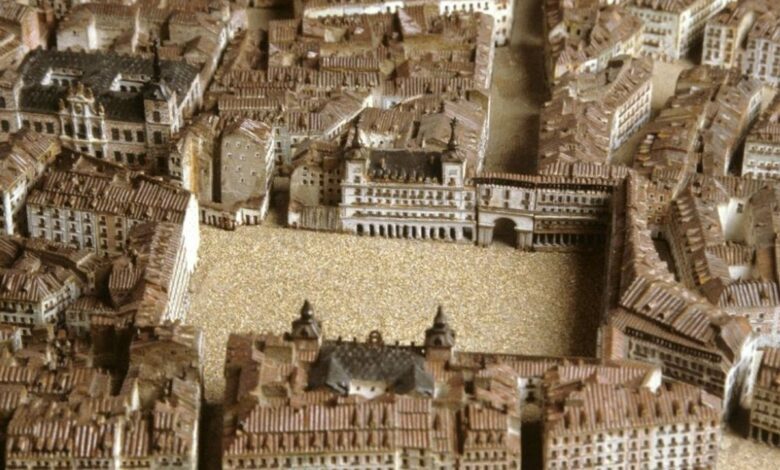
The model, crafted with remarkable precision, is regarded as one of the most important cartographic monuments of 19th-century Europe. Its creator, military engineer León Gil de Palacio, worked on the project with a team of assistants. Their efforts resulted in a large-scale model of Madrid spanning 18 square meters, at a scale of 1:816. The team used wood, silk, wire, and sand—materials that allowed them to capture the smallest details of the city’s environment at the time.
The restoration, which had a budget of around 90,000 euros, included a thorough cleaning of the model, replacing the old protective glass case with a modern transparent structure, and installing a new lighting system. Thanks to these changes, visitors can now observe every element of the exhibit in detail. In addition, an accessible route with a ramp has been set up around the model, making it available to all categories of visitors. Relocating the exhibit created space for a new multifunctional hall that will host cultural events.
The model’s history dates back to 1828, when King Fernando VII commissioned its creation through Infante Francisco de Paula and the artillery command. The work took less than two years. The result was a unique map of the city, which at that time was still enclosed by the fiscal wall built during the reign of Felipe IV. For the first time, the model depicted not only buildings, but also the courtyards within city blocks and the topography, giving this exhibit particular historical value.
The model captures the appearance of Madrid before the major transformations that followed the demolition of the city wall in 1868 and the beginning of urban expansion. Thanks to this exhibit, visitors can understand what life in the Spanish capital was like before the era of large-scale urban reforms.
Today, Ginés de Palacio’s model serves as an important resource for researchers, architects, and historians, and remains one of the key symbols of Madrid’s cultural heritage. The exhibition attracts not only specialists but also the general public, offering everyone a glimpse into the city’s past and the chance to see what it looked like almost two centuries ago.