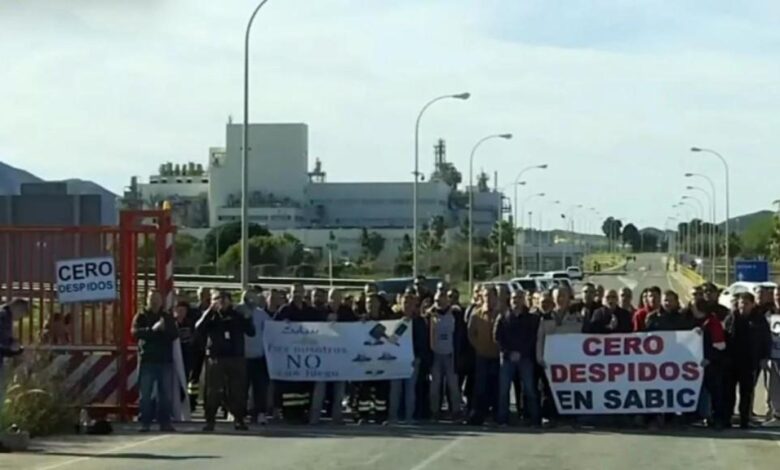
A conflict is escalating in Cartagena over the future of the SABIC plant. After the company’s European assets were sold to the German fund Mutares, some 400 workers now face the real threat of losing their jobs. The new owners are slow to disclose details of their plans, leaving employees and their families in limbo. Anxiety hangs in the air: what will happen to people whose average age is over 50, and how will they find new work in a region where industry is already struggling?
The situation is further complicated by the fact that Mutares is known for its aggressive cost-cutting and focus on quick profit. Workers fear the plant could be shut down completely, leaving thousands employed by related companies without a livelihood. In response to management’s silence, unions and the plant’s committee have launched a series of protests, demanding immediate transparency and guarantees for all staff.
Threat of mass layoffs
Tensions have been running high in Cartagena in recent weeks. SABIC workers and their families are waiting for news that could change their lives. According to union representatives, the company still has not provided clear information about how many people will be laid off or the conditions under which they will leave. The fate of older employees is of particular concern, as losing their jobs could be devastating.
Unions stress that it is unacceptable to simply shut down the plant and leave hundreds of families without support. In a region where industry plays a crucial role, such a decision could trigger social unrest. Workers are demanding transparency from the new owners, respect for labor rights, and fair compensation. Otherwise, they threaten to escalate their protests and rally broader public support for their cause.
Management remains silent
So far, SABIC’s management has only announced the shutdown of production at the Lexan 1 line. There is no information about timing, the scale of layoffs, or any social guarantees. Workers and their representatives are outraged; they feel as though they are simply being ignored. In such circumstances, people feel abandoned and unprotected.
Unions are already preparing to file complaints with the labor inspectorate and other authorities to defend workers’ rights. Legal support will be provided to everyone who might be affected by layoffs. If there are no guarantees and transparency, they promise not to limit themselves to peaceful demonstrations, and may resort to tougher measures.
Industry under threat
The story with SABIC is just part of a bigger picture. Both Spanish and European industry are facing serious challenges: high energy prices, competition from cheap products from countries with lower standards, and pressure on profits. In these conditions, investors are increasingly resorting to layoffs and shutdowns, often with little thought for the people affected.
This is felt especially acutely in Cartagena. The loss of a major plant could be a blow not only for SABIC workers but for the entire region. Thousands of people employed in related industries risk being left without work. Unions are calling for unity and for the protection of industry to prevent the city from becoming yet another unemployment zone.
Protests and Demands
In response to management’s inaction, the plant committee and labor unions have announced the start of mass protests. A large demonstration is already scheduled for February 3 — a date remembered in Cartagena for historic events. Organizers hope to attract not only plant workers, but also representatives from other sectors, politicians, and civic organizations.
The main demand is the immediate start of negotiations on social guarantees, compensation payments, and job opportunities for everyone at risk of losing their employment. SABIC workers have no intention of giving up without a fight. They are demanding respect, transparency, and real solutions instead of empty promises. Otherwise, the protests could escalate into a large-scale labor movement across Murcia.