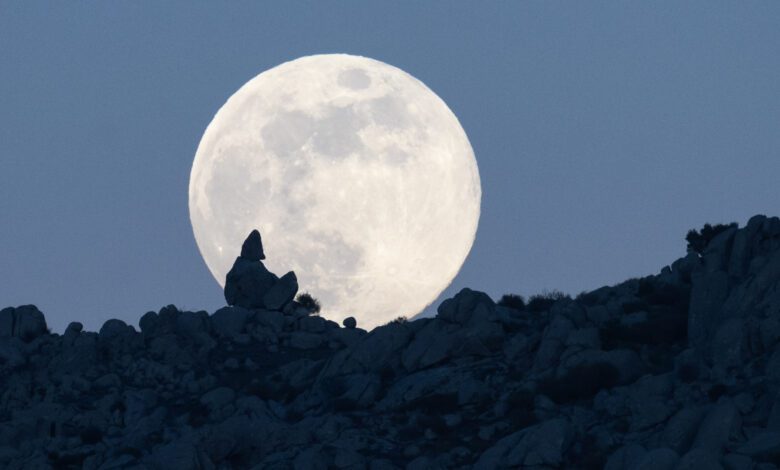
Tonight, the long-awaited first full moon of 2026 will light up the sky—and it won’t be just any moon, but a true supermoon. January’s full moon, known as the Wolf Moon, promises to be one of the brightest and most spectacular astronomical events of the winter. This time, the Moon will be closer to Earth than usual, making it appear larger and brighter. For many, it’s a chance to see the night’s brightest object in a rare form, seemingly floating just above the horizon and evoking ancient legends and cosmic mysteries.
The full moon will reach its peak at 5:03 a.m. Eastern Time (10:03 GMT) on January 3, but already on the evening before and over the following nights the Moon will appear nearly full. Depending on your location, moonrise and moonset times may vary, but the spectacle promises to be breathtaking either way. The Moon looks especially stunning against the winter sky, when frosty air makes its glow appear even brighter.
Wolf Moon
January’s full moon gets its name from wolves, who were believed to howl through the long winter nights. In Anglo-Saxon tradition, it is called the Moon After Yule, while among the Dakota people, it’s known as the Severe Moon, emphasizing the cold and severity of this season. These names reflect not just natural phenomena, but the cultural traditions of peoples for whom the Moon has always symbolized change and hope.
This year, the full moon coincides with the moment when the Moon is closest to Earth—a phenomenon called perigee. Thanks to this, the Moon appears 14% larger and 30% brighter than usual. This effect is known as a supermoon, and January 2026 marks the last of four consecutive supermoons. The next similar event won’t occur until the end of November.
When and where to watch
The best time to observe is the evening of January 2, when the Moon rises above the eastern horizon just before sunset. At this moment, it appears especially large because of an optical illusion: when the Moon is low on the horizon, our brains perceive it as bigger than when it’s high in the sky. On the following day, January 3, the Moon will rise after sunset, making it visible against the dark sky.
Pay special attention to the color of the Moon. While it’s low, its light passes through denser layers of the atmosphere, which brings out yellow and orange tones. This adds a mysterious touch to the spectacle and makes photos particularly stunning. By the way, on this night you may notice a bright dot next to the Moon—this is Jupiter, which will be just four degrees from the lunar disk. For comparison: three middle fingers held at arm’s length span about five degrees in the sky.
Tips for observers
If you want to capture this event, don’t forget to prepare your camera or smartphone. A supermoon is a great opportunity to try your hand at astrophotography. Even simple equipment can produce impressive shots if you choose the right time and place. Don’t forget a tripod and pick a vantage point with an open horizon so the Moon isn’t hidden behind buildings or trees.
For those just discovering an interest in the night sky, January’s full moon is the perfect reason to step outside and look at the stars. And if the weather’s on your side, you’ll be able to admire not only the Moon but also other bright objects of the winter sky. Don’t miss the chance to witness this rare phenomenon that brings people together across the globe.
RUSSPAIN reminds readers that a supermoon is an astronomical term for a full moon that coincides with the closest approach of the Moon to Earth. On these nights, the Moon appears especially large and bright, drawing the attention not only of astronomers but of anyone who appreciates beautiful natural phenomena. The next supermoon won’t occur until November 2026, so don’t miss the chance to see it with your own eyes.