Global Language Analysis: How Scientists Sought Universal Grammar Rules
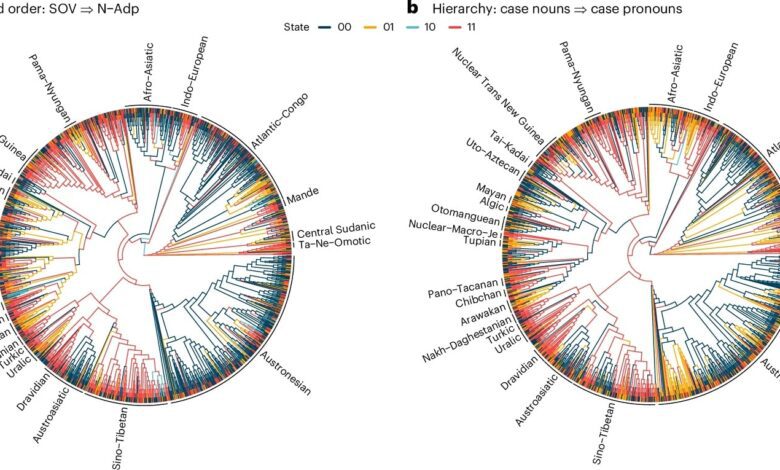
An international team of linguists conducted a large-scale study to determine how widespread certain grammatical patterns are across the world’s languages. To do this, experts from Germany and the USA analyzed data from 2,430 languages, using the largest existing database of grammatical features. Their focus was on 191 rules previously considered universal or nearly universal for all languages.
During the study, researchers used Bayesian statistical methods to account for not only the similarities between related languages but also the influence of geographic location. This approach helped minimize distortions caused by historical development in language families and the interactions between peoples.
Which Grammatical Universals Held Up: Key Findings
The results of the analysis were surprising: only 60 out of the 191 patterns tested were confirmed by the large dataset. This is about one third of all the rules examined. Hierarchical universals that describe relationships between grammatical categories within a language proved especially robust. Of 30 such rules, 24 were confirmed, indicating their high prevalence.
Patterns related to word order proved to be less universal. Of these, only 24 out of 65 were confirmed in a narrow context (such as within a sentence), and 8 out of 72 in a broader context (between sentences or paragraphs). Moreover, of the 24 universals not included in these categories, only four were found to be statistically significant.
What the new data means for understanding language diversity
The researchers concluded that the differences among the world’s languages are much less constrained than previously thought. Many rules once believed to be universal are, in fact, far from common. Nonetheless, a third of the universals do appear in the majority of languages, suggesting that certain patterns do exist in the development of grammar.
The findings highlight that languages can differ greatly from one another, yet still maintain some common traits. This discovery is significant for future linguistic research, as well as for understanding how language systems are formed and evolve.
Prospects and new questions in linguistics
This large-scale study not only broadens our understanding of linguistic diversity but also raises new questions for researchers. Why do some grammatical rules persist while others do not? How do historical and cultural processes shape language structures? The answers to these questions will help us gain deeper insight into the mechanisms behind the development of human speech and communication.
The work of linguists demonstrates that even long-standing scientific views can be revised when new evidence emerges. In the future, such research will make it possible to more accurately identify which features truly unite the world’s languages and which set them apart.