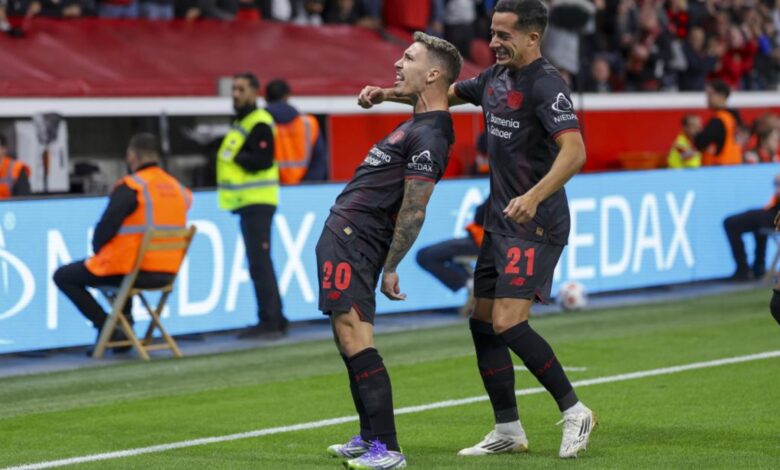
In recent years, Bayer Leverkusen has firmly established itself as the most Spanish club in Germany. Even after Xabi Alonso’s departure, the Spanish language and mentality remain an integral part of the team’s daily life. The management, starting with CEO Fernando Carro, maintains close ties with Spanish professionals and players.
This season, the presence of Spanish footballers is noticeable both on and off the field. Defender Alejandro Grimaldo, midfielder Aleix Garcia and versatile Lucas Vazquez form the core of the squad, bringing the distinctive qualities of the Spanish school of football. They are joined by Loïc Badé and Christian Kofane, former players for Sevilla and Albacete, as well as an Argentine group: Exequiel Palacios, Claudio Echeverri, Equi Fernandez and Alejo Sarco.
Sporting director Simon Rolfes notes that the Spanish influence at the club developed naturally. Over the last two decades, Spanish football has transformed its approach to the game, which has also affected German teams. At Leverkusen, they value not only language skills, but also players’ ability to fit into the chosen tactics and style.
Spanish is often spoken in the locker room, helping newcomers adapt more easily. However, when assembling the squad, priority is given to professional qualities and alignment with the club’s philosophy. Former Real Madrid assistants—Alberto Encinas and Ismael Camenforte, who were at Leverkusen even before the Spanish coach arrived—also play a key role.
Argentine midfielder Exequiel Palacios emphasizes that Spanish players possess a high level of skill and leadership qualities. Their presence on the field significantly impacts team dynamics and helps achieve results.
The off-season brought major changes to the club: 17 new players joined, while 20 left. Leverkusen set a Bundesliga record for transfer activity, spending €198.15 million on signings and earning €229.5 million from sales. The new head coach, Kasper Hjulmand, who replaced Erik ten Hag, has been tasked with leading the team back to success. Management explains the coaching change as a necessary step to quickly respond to developments and avoid losing time if things go off track.
The focus is on young and ambitious players ready to fit into the updated strategy. The club expects that the combination of Spanish experience and fresh energy will allow Leverkusen to continue progressing and secure a place among the leaders of German football.