In the very heart of Asturias, where rolling hills give way to green valleys, a route has emerged that can surprise even the most seasoned traveler. Here, amid pastoral landscapes, Leopoldo Alas—better known as Clarín—once found inspiration. His literary universe comes alive along a trail that passes through the places where his famous works were born.
The journey begins at the CE-3 road, near the Casa Gerardo restaurant. From there, the route winds through the small villages of Prendes, Guimarán, and Logrezana. These aren’t just points on a map—they hold the memory of the writer, his family, and the characters from his books. Each turn reveals new views: ancient granaries, rural mansions, and fields where the past still seems to linger.
The route is just over eight kilometers long and can be completed even by those unaccustomed to long walks. The path leads through forests, past traditional buildings and quiet villages, where life moves as slowly as it did a century ago. The granaries in the Carreño style and the old paneras draw special attention—details Clarín skillfully described in his books. For cycling enthusiasts, this route is a real find, combining sport, culture, and the enjoyment of nature.
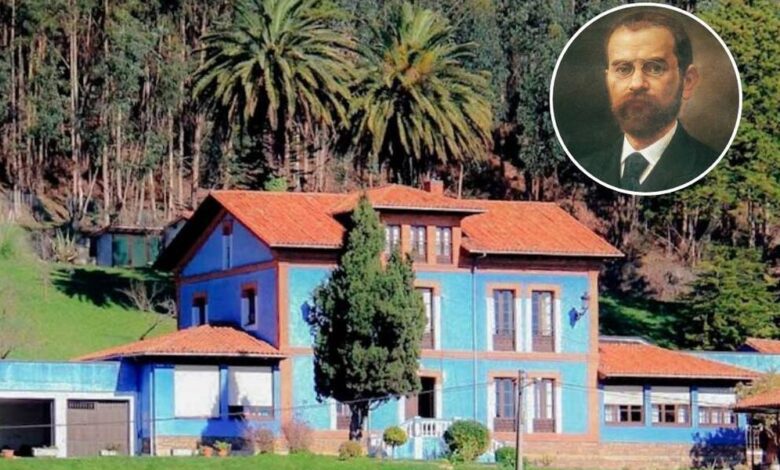
One of the highlights of the route is the Quinta Clarín estate—where the writer spent his summer months and worked on his literary works. Nearby stands the Carreno family palace, built in the 16th century, with a small chapel that recalls the former splendor of the local nobility. These places seem to transport you back to the 19th century, allowing you to experience the atmosphere of the era when masterpieces of Spanish literature were created.
The route then leads to the church of Santa María la Real de Logresana—a Romanesque architectural monument where a special tranquility still prevails. Both Clarín and his relatives once visited this church. Despite renovations, the building has preserved elements from the 12th century, and a walk through its surroundings turns into a true journey through time.
The final stretch of the route climbs to the old Logresana schools, built with funds from emigrants. From here, there is a view over the valley where the greenery seems endless. Along the way are quotes from the novel “Doña Berta,” in which Clarín affectionately described his homeland. This route is more than just a walk—it is an opportunity to touch living history, feel the spirit of Asturias, and see how literature and reality intertwine in the same space.