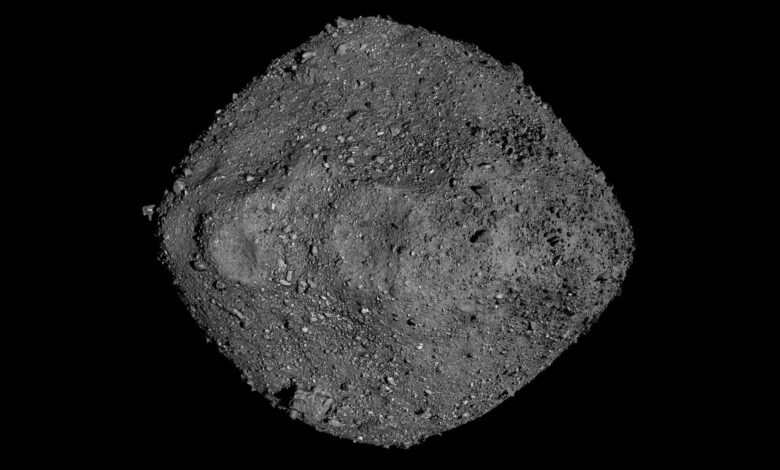
For the first time in history, NASA scientists have discovered sugars in samples from the Bennu asteroid that are considered key to the emergence of life. Analyzing material brought to Earth by the OSIRIS-REx mission, an international team of researchers identified ribose—the backbone of RNA—as well as glucose, the primary energy source for most terrestrial organisms. These substances were found in particles that had never come into contact with Earth’s atmosphere, preserving them in their original state.
The research findings suggest that the chemical components necessary for biological processes may have been widespread in the early Solar System. Experts believe these sugars could have formed inside ancient asteroids when water reacted with simple organic compounds. This discovery supports the hypothesis that the building blocks of life could have appeared long before the formation of planets.
Extraterrestrial chemistry
Scientists have paid particular attention to ribose—a sugar that forms the backbone of the RNA molecule. RNA plays a crucial role in storing and transmitting genetic information, as well as in protein synthesis. Modern theories of the origin of life suggest that RNA appeared before DNA, and ribose may have been one of the earliest steps toward the emergence of living organisms.
Glucose, also detected in the samples, was identified for the first time in material that arrived from outer space. This discovery broadens our understanding of the possibilities of chemical evolution beyond Earth. Scientists note that the absence of 2-deoxyribose sugar—essential for DNA—in the samples supports the theory that RNA came first in early biological evolution.
Unusual discoveries
In addition to sugars, researchers encountered another mystery: an unusual polymer found in the Bennu samples, which scientists dubbed ‘cosmic glue.’ This substance, whose structure resembles tangled molecular chains, had never been observed in any known meteorite before. According to experts, it contains large amounts of nitrogen and oxygen and likely formed in the early stages of the asteroid’s existence.
Studying this material may shed light on the processes that occurred in the first millions of years after the formation of the Solar System. Scientists suggest that such polymers could have acted as catalysts or precursors to more complex organic molecules necessary for the emergence of life.
Dust of ancient stars
Another significant discovery was the detection of large amounts of dust in Bennu’s particles, left over from ancient stellar explosions. According to experts, the concentration of this dust in the samples is six times higher than in other cosmic materials known to science. This suggests that Bennu’s parent body formed in a region rich in remnants of dead stars.
These findings offer a fresh perspective on the processes that occurred in the early solar nebula and provide insight into how the first solid bodies in our system were formed. Scientists continue to analyze the composition of the dust to understand how it may have influenced the chemical evolution of the asteroid and possibly the entire Earth.
Comparison with other asteroids
Alongside the analysis of Bennu samples, experts are also studying material brought back from the asteroid Ryugu by Japan’s Hayabusa2 mission. Researchers do not rule out the possibility that similar sugars may be found there as well, which would support the hypothesis that organic compounds are widespread in space. If these assumptions are confirmed, it would provide further evidence for the panspermia theory—the idea that life could have been brought to Earth by asteroids and comets.
In the coming years, scientists plan to conduct further experiments to determine exactly how the discovered sugars and polymers formed, and what role they may have played in the chemical evolution of early Earth. These new findings are expected to bring us closer to solving one of humanity’s greatest mysteries—the origin of life.
If you didn’t know, the OSIRIS-REx mission (Origins, Spectral Interpretation, Resource Identification, Security, Regolith Explorer) was launched by NASA in 2016 to study the asteroid Bennu and return samples to Earth. In 2023, the capsule containing the material successfully landed in the US, giving scientists a unique opportunity to study pristine matter from deep space. OSIRIS-REx became the first American mission to bring back asteroid samples, and one of the few in the world to accomplish such a project. The collected data is already changing our understanding of the chemistry and evolution of the Solar System.