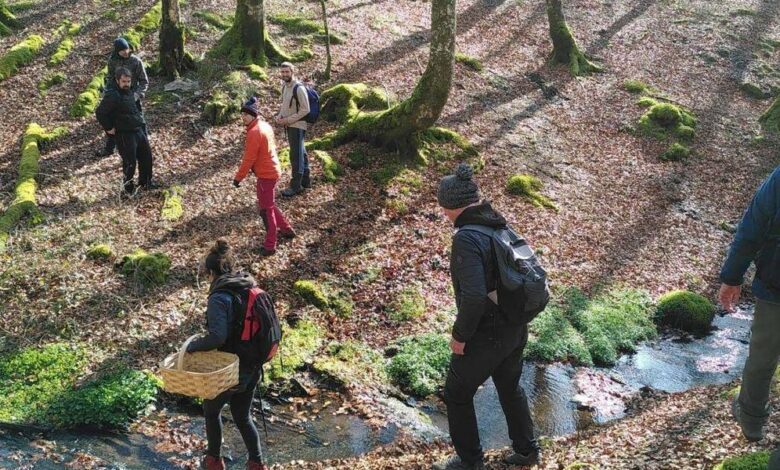
Just twenty-five kilometers from bustling Pamplona lies a land seemingly plucked from the pages of ancient legends. This is the Ulzama Valley, where centuries-old beech and oak groves, covered in a thick carpet of moss and ferns, create a truly magical atmosphere. With the arrival of autumn, these places become a real magnet for thousands of mushroom enthusiasts and those simply seeking solitude amidst untouched greenery. The air is filled with the scent of damp earth and decaying leaves, and the silence is broken only by birdsong and the rustling of the wind in the tree canopies.
The season for foraging forest delicacies begins here with the first heavy rains at the end of summer and the start of autumn. It is the moisture that awakens the mycelium, bringing forth the first porcini, chanterelles, russulas, and dozens of other varieties. However, accessing these grounds is not as simple as it might seem. The entire area is a carefully protected mycological park, and a special permit is required for collecting. This is not a bureaucratic whim, but a key part of a comprehensive program to preserve the fragile balance of the local ecosystem, which is part of the broader European Natura 2000 network.
A day pass, which grants permission to forage, costs 7 euros. It can be easily obtained online through the park’s official website or purchased at local establishments such as bars or information centers. This system effectively regulates visitor flow and, most importantly, helps prevent overharvesting, which in the past caused significant harm to the forest ecosystem. For beginners and those wishing to deepen their knowledge, educational excursions with experienced guides are organized on weekends from September to November. Guides teach participants to distinguish valuable mushrooms from poisonous lookalikes and remind them of the unwritten forager’s code: use woven baskets to allow spores to disperse, avoid damaging the mycelium when harvesting, and leave older specimens to support the population.
The highlight of the season is the annual “Día del Hongo”, traditionally celebrated on October 12. On this day, locals and numerous visitors gather to take part in themed fairs, workshops, and, of course, to sample dishes prepared from freshly collected finds. To help foragers better plan their outings, the park administration regularly publishes an up-to-date mycological bulletin, providing information on which species are currently fruiting in different parts of the valley.
According to the latest reports compiled in mid-September after an analysis of ten monitoring sites, the situation overall is consistent with seasonal norms. The greatest species diversity and number of fruiting bodies are observed in the northern, wetter beech groves. There, oyster mushrooms, Tricholoma, and other varieties prized by cooks are already found in abundance. Meanwhile, in the central and southern zones, due to less rainfall, fungal activity has not yet reached its peak, but experts expect conditions to improve after the next rains.
But the appeal of this region goes far beyond the thrill of foraging. It is also an unforgettable culinary journey. Local restaurants, such as Aitona and Venta de Ultzama, carefully preserve the traditions of Basque-Navarrese cuisine. In autumn, mushrooms in all their varieties take center stage on the menu. Visitors can savor flavors that, just that morning, grew in the shade of ancient trees—a marvelous cycle that unites people, nature, and culinary excellence. This project is a vivid example of how responsible tourism can benefit the local economy while preserving priceless natural heritage for future generations.