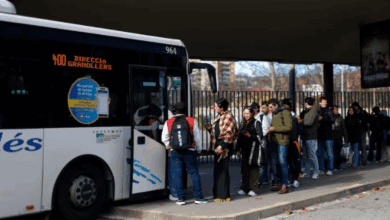
Urban mobility issues remain one of the main sources of discontent among residents of Spain. According to recent data, about 80% of the country’s citizens believe that difficulties in navigating the city negatively affect their quality of life. This is felt especially acutely in regions such as Madrid, Catalonia, and Andalusia, where the share of dissatisfied residents exceeds the national average.
In Madrid, 87% of respondents reported a negative impact of urban mobility on their daily lives. In Catalonia, this figure stands at 81%, and in Andalusia—almost 80%. Residents of these autonomous communities face transport-related problems more frequently than others, which affects their emotional well-being and stress levels.
With the onset of autumn and the return to work routines, stress levels related to city travel rise noticeably. After the summer break, many people once again encounter familiar challenges: traffic jams, searching for parking, and having to spend more time on the road. This leads to additional emotional strain, especially among those who use private vehicles daily.
The study also showed that 40% of Spaniards prefer to get around the city by personal car, motorcycle, or bicycle, with most traveling alone. Walking was chosen by 23% of respondents, and public transport by 20%. Thus, private transport remains the main mode of movement, despite its associated inconveniences.
Among the main reasons for dissatisfaction, Spaniards cite excessive time spent commuting and searching for parking—a concern highlighted by more than a third of respondents. Nearly half of the country’s residents spend between half an hour to an hour traveling to work or school in one direction. Additionally, about 35% note that city trips cause them stress and fatigue. Another significant issue is air pollution, which negatively affects residents’ health—28% of survey participants report this problem.
The most frustrating situations for Spaniards are being late due to traffic jams (nearly 50%) and being unable to find a parking space (47%). Other common complaints include the need to visit auto repair shops and being late for public transport.
Experts note that urban mobility issues go beyond infrastructure and are directly linked to people’s emotional and physical well-being. In this context, specialists emphasize the importance of seeking solutions that reduce stress levels and make getting around cities more comfortable for all residents.