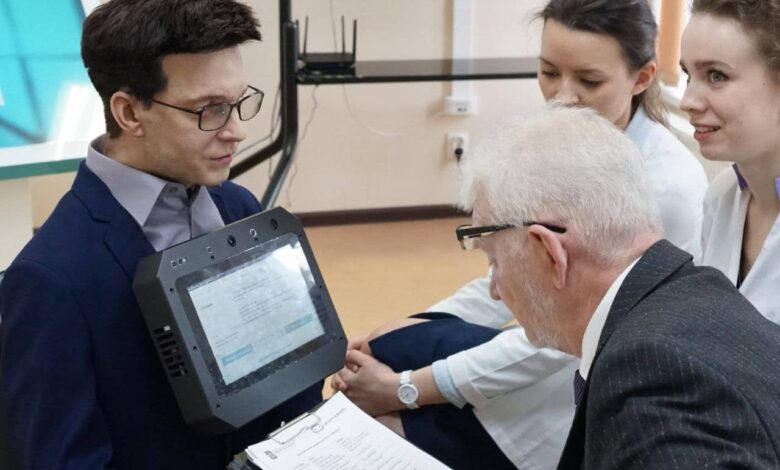
An innovative patient simulator has been developed in Perm that can fully mimic the behavior of a person with hypertension. This robot is designed to help both future and practicing doctors improve their skills in diagnosing and treating complex cases of high blood pressure. Unlike traditional computer programs, the new system allows for the simulation of real-life clinical scenarios, where every action taken by the doctor impacts the further development of the situation.
Hypertension has long been recognized as one of the most common and dangerous diseases of our time. According to the World Health Organization, over a billion people worldwide suffer from it. The disease often progresses silently, and its complications—strokes and heart attacks—claim hundreds of thousands of lives every year. People over 50, as well as those who are overweight or have chronic illnesses, are especially vulnerable.
Doctors face numerous challenges when making a diagnosis: patients are not always able to accurately describe their symptoms, and comorbidities often complicate the picture. In addition, every case is unique—standard treatment protocols do not work for everyone. Errors in therapy can lead to severe consequences, making high-quality specialist training a critical priority.
Training challenges
Traditional methods for training medical professionals often fail to cover every potential scenario. Working with real patients is limited by time and rarely allows exposure to rare or complex cases. Computer simulators, while useful, cannot fully replicate the nuances of human behavior or the body’s response to treatment.
As a result, young doctors are left with gaps in their knowledge, and even experienced specialists may struggle to quickly adapt in atypical situations. This increases the risk of medical errors, especially when treating patients with hypertension combined with other serious illnesses.
Researchers in Perm decided to change the approach to medical training. They developed a multi-level system with an anthropomorphic robot at its core. The robot’s behavior and reactions closely mimic those of a real patient, and the scenarios are based on international standards and clinical guidelines.
Technologies and capabilities
At the core of the simulator are advanced machine learning algorithms. The system analyzes patient data—age, gender, lifestyle, the presence of comorbidities—and generates an individualized disease progression scenario. Doctors can conduct a comprehensive consultation: take a medical history, order tests, receive laboratory results, and even observe changes on an ECG or ultrasound.
The robot responds to the trainee’s actions, changes symptoms depending on the chosen treatment strategy, and demonstrates possible complications. This approach not only tests theoretical knowledge but also develops clinical thinking and teaches quick decision-making in complex situations.
The system covers a wide range of clinical scenarios—from typical cases to rare complications. For medical students, it’s an opportunity to master basic skills, while for experienced doctors, it’s a chance to hone their approach to managing complex patients. Importantly, mistakes here have no real consequences, allowing users to experiment and learn from their own errors.
The advantages of simulation-based learning
Numerous studies confirm that the use of simulators in medical education significantly improves the level of specialist training. According to statistics, doctors trained with simulators perform 11% better in practical tasks than their colleagues who studied using traditional methods.
The main advantage is the ability to repeat procedures multiple times, receive instant feedback, and analyze one’s actions. This fosters not only technical skills but also critical thinking—especially important when dealing with patients whose conditions can change in an instant.
The integration of such technologies into the educational process helps reduce medical errors, increase specialists’ confidence, and, ultimately, improve the quality of healthcare for the population. For the healthcare system, this is a step forward that could save thousands of lives.
The Future of Medicine
The introduction of a robot simulator in Perm is more than just a technological novelty; it marks an important milestone in the development of medical education. This approach makes it possible to train specialists who can quickly adapt to new challenges and work effectively in the most demanding conditions. In the coming years, such systems may become the standard for training doctors not only in Russia, but also beyond its borders.
If you didn’t know, Perm National Research Polytechnic University (PNIPU) is one of Russia’s leading technical universities, actively pioneering innovative developments across various fields. In collaboration with the Federal Center for Cardiovascular Surgery named after S.G. Sukhanov and Perm State Medical University named after E.A. Wagner, PNIPU specialists are implementing projects to improve the quality of medical education and bring modern technology into healthcare. Their work has repeatedly received recognition at Russian and international scientific forums.