The issue of radioactive contamination of water bodies is becoming increasingly urgent for many countries. Cesium-137, a byproduct of nuclear power plants, weapons testing, and industrial facilities, poses a particular threat. This radionuclide is highly mobile, can accumulate in living organisms, and remains active for decades. As a result, it endangers not only ecosystems but also human health by causing serious illnesses when it enters the body.
Cesium-137 easily enters the food chain because its chemical properties are similar to those of potassium. The body cannot distinguish between these elements, so radioactive cesium is distributed throughout tissues, especially concentrating in muscles and internal organs. Internal exposure leads to cellular damage, mutations, and an increased risk of cancer. That’s why effective methods for removing cesium from water remain a top priority for scientists and environmentalists.
The purification problem
Current technologies for filtering radioactive waste have several drawbacks. Natural sorbents such as zeolites, clays, and algae cannot selectively capture only cesium—they absorb other ions as well, quickly becoming saturated and losing efficiency. Coagulation, in which contaminants are bound into large flocs with chemicals, allows for rapid purification of large volumes of water but creates new environmental concerns: the process produces radioactive sludge that is difficult to dispose of.
In search of more effective and safer solutions, scientists around the world are developing new materials capable of selectively removing cesium even in the presence of other metals. Particular attention is being paid to biosorbents—natural or modified substances that can bind radionuclides due to their structure and chemical properties.
Experiment with algae
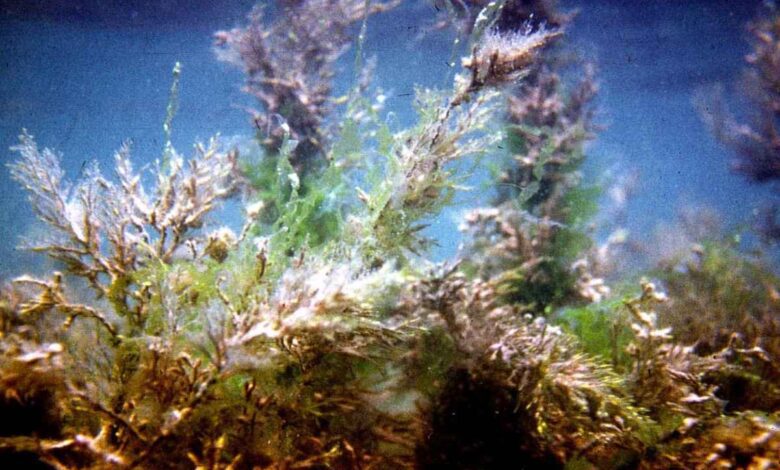
A team of researchers from Perm National Research Polytechnic University (PNRPU) has proposed an innovative approach: using algae in combination with iron ferrocyanide. Three types of algae were selected for the experiment, each with different structures: the seagrass Zostera marina, the red Phyllophora nervosa, and the brown Cystoseira barbata. All of them contain alginates—natural polymers capable of binding heavy metals.
Tests showed that natural algae are indeed able to absorb cesium; however, their sorption capacity falls short of industrial standards. The best result was demonstrated by the red algae—97.27 mg of cesium per gram of sorbent—which is still insufficient for large-scale use.
Material modification
To improve efficiency, the scientists modified the surface of the algae by applying thin layers of iron ferrocyanide—a substance known as ‘Prussian blue.’ This component forms molecular traps on the surface of the biosorbent that selectively capture and retain cesium ions even in the presence of other metals.
The material’s stability is further enhanced by functional groups on the algae surface, which prevent the active substance from leaching out. To assess effectiveness, samples were placed in solutions containing cesium ions, and then the residual concentration was measured using an atomic absorption spectrometer.
Results and prospects
Treating the algae with ‘Prussian blue’ increased their sorption capacity by 2.5 to 8 times. The most impressive results were shown by the brown algae Cystoseira barbata: its ability to retain cesium increased 11-fold, reaching 113.64 mg per gram. This is 15% higher than the modified red algae, and 12% greater than seagrass.
The experiment confirmed that this particular type of algae combined with iron(III) ferrocyanide could form the basis for effective filters capable of purifying water from radioactive contaminants to a level suitable for industrial use.
The future of the technology
This development opens up new possibilities not only for water purification but also for the creation of medical products—enterosorbents that can remove radionuclides from the bodies of humans and animals. The environmental safety of this material makes it a promising candidate for wide adoption in various fields, from disaster recovery to radiation contamination prevention.
In case you didn’t know, Perm National Research Polytechnic University (PNRPU) is one of Russia’s leading technical universities, actively engaged in research in chemistry, ecology, and biotechnology. The university is renowned for its innovative developments, which are applied in both industry and medicine. The team of scientists behind the creation of the new biosorbent has repeatedly won both Russian and international scientific awards.