This week, the scientific community was abuzz with several major discoveries. Research revealed that the familiar choice between tea and coffee may affect bone health in older women. At the same time, astronomers observed a rare phenomenon—the interstellar comet 3I/ATLAS passing by Earth. And the JWST space telescope confirmed the existence of the first known runaway supermassive black hole, rapidly escaping its home galaxy. Scientists also found a way to extend the lifespan of mice, while psychiatrists identified six symptoms of depression that may predict the risk of developing dementia. These are just some of the science stories discussed this week.
New approaches to treating life-threatening diseases were also in the spotlight. It turned out that a simple combination of supplements can slow the progression of aggressive brain tumors. Each of these discoveries not only pushes the boundaries of knowledge but also brings hope for a better quality of life.
Tea and coffee
Australian researchers from Flinders University conducted a large-scale study to find out how drink choices affect bone health in older women. The results were unexpected: regular tea consumption helps strengthen bone tissue, while excessive coffee intake, on the contrary, may lead to its weakening.
Experts emphasize that this is not about giving up coffee entirely or needing to drink tea by the gallon. However, moderate tea consumption may be a simple way to support bone health, whereas excessive coffee intake is not the best choice for women over 60. The study has sparked considerable discussion among nutrition and geriatrics professionals.
Interstellar comet
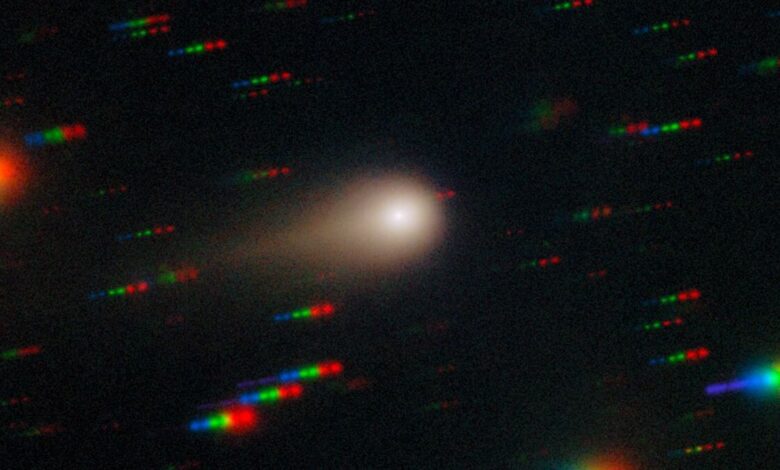
Comet 3I/ATLAS, which arrived from the depths of interstellar space, made its closest approach to Earth on December 19—about 270 million kilometers away. That’s nearly twice the distance from our planet to the Sun, but for astronomers, this event was a real gift. At that moment, scientists had a unique opportunity to observe an object that will soon leave the Solar System.
Observations of 3I/ATLAS allowed researchers to refine its trajectory and composition, as well as compare it with other interstellar visitors such as ʻOumuamua and Borisov. Such objects are extremely rare, and each visit offers a chance to learn more about the processes occurring beyond our own stellar system.
Brain cancer treatment
Scientists from India have reported a modest but promising result: a combination of two simple supplements—resveratrol and copper—can slow the development of glioblastoma, one of the most aggressive forms of brain cancer. The study found that these substances help reduce inflammation caused by DNA fragments released by dying cancer cells, which in turn stimulate tumor growth.
According to experts, taking these supplements does not replace primary treatment, but can serve as additional support for patients. Doctors note that such discoveries open new horizons in the fight against cancer, especially where traditional methods are powerless.
Depression and dementia
British psychologists from University College London have identified six symptoms of depression that are closely linked to an increased risk of developing dementia in the future. It turns out not all depression is equally dangerous: certain manifestations of this condition can serve as an early warning sign decades before the first symptoms of cognitive decline appear.
The study highlights the importance of an individualized approach to diagnosing and treating depression. Doctors will now be able to more accurately identify which patients are at risk and take timely measures to prevent cognitive impairment.
Runaway black hole
The James Webb Space Telescope (JWST) has confirmed the existence of the first known runaway supermassive black hole, which is moving through space at nearly 1,000 kilometers per second. This discovery has been a true sensation for astronomers: previously, it was believed that objects like this were almost impossible to detect.
Scientists believe that such a powerful ‘gravitational kick’ was given to the black hole as a result of galaxy mergers or interactions with other massive objects. Experts are now trying to determine how often such phenomena occur in the universe and how they impact galaxy evolution.
Life Extension
Japanese biologists have discovered a way to extend the lifespan of laboratory mice by increasing the production of the COX7RP protein in mitochondria. Experiments showed that rodents with higher levels of this protein lived on average 6.6% longer and displayed significantly better health in old age.
Researchers note that mitochondria play a key role in powering all the body’s cells. Maintaining their function at a high level could be one way to slow down aging and promote active longevity. So far, these results have only been achieved in animals, but scientists are already planning to study similar mechanisms in humans.
In case you didn’t know, the JWST is the newest space telescope, launched in 2021 to explore the most distant corners of the universe. Its unique instruments deliver images of unprecedented detail, making it indispensable for astronomical discoveries. The telescope is named after James Webb, the NASA administrator during the Apollo program. Thanks to JWST, scientists have already made numerous discoveries, including the detection of a runaway black hole and studies of exoplanet atmospheres.