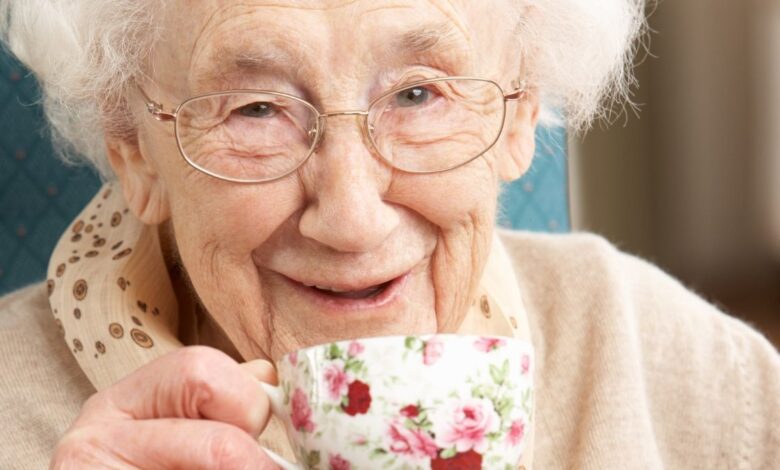
Many older women can’t imagine their day without a cup of their favorite beverage. However, Australian scientists have found that a daily choice between tea and coffee can significantly affect bone health in women over 65. A study involving nearly 10,000 American women showed that their drinking habits could influence bone mineral density and, as a result, the risk of developing osteoporosis.
Osteoporosis is one of the most common diseases among women over 50. One in three cases is diagnosed in women. The disease develops when the body cannot restore bone tissue quickly enough, making bones brittle and increasing the risk of fractures. Women become especially vulnerable after menopause, when estrogen levels drop sharply and the body’s ability to regenerate bone tissue declines.
The study and its details
A team of experts from Flinders University in Australia analyzed data on the dietary habits and bone health of women over 65. Over a ten-year period, participants completed detailed questionnaires four times, indicating how many cups of tea and coffee they consumed each day. At the same time, their bone mineral density in the hip area and femoral neck was measured using X-rays.
The results turned out to be quite revealing. Women who regularly drank tea had higher bone density in the hip area compared to those who did not consume tea. The effect was especially pronounced in overweight women. Researchers attribute this to the catechins found in tea—substances capable of stimulating the cells responsible for bone formation.
The impact of coffee and alcohol
The case with coffee proved to be less straightforward. Those who drank more than five cups of coffee a day were more likely to have reduced bone density. This supports the idea that caffeine may interfere with calcium absorption, which is essential for strong bones. Moreover, among women who consumed a lot of alcohol throughout their lives, the negative effect of coffee on bones was even more pronounced.
Interestingly, even moderate coffee consumption was linked to decreased bone density in the hip among those who regularly consumed alcohol. This suggests that the combination of these two habits may be particularly detrimental to bone health in older age.
Study limitations
It is worth noting that most of the study participants were of European descent, so the findings may not necessarily apply to all ethnic groups. Nevertheless, the researchers’ conclusions may prompt readers to reflect on their own habits and, perhaps, adjust them in favor of a healthier lifestyle.
The authors emphasize that this is not about completely giving up coffee or drinking tea by the liter. The key is moderation. For older women, a daily cup of tea can be not only a pleasant ritual but also an additional way to support bone health. On the other hand, excessive coffee consumption—especially when combined with alcohol—should be avoided.
Practical recommendations
Experts remind us that calcium and vitamin D remain the foundation of osteoporosis prevention. However, it is now clear that beverage choices also play a role. For women over 65, a daily cup of tea can be a simple and accessible way to support bone health. At the same time, if coffee makes up a significant part of your diet, it’s worth reconsidering how much you consume, especially if you have a history of regular alcohol use.
If you weren’t aware, Flinders University is one of Australia’s leading research centers specializing in public health and aging. The university is actively involved in international projects aimed at improving the quality of life for older adults. Its experts regularly publish studies on chronic disease prevention and explore new approaches to maintaining health in later life.