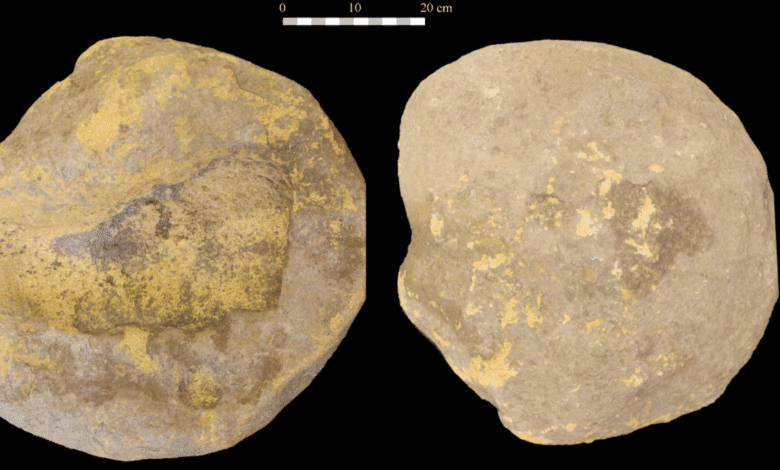
In northern Spain, in the heart of the Iberian Peninsula, archaeologists have made a discovery that could change our understanding of Cro-Magnon life. Inside the Martinarri cave, hidden among dense oak forests, they found a massive stone mortar estimated to be around 14,000 years old. According to researchers, this artifact was used by the region’s ancient inhabitants to process acorns—a food source which, it now appears, played a far more significant role in prehistoric diets than previously believed.
Scientists from the Universidad del País Vasco conducted a detailed analysis of the organic residues preserved on the mortar’s surface. The results were unexpected: among the microscopic particles, traces of oak acorns were found, indicating their active use as food. This discovery not only sheds new light on the dietary habits of Cro-Magnons but also raises fresh questions about how exactly they processed and prepared plant foods during the Stone Age.
Discovery details
The stone mortar found in Martinarri is remarkable for its size: 34 centimeters long, 32 wide, and 15.5 centimeters high. It weighs over 15 kilograms. Archaeologists note that this item probably originally served as a grain grinder, but was later adapted for other purposes. The artifact’s surface bears characteristic wear marks, evidence of many years of use.
Near the main find, another stone object was discovered—a small pestle, perfectly sized for use with a mortar. Its dimensions are 7.6 by 5.2 by 4.1 centimeters. The joint analysis of these two artifacts allowed researchers to reconstruct the process of acorn processing: they were crushed, ground, and possibly subjected to additional treatment to remove bitterness.
Cro-Magnon Diet
For a long time, it was believed that the diet of Paleolithic hunter-gatherers was predominantly meat-based. However, new evidence is prompting a reassessment of this stereotype. In situations where animal food was not always available, Cro-Magnons actively relied on forest resources. Despite their bitterness, acorns became a valuable source of carbohydrates and fats after special processing.
Paleobotanists note that organic plant food remains are a rare find at Stone Age sites. Usually, such traces survive only as phytoliths or starch grains, which can be detected on tools or in the dental calculus of ancient people. In the case of Martinarri, scientists were able to identify exactly such micro-remains, which was a real stroke of luck for the research team.
Comparison with Other Regions
Interestingly, similar evidence of acorns being used as food has been found in other parts of the world. In China, for example, archaeologists discovered acorn starch grains in the dental calculus of prehistoric humans in the Fuyan Cave. In Italy, traces of crushed plants were also found on stone tools belonging to both Neanderthals and early Cro-Magnons.
These findings confirm that processing and eating acorns was a common practice among ancient Europeans. In some cases, acorns were even turned into a kind of flour, which was then used for cooking. This approach helped diversify their diet and provided essential nutrients during periods of meat scarcity.
Processing techniques
The process of preparing acorns for consumption was quite labor-intensive. First, they were collected and then thoroughly ground in a stone mortar. After that, they were likely soaked or heat-treated to remove bitter substances. Only then did the acorns become edible.
Archaeologists emphasize that such findings point to the high level of Cro-Magnon adaptation to their environment. Not only were they skilled hunters, but they also made effective use of plant resources, allowing them to survive in the challenging climate of the Late Paleolithic.
In case you didn’t know, the University of the Basque Country is one of Spain’s leading research centers specializing in archaeology. In recent years, its staff have made significant contributions to the study of prehistoric cultures on the Iberian Peninsula. Their discoveries are regularly discussed within the scientific community and attract public interest. Martinharri is just one of many sites where Spanish archaeologists continue to uncover the secrets of ancient life.