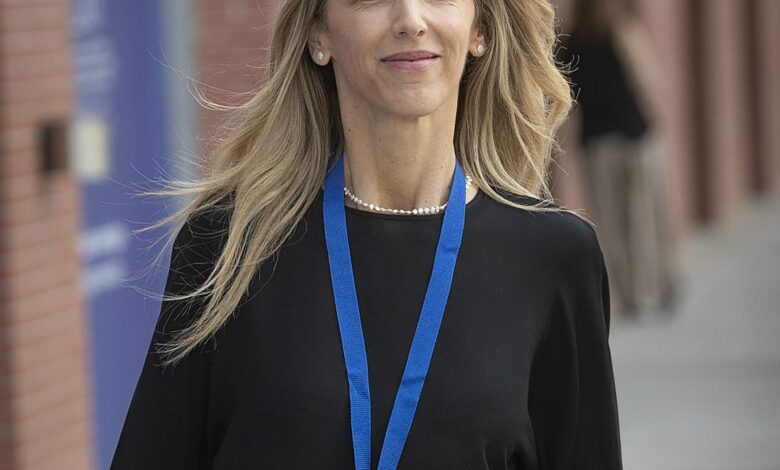
The influence of aristocratic heritage on Cayetana Álvarez de Toledo’s career is evident not only in her public appearances but also in how Spanish society perceives her. The title of Marquesa de Casa Fuerte, which she inherited, has become more than a formality—it stands as a symbol of tradition and connection to the country’s history. In Spain, where traditions and family ties still hold significant weight, such a background draws both interest and respect, but also raises questions about the impact of the past on contemporary politics.
Cayetana’s family history weaves together Spanish, French, and Argentine aristocracy. Her father, Jean Illán Álvarez de Toledo y Giró, was not only a marquis but also a member of the French Resistance during World War II. Her mother, Patricia Peralta-Ramos y Madero, comes from old Argentine nobility tracing back to the era of Spanish rule in South America. Among Cayetana’s ancestors are the founder of Mar del Plata and a Spanish conquistador, highlighting the uniqueness of her lineage.
As Mujerhoy reports, the title of Marquise de Casa Fuerte was acquired by the family in the early 18th century and passed down through complex family lines. In the 19th century, the title ended up in the hands of the Álvarez de Toledo family thanks to a marriage between members of two influential houses. In the 20th century, the title was temporarily lost, but after legal proceedings, Cayetana’s father regained it and later passed it on to his daughter. Interestingly, despite having older brothers, it was Cayetana who became the heir, which is rare in such families.
Childhood and education
Cayetana spent her childhood years in London and Buenos Aires, where she attended the prestigious Northlands School. In Argentina, her family maintained close ties with the local elite, and among their acquaintances was the future Queen of the Netherlands, Máxima. These relationships continued even after Cayetana moved to the United Kingdom, where she enrolled at Oxford and earned a doctorate in Spanish history. This experience helped her feel at ease in an international environment and shaped her broad outlook.
At university, Cayetana met her future husband, financier Joaquín Güell Ampuero, a descendant of renowned Catalan families. Their union brought together two powerful dynasties, and their wedding was a notable event in Spanish society columns. The couple had two daughters, but years later they separated. Cayetana chose not to publicize her personal life, focusing instead on her career and raising her children.
Aristocratic ties
Cayetana’s family ties extend beyond Spain, reaching France, Argentina, and even the Netherlands. Her lineage connects her to the Houses of Alba, Villafranca del Bierzo, and Comillas, as well as to the descendants of the Dukes of Bivona and Medina Sidonia. Such a network of relationships opens doors to even the most exclusive circles, but also imposes certain expectations and obligations. In modern Spain, these surnames remain associated with influence and status, although Cayetana herself has often emphasized that she prefers to judge people by their actions rather than their heritage.
Family traditions and aristocratic titles have not prevented Cayetana from actively participating in the country’s political life. She is known for her directness and skill in engaging in sharp debates, which sets her apart from other deputies. At the same time, her noble origins frequently become a topic of discussion in the media and among colleagues, adding further intrigue to her persona.
Personal life and public role
After her divorce, Cayetana maintained a reputation as someone who values her privacy and keeps family matters out of the public eye. Her daughters are raised away from media attention, and she herself prefers to speak about politics and social issues. Nevertheless, public interest in her private life remains strong, as the combination of aristocratic heritage and modern public engagement is a rarity in Spanish politics.
In recent years, Cayetana has continued working within international organizations and actively participating in public debates. Her biography serves as an example of how tradition and modernity can coexist in one person, and how aristocratic titles can be not just a tribute to the past but also a tool for influencing the country’s future.
Cayetana Álvarez de Toledo is one of the most prominent figures in 21st-century Spanish politics. Her journey from aristocratic salons to parliamentary debates demonstrates that background can serve not only as a privilege, but also as a challenge. Thanks to her education, international experience, and personal charisma, she has managed to secure a unique place in Spain’s public life, all while remaining true to her roots and convictions.